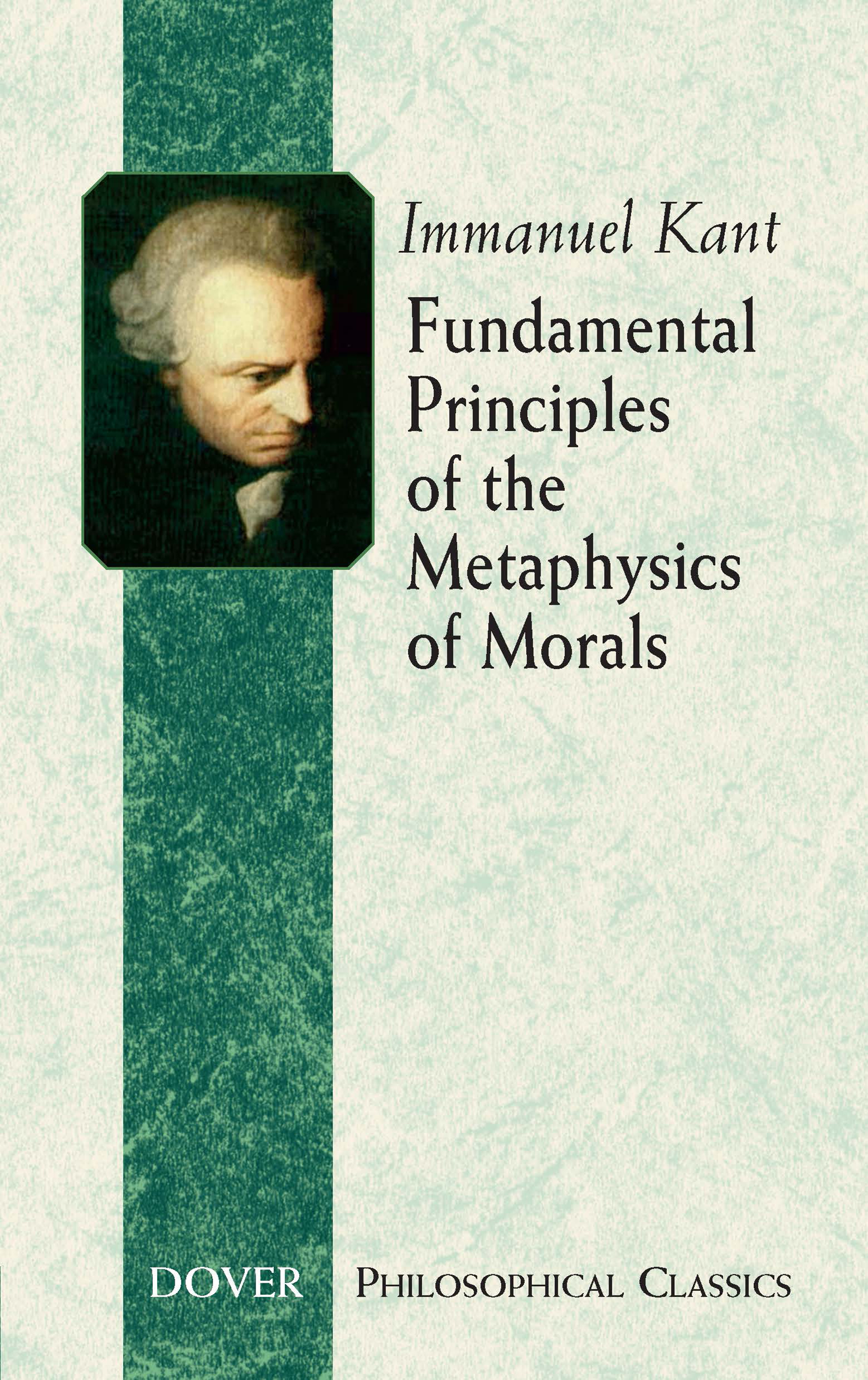
Fundamental Principles of the Metaphysics of Morals
Series: Dover Philosophical Classics
Kant turns questions of duty into a rigorous test of whether a maxim could guide everyone.
- Themes
- Moral permissibility and obligation, The Categorical Imperative, Ethical reasoning
Testing Moral Rules
Come here for
- A clear entry into the Categorical Imperative
- Ethical questions treated as logical problems
Expect
- Reasoning through what universal rules permit or require
- A contemplative argument about duty and moral action
Where it sits
How strongly BookFrontier reads the book as belonging to each subject.
Nearest books
Matched by our semantic model. Ordered by what its readers also loved.
 Tractatus Logico-PhilosophicusLudwig Wittgenstein40% subject match
 Phenomenology of SpiritG. W. F. Hegel44% subject matchShares Modern Philosophy
 Beyond Good and EvilFriedrich Nietzsche53% subject matchShares Philosophers & Their Ideas and Modern Philosophy
 The Birth of TragedyFriedrich Nietzsche, Michael Tanner42% subject match
 EthicsBenedict de Spinoza41% subject matchShares Ethics
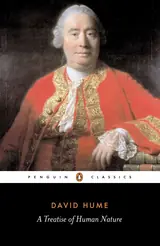 A Treatise of Human NatureDavid Hume48% subject matchShares Ethics and Philosophers & Their Ideas
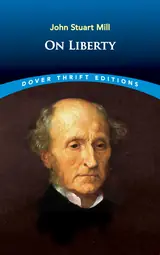 On LibertyJohn Stuart Mill48% subject match
For younger readers: Is It Still Cheating If I Don't Get Caught?
Start with three books, and this one can be the first.
Members get a new edition every morning: a route out from their books to essays, research and talks, with the reason for each.
Sign upAbout this book
What is morally permissible, and what is morally obligatory? These questions form the core of a vast amount of philosophical reasoning. In his Fundamental Principles of the Metaphysics of Morals, Immanuel Kant developed a basis for the answers.
In this landmark work, the German philosopher asks what sort of maxim might function as a guide to appropriate action under a given set of circumstances.
Continue reading
By universalizing such a maxim, would morally permissible behavior not become clear? Suppose that everyone were to behave in accordance with this maxim. If everyone followed the maxim in the same way without harm to civilized culture, then the behavior would be morally permissible. But what if no one followed the maxim? Would civilization thereby be at risk? In such a case, the behavior would be morally obligatory.
Kant's test, known as the Categorical Imperative, is a logical proof of the Golden Rule and the centerpiece of this work. It constitutes his best-known contribution to ethical discussion, and a familiarity with his reasoning in this book is essential to students of philosophy, religion, and history.
Publisher details
Publisher categories
- Ethics
- Authors
- Immanuel Kant
- Publisher
- Dover Publications
- Published
- May 6, 2005
- Format
- Paperback
- Reading lane
- Ethics