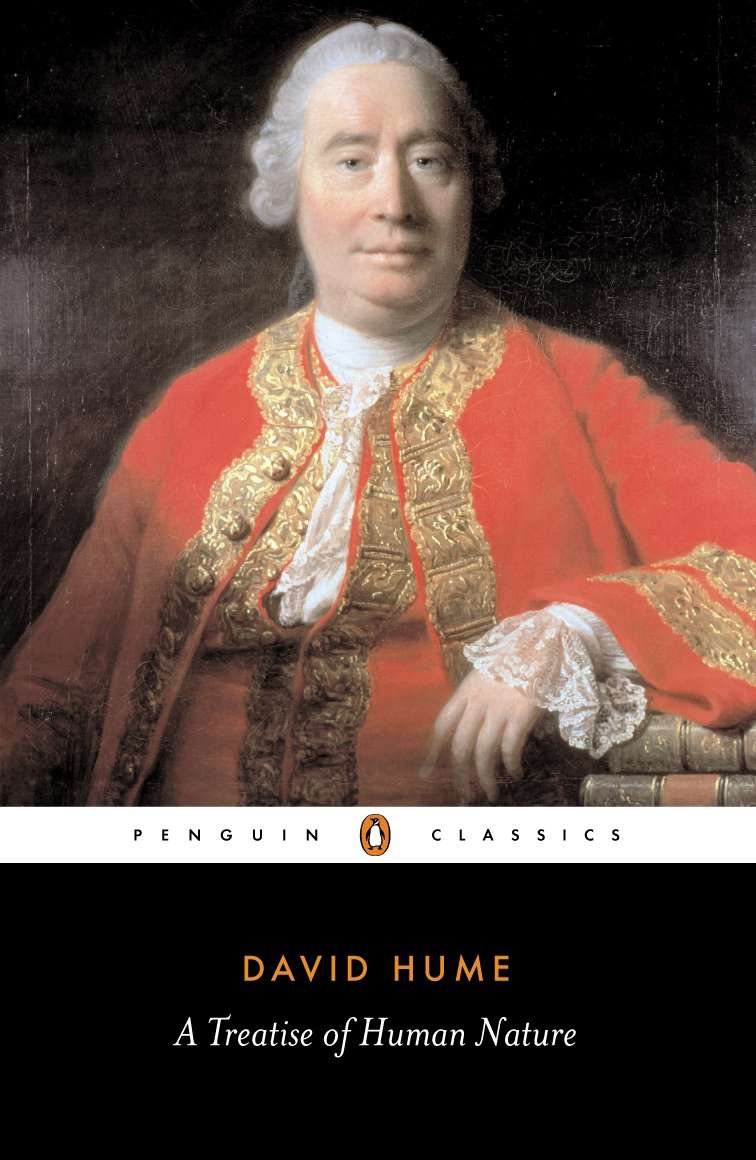
A Treatise of Human Nature
Being an Attempt to Introduce the Experimental Method of Reasoning into Mor
Hume brings observation to questions of human nature, challenging metaphysics with eloquent skepticism.
- Themes
- Empiricism, Human nature and emotion, Skepticism about metaphysics
Reason Under Review
Come here for
- Questions about identity, causation, freedom, virtue, and emotion
- A skeptical account of human nature shaped by sentiment and appetite
Expect
- Layered arguments on how we form ideas of identity and cause
- A contemplative inquiry into reason, passion, and what we can know
Where it sits
How strongly BookFrontier reads the book as belonging to each subject.
Nearest books
Matched by our semantic model. Ordered by what its readers also loved.
 Dialogues Concerning Natural ReligionDavid Hume57% subject match
 Phenomenology of SpiritG. W. F. Hegel56% subject match
 Fundamental Principles of the Metaphysics of MoralsImmanuel Kant48% subject matchShares Philosophers & Their Ideas and Ethics
 Being and TimeMartin Heidegger47% subject matchShares Philosophers & Their Ideas
 On CertaintyLudwig Wittgenstein52% subject matchShares What We Can Know
 The Origin Of Consciousness In The Breakdown Of The Bicameral MindJulian Jaynes46% subject match
 EthicsBenedict de Spinoza50% subject matchShares Ethics
 Prolegomena to Any Future Metaphysics: And the Letter to Marcus Herz, February 1772Immanuel Kant, James W. Ellington50% subject matchShares What We Can Know
Start with three books, and this one can be the first.
Members get a new edition every morning: a route out from their books to essays, research and talks, with the reason for each.
Sign upAbout this book
One of the most significant works of Western philosophy, Hume's Treatise was published in 1739-40, before he was thirty years old. A pinnacle of English empiricism, it is a comprehensive attempt to apply scientific methods of observation to a study of human nature, and a vigorous attack upon the principles of traditional metaphysical thought.
Continue reading
With masterly eloquence, Hume denies the immortality of the soul and the reality of space; considers the manner in which we form concepts of identity, cause and effect; and speculates upon the nature of freedom, virtue and emotion. Opposed both to metaphysics and to rationalism, Hume's philosophy of informed scepticism sees man not as a religious creation, nor as a machine, but as a creature dominated by sentiment, passion and appetite.
For more than seventy years, Penguin has been the leading publisher of classic literature in the English-speaking world. With more than 1,700 titles, Penguin Classics represents a global bookshelf of the best works throughout history and across genres and disciplines. Readers trust the series to provide authoritative texts enhanced by introductions and notes by distinguished scholars and contemporary authors, as well as up-to-date translations by award-winning translators.
Publisher details
Publisher categories
- Ethics
- Modern Philosophy
- Empiricism
- Authors
- David Hume
- Publisher
- Penguin Publishing Group
- Published
- February 4, 1986
- Format
- Print & ebook
- Reading lane
- Ethics