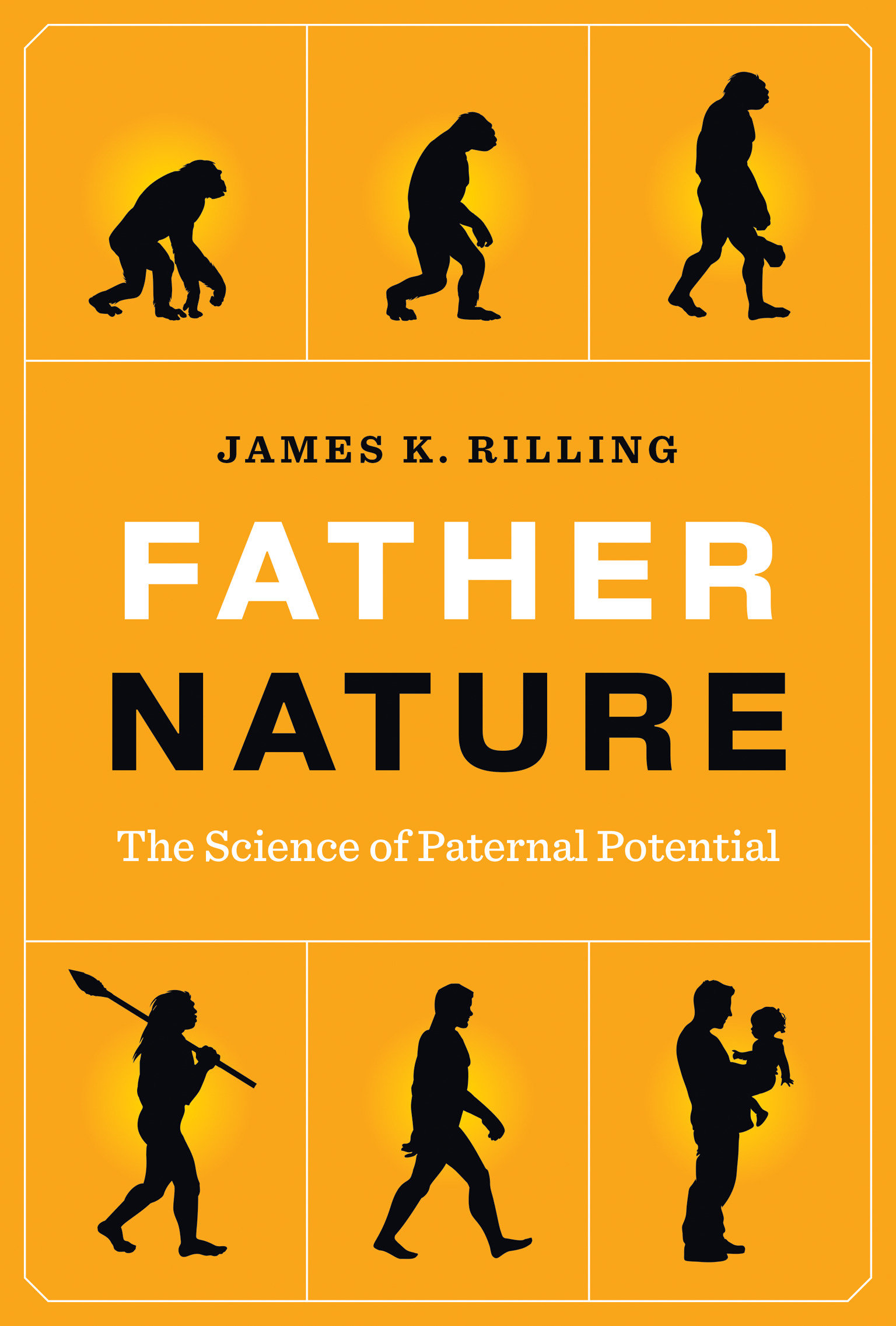
Father Nature
The Science of Paternal Potential
James Rilling examines paternal caregiving’s evolution, its effects on children, and why fathers’ involvement varies.
- Themes
- Evolution of paternal caregiving, Fathers’ impact on child development, Social factors in paternal involvement
Paternal Caregiving
Come here for
- How human males evolved the capacity for involved caregiving
- Why paternal involvement varies across and within societies
Expect
- How natural selection adapted male physiology for caregiving
- Social and policy changes that might increase positive paternal involvement
Where it sits
How strongly BookFrontier reads the book as belonging to each subject.
Nearest books
Matched by our semantic model. Ordered by what its readers also loved.
 The Origin of PoliticsNicholas Wade47% subject matchShares Evolution
 The Goodness ParadoxRichard Wrangham47% subject matchShares How We Evolved to Think
 First StepsJeremy DeSilva44% subject matchShares Evolution
 The Wonder of BoysMichael Gurian57% subject matchShares Fatherhood
 Hold On to Your KidsGordon Neufeld, Gabor Maté, MD56% subject match
 Hunt, Gather, ParentMichaeleen Doucleff56% subject match
 Bringing Up BoysJames C. Dobson56% subject matchShares Fatherhood
 The Intentional FatherTyson, Jon55% subject matchShares Fatherhood
For younger readers: ABCs of Love for Dad, Be Brave, Be Brave, Be Brave, Because Your Daddy Loves You Board Book
Start with three books, and this one can be the first.
Members get a new edition every morning: a route out from their books to essays, research and talks, with the reason for each.
Sign upAbout this book
How and why human males evolved the capacity to be highly involved caregivers—and why some are more involved than others.
We all know the importance of mothers. They are typically as paramount in the wild as they are in human relationships. But what about fathers? In most mammals, including our closest living primate relatives, fathers have little to no involvement in raising their offspring—and sometimes even kill the offspring sired by other fathers.
Continue reading
How, then, can we explain modern fathers having the capacity to be highly engaged parents? In Father Nature, James Rilling explores how humans have evolved to endow modern fathers with this potential and considers why this capacity evolved in humans.
Paternal caregiving is advantageous to children and, by extension, to society at large, yet variable both across and within human societies. Rilling considers how to explain this variability and what social and policy changes might be implemented to increase positive paternal involvement. Along the way, Father Nature also covers the impact fathers have on children’s development, the evolution of paternal caregiving, how natural selection adapted male physiology for caregiving, and finally, what lessons an expecting father can take away from the book, as well as what benefits they themselves get from raising children, including increased longevity and “younger” brains.
A beautifully written book by a father himself, Father Nature is a much-needed—and deeply rewarding—look at the science behind “good” paternal behavior in humans.
Publisher details
Publisher categories
- Fatherhood
- Biology
- Marriage & Family
- Authors
- James K. Rilling
- Publisher
- MIT Press
- Published
- October 1, 2024
- Format
- Print & ebook
- Reading lane
- Fatherhood