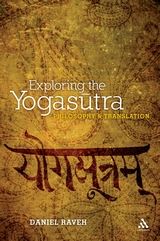
Exploring the Yogasutra
Philosophy and Translation
A philosophical reading of the Yogasutra explores its themes and the work of translating it.
Yogasutra Translation
Come here for
- Themes of freedom, self-identity, time, and transcendence
- A close reflection on translation across languages, cultures, and eras
Expect
- A new annotated translation and background on Samkhya terminology
- Engagement with Daya Krishna and Krishna Chandra Bhattacharyya
Where it sits
How strongly BookFrontier reads the book as belonging to each subject.
Nearest books
Matched by our semantic model. Ordered by what its readers also loved. Most of these share its genre: Hindu Thought.
 The Yoga Sutras of PatanjaliPatanjali68% subject matchAlso shares Hindu Sacred Writings
 The Path of the Yoga SutrasNicolai Bachman66% subject match
 The Yamas & NiyamasDeborah Adele58% subject match
Start with three books, and this one can be the first.
Members get a new edition every morning: a route out from their books to essays, research and talks, with the reason for each.
Sign upAbout this book
Patañjali's Yogasutra is an ancient canonic Indian text composed in Sanskrit in the 3rd or 4th century. Belonging to a very different cultural milieu, this multi-layered text is philosophical, psychological and practical in nature. Offering a philosophical reading of Patañjali's Yogasutra, this book discusses themes such as freedom, self-identity, time and transcendence, and translation - between languages, cultures and eras.
Continue reading
Drawing substantially upon contemporary Indian materials, it discusses for the first time classical yoga as reflected upon by Daya Krishna (1924-2007) with constant reference to Krishna Chandra Bhattacharyya's (1875-1949) studies in yoga philosophy. The genuine attempt on behalf of these two original thinkers to engage philosophically with Patañjala-yoga sets the tone of the textual exploration provided here. This book features a new annotated translation of the Yogasutra, and the author provides a useful background to the extensive Samkhya terminology employed by Patañjali. Daniel Raveh also offers a close reflection of the very act of translation, and the book concludes with suggestions for further reading and a glossary of central notions.
Publisher details
Publisher categories
- Philosophy
- Authors
- Daniel Raveh
- Publisher
- Continuum: 33 1/3
- Published
- May 10, 2012
- Format
- Print & ebook
- Reading lane
- Philosophy