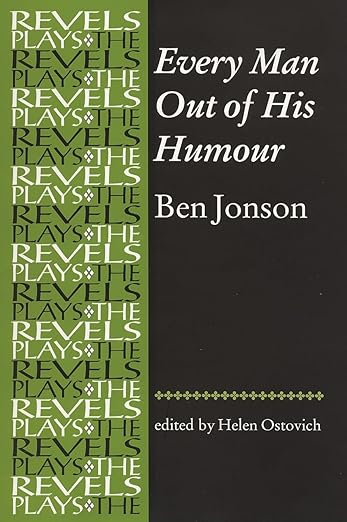
An introduction and annotations connect this play’s concerns with wealth and self-display to their historical context.
Wealth and Self-Display
Come here for
- Historical contexts and annotations on wealth and self-display
- Social relationships and colloquial language at the end of Elizabeth’s reign
Expect
- A play influential in the course of city comedy
- A single modern critical edition
Where it sits
How strongly BookFrontier reads the book as belonging to each subject.
Nearest books
Matched by our semantic model. Ordered by what its readers also loved. Most of these share its genre: British & Irish Plays.
 Antonio's RevengeW Reavley Gair54% subject match
 Philaster: Or Love Lies a-BleedingAndrew Gurr57% subject match
 The Cid, Cinna, the Theatrical IllusionPierre Corneille42% subject match
 The MalcontentGeorge Hunter56% subject match
 Five PlaysJean Anouilh44% subject match
 Bartholomew FairSuzanne Gossett67% subject match
 The Knight of the Burning PestleSheldon Zitner64% subject match
 Epicene, or The Silent WomanRichard Dutton63% subject match
For younger readers: Shakespeare's First Folio: All The Plays: A Children's Edition, Welcome To the Globe, Bard of Avon: The Story of William Shakespeare
Start with three books, and this one can be the first.
Members get a new edition every morning: a route out from their books to essays, research and talks, with the reason for each.
Sign upAbout this book
Despite its popularity when it first appeared in print in 1600, Every Man out of His Humour has never appeared as a single modern critical edition until now. The volume's introduction and annotations convey early modern obsessions with wealth and self-display by providing historical contexts and pointing out the continuity of those obsessions into modern life.
Continue reading
The play is of interest because of its influence on the course of city comedy and its wealth of information about social relationships and colloquial language at the end of Elizabeth's reign. Jonson's experiments in generating theatrical meaning continued throughout his career, but Every Man out of His Humour – with its youthful vigour and extraordinary visualizations of the urban capacity for self-deceit – is a text that enriches the understanding of all the plays that come after it.
Publisher details
Publisher categories
- 16th-Century Literary Criticism
- Television History & Criticism
- Authors
- Helen Ostovich
- Publisher
- Manchester University Press
- Published
- September 1, 2008
- Format
- Print & ebook
- Reading lane
- 16th-Century Literary Criticism