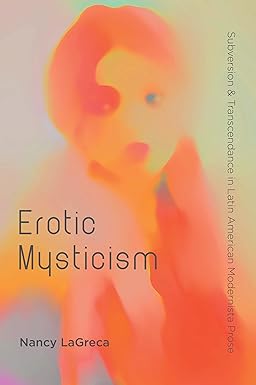
Erotic Mysticism
Subversion and Transcendence in Latin American Modernista Prose
Series: North Carolina Studies in the Romance Languages and Literatures
LaGreca traces how modernista prose turned sensual experience into mystical thought.
Modernista Erotic Mysticism
Come here for
- Analysis of essays and fiction by five Latin American modernistas
- Catholicism and positivism as competing accounts of desire
Expect
- A study of non-theistic erotic mysticism in modernista writing
- Connections among sexuality, gender, desire, acceptance, and art
Where it sits
How strongly BookFrontier reads the book as belonging to each subject.
Nearest books
Matched by our semantic model. Ordered by what its readers also loved. Most of these share its genres: Caribbean & Latin American Criticism and Hispanic American Lit Crit.
 Incomparable EmpiresGayle Rogers65% subject match
 Modernismo, Modernity and the Development of Spanish American LiteratureCathy L. Jrade65% subject match
 Things with a HistoryHéctor Hoyos64% subject match
 Gender and Nation in the Spanish Modernist NovelRoberta Johnson63% subject match
 The Twentieth-Century Spanish American NovelRaymond Leslie Williams62% subject match
 Latin American FictionPhillip Swanson60% subject match
 The Places of HistoryDoris Sommer60% subject match
 Sexual TextualitiesDavid William Foster59% subject matchAlso shares Queer Literary Criticism
For younger readers: Cazadora
Start with three books, and this one can be the first.
Members get a new edition every morning: a route out from their books to essays, research and talks, with the reason for each.
Sign upAbout this book
Modernismo, Latin America?s first homegrown literary movement, has garnered critical attention for its political and social import during a time of intense nation building and efforts to propel the region into modernity. LaGreca?s Erotic Mysticism explores two dominant discourses of the period, Catholicism and positivism, which sought to categorize and delimit the desires and behaviors of the ideal citizen.
Continue reading
These discourses, LaGreca argues, were powerful because each promised to allay the individual?s existential fears. Yet the coexistence of these two competing ideologies, one atheist and one religious, sowed doubt and unease in the modern intellectual who sought an alternative mode of understanding the human condition. From these uncertainties sprang a seductively liberating mode of writing: non-theistic erotic mysticism. Through analysis of key essays and fiction of Carlos Díaz Dufoo (Mexico), Manuel Díaz Rodríguez (Venezuela), José María Rivas Groot (Colombia), Aurora Cáceres (Peru), and Enrique Gómez Carrillo (Guatemala), LaGreca establishes erotic mysticism as a central philosophical substratum of the movement that anticipated the work of twentieth-century theorists such as William James and Georges Bataille. In modernista texts, the mystic?s ecstatic state is achieved through a sublime erotic or sensual experience. The noetic mystical state expands one?s consciousness, opening his or her mind to embrace diverse ways of loving and engaging. While science and religion sought to mold heteronormal and pragmatically useful citizens, modernista writers employed mystical discourse to transcend boundaries, opening readers? minds to alternative notions of sexuality, gender, desire, acceptance, and, ultimately, art.
Publisher details
Publisher categories
- Literary Criticism
- Hispanic American Lit Crit
- Caribbean & Latin American Criticism
- Authors
- Nancy LaGreca
- Publisher
- UNC Department of Romance Studies
- Published
- December 15, 2016
- Format
- Print & ebook
- Reading lane
- Literary Criticism