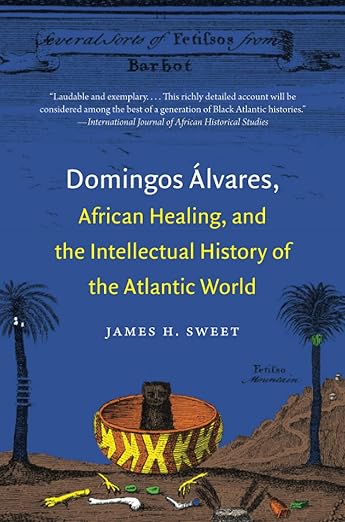
Domingos Álvares, African Healing, and the Intellectual History of the Atlantic World
Paperback – Illustrated, August 1, 2013
Where it sits
How strongly BookFrontier reads the book as belonging to each subject.
Nearest books
Matched by our semantic model. Ordered by what its readers also loved.
 Atlantic Africa and the Spanish Caribbean, 1570-1640David Wheat55% subject matchShares West African History
 The Age of Revolutions in Global Context, c. 1760-1840David Armitage, Sanjay Subrahmanyam54% subject match
 Discourse on ColonialismAimé Césaire45% subject match
 Two Princes of CalabarRandy J. Sparks57% subject matchShares West African History
 Of Water and the SpiritMalidoma Patrice Some56% subject match
 RitualMalidoma Patrice Some56% subject match
 Born in BlacknessHoward W. French55% subject matchShares West African History
 Marvels of MedicineYarà Pérez MarÃn54% subject match
For younger readers: Sugar Changed the World, Sundiata: Lion King of Mali, Encounter
Start with three books, and this one can be the first.
Members get a new edition every morning: a route out from their books to essays, research and talks, with the reason for each.
Sign upAbout this book
Between 1730 and 1750, powerful healer and vodun priest Domingos Álvares traversed the colonial Atlantic world like few Africans of his time — from Africa to South America to Europe — addressing the profound alienation of warfare, capitalism, and the African slave trade through the language of health and healing.
Continue reading
In Domingos Álvares, African Healing, and the Intellectual History of the Atlantic World, James H. Sweet finds dramatic means for unfolding a history of the eighteenth-century Atlantic world in which healing, religion, kinship, and political subversion were intimately connected.
Publisher details
Publisher categories
- Lives in History
- West African History
- South American History
- Authors
- James H. Sweet
- Publisher
- The University of North Carolina Press
- Published
- August 1, 2013
- Format
- Paperback
- Reading lane
- Lives in History