
Discourse Grammar of the Greek New Testament
A Practical Introduction for Teaching and Exegesis
Tyndale House Publishers, Inc. · Print & ebook · January 1, 2011
In Discourse Grammar of the Greek New Testament, Steve Runge, scholar in residence at Logos Bible Software, explores New Testament Greek grammatical conventions by focusing on the communication tasks they accomplish through discourse analysis.
We earn from qualifying purchases.
- Who it’s for
- A practical guide to Greek discourse grammar for teaching, exegesis, and classroom use.
- Genres
- Biblical Language Study, New Testament Interpretation, Pragmatics
- Published
- Tyndale House Publishers, Inc., January 1, 2011
Nearest books
Matched by what the books are about, then ordered by what their readers also loved. Most of these share its genre: Biblical Language Study.
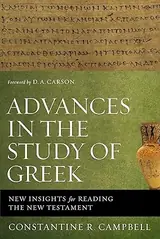 Advances in the Study of GreekConstantine R. Campbell, D. A. Carson61% match
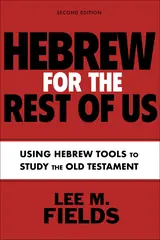 Hebrew for the Rest of US, Second EditionLee M. Fields51% match
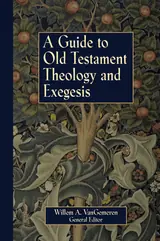 A Guide to Old Testament Theology and ExegesisWillem A. VanGemeren60% match
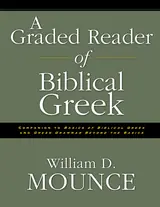 A Graded Reader of Biblical GreekWilliam D. Mounce67% match
 Introduction to Biblical InterpretationWilliam W. Klein, Craig L. Blomberg54% match
 Basics of Biblical Greek GrammarWilliam D. Mounce64% match
 A Summer Greek ReaderRichard J. Goodrich, David Diewert56% match
 The Poetics of Biblical NarrativeMeir Sternberg48% match
Start with three books, and this one can be the first.
Members get a new edition every morning: a route out from their books to essays, research and talks, with the reason for each.
Join the waitlistAbout this book
In Discourse Grammar of the Greek New Testament, Steve Runge, scholar in residence at Logos Bible Software, explores New Testament Greek grammatical conventions by focusing on the communication tasks they accomplish through discourse analysis. His focus on discourse analysis emphasizes the ways in which words are used in texts and contexts, and has less to do with the elements of speech and focuses, instead, on how humans cognitively process language.
Continue reading
In doing so, Runge is consciously building on the ground breaking work of James Barr entitled Semantics of Biblical Language which focused on lexical linguistics (an element of speech) rather than grammatical linguistics. Runge, in effect, picks up from where Barr left off and attempts to show the exegetical significance of discourse grammar for students of the New Testament. Runge's project is dynamic and multi-layered. One might even call it a "cross-linguistic" and "function-based" approach to discourse analysis that treat aspects of the language often examined in isolation, or only with lip-service. The result, according to Daniel Wallace, is that Runge "has made discourse analysis accessible, systematic, comprehensive, and meaningful to students of the New Testament". As such, Runge's Discourse Grammar of the Greek New Testament offers direct treatment of linguistic phenomena often truncated or all together mishandled by traditional grammars. Runge provides ample examples from the New Testament to illustrate his points, and does so with accompanying commentary. Everywhere he demonstrates that "if there is more than one way of accomplishing a discourse task, there is likely a meaning associated with each choice" (148). In some ways Runge's book seems like it may be a substitute for traditional grammars. It is not. It is, rather, a grammar that augments specific aspects of the language that traditional grammars often do not have, or choose not to have, room to highlight the importance of discourse analysis for sound exegesis.
Teaching Tool
A practical guide to Greek discourse grammar for teaching, exegesis, and classroom use.
Come here for
- teaching-friendly Greek discourse grammar
- classroom-ready exegesis and explanation
Expect
- straightforward, tool-like structure
- utility over ornament
Where it sits
| Biblical Language Study | 65% |
|---|---|
| Pragmatics | 25% |
| New Testament Interpretation | 18% |
Percentages are BookFrontier’s reading of the book.
Publisher categories
- Exegesis & Hermeneutics
- Biblical Language Study
- Authors
- Steven E. Runge, Daniel B. Wallace
- Publisher
- Tyndale House Publishers, Inc.
- Published
- January 1, 2011
- Format
- Print & ebook
- Reading lane
- Exegesis & Hermeneutics