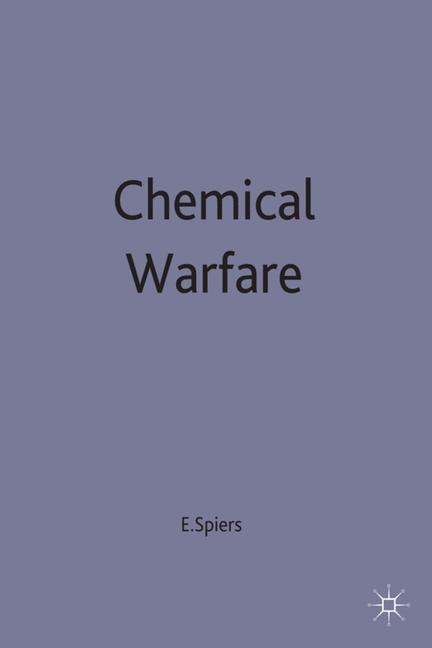
Chemical Warfare
Edward M. Spiers reassesses chemical-weapons deterrence, disarmament, and their place in strategic history.
Chemical Deterrence
Come here for
- Historical and strategic context for disarmament and deterrence policies
- Discussion of Geneva disarmament talks and verification difficulties
Expect
- An argument that nuclear parity weakens deterrence against chemical attack
- A case for modernizing the U.S. chemical-weapons stockpile
Where it sits
How strongly BookFrontier reads the book as belonging to each subject.
Nearest books
Matched by our semantic model. Ordered by what its readers also loved. Most of these share its genre: Chemical & Biological Warfare.
 Chemical WeaponryEdward M. Spiers75% subject matchAlso shares Arms Control & Security
 Chemical WarfareBrown, Fredric70% subject match
 Holding Their BreathMarion Girard Dorsey69% subject matchAlso shares Arms Control & Security
 A History of Chemical WarfareK. Coleman69% subject matchAlso shares Arms Control & Security
 War of NervesJonathan Tucker68% subject matchAlso shares Arms Control & Security
 Chemical-Biological DefenseAlbert J. Mauroni68% subject match
 The Poisonous CloudL. F. Haber65% subject match
 A Higher Form of KillingRobert Harris, Jeremy Paxman61% subject match
For younger readers: What Was the Bombing of Hiroshima?, What Was World War I?
Start with three books, and this one can be the first.
Members get a new edition every morning: a route out from their books to essays, research and talks, with the reason for each.
Sign upAbout this book
Ever since its employment in the First World War, chemical warfare has always aroused controversy. Governments have responded by pursuing the policies of disarmament and deterrence in the hope of avoiding its recurrence. However, despite the signing of the Geneva Protocol in 1925 which banned the use of poison gas, chemical weapons have been used in subsequent conflicts and most recently in the Gulf War between Iraq and Iran.
Continue reading
In this work the policies of disarmament and deterrence will be reassessed within a broad historical and strategic context. It will be argued that poison gas could still be used in a modern European conflict; that the Soviet forces are the best equipped to operate in a contaminated environment; and that weaknesses persist in NATO's anti-chemical defences and in her deterrent. It will be emphasised, too, that the Geneva disarmament talks, which have made some progress in recent years, still face formidable difficulties over the issues of verification and compliance. Above all, it will be claimed that the onset of nuclear parity between the superpowers has eroded the credibility of a deterrent to chemical attack based upon the threat of nuclear release. Accordingly, this book will contend that the United States should modernize her stockpile of chemical weapons to bolster the Western deterrent and to provide more leverage for the negotiations in Geneva.
Publisher details
Publisher categories
- Politics & Government
- Clinical Psychology
- Authors
- Edward M. Spiers
- Publisher
- Palgrave Macmillan
- Published
- February 12, 1986
- Format
- Hardcover
- Reading lane
- Politics & Government