
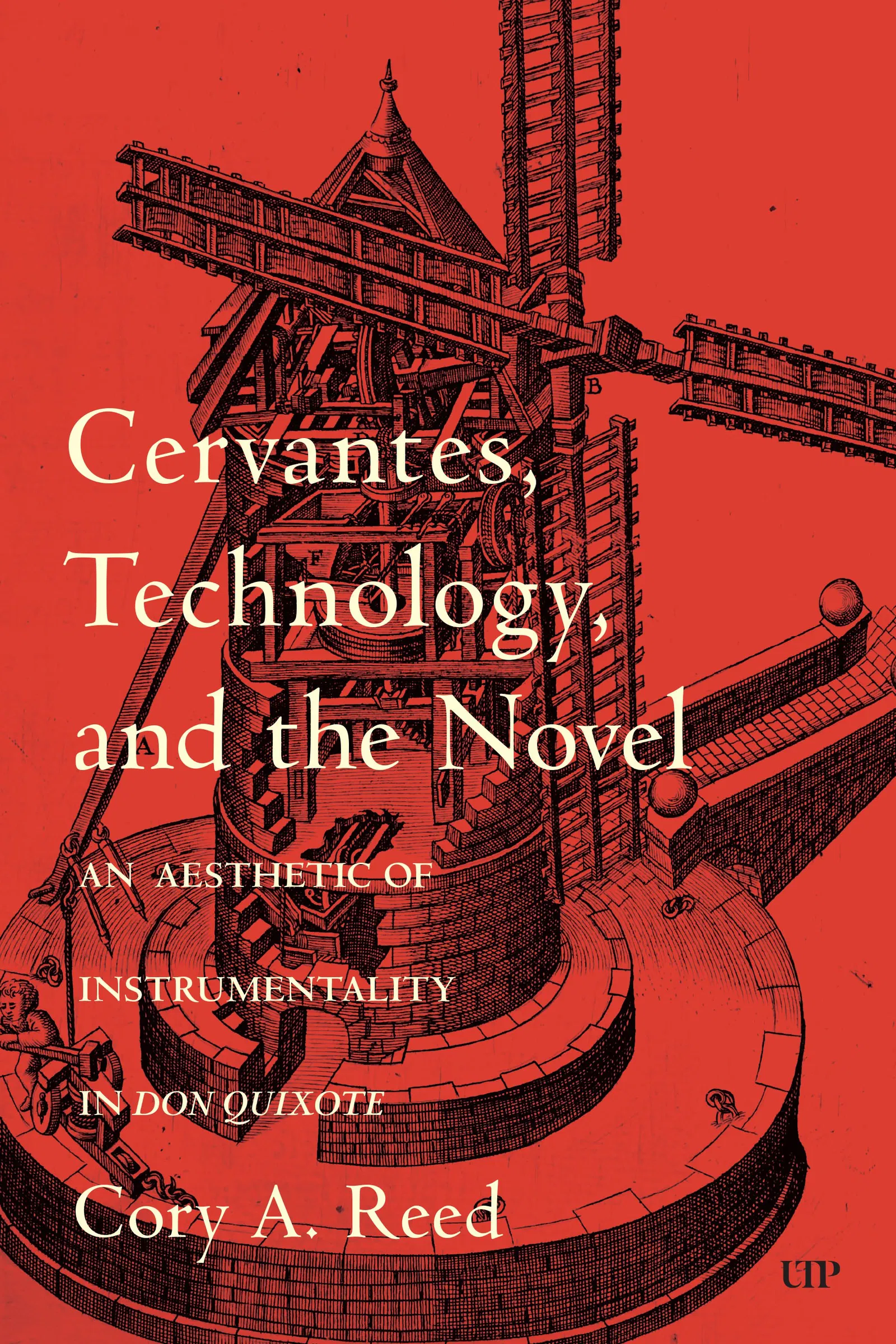
Book
Cervantes, Technology, and the Novel
An Aesthetic of Instrumentality in Don Quixote
Cory A. Reed
University of Toronto Press · Print & ebook · December 15, 2025
Reading lane: Iberian Lit Crit
This book examines the technological and scientific imagery in Cervantes’s novel, Don Quixote , and the ways in which the Scientific Revolution participated in the author’s examination of early modern European culture during a time of crisis and change.
At a Glance
Who It's For
Book Details
- Authors
- Cory A. Reed
- Publisher
- University of Toronto Press
- Published
- December 15, 2025
- Format
- Print & ebook
- Theme
- Iberian Lit Crit · 17th-Century Literary Criticism
- Reading lane
- Iberian Lit Crit
Affinity
Publisher Categories
Iberian Lit Crit
Renaissance Literary Criticism
17th-Century Literary Criticism
History of Science
About This Book
This book examines the technological and scientific imagery in Cervantes’s novel, Don Quixote , and the ways in which the Scientific Revolution participated in the author’s examination of early modern European culture during a time of crisis and change. Cervantes’s representation of technology not only documents the cultural dynamics of the transition between medieval scholasticism and early modern empiricism in Spain but also celebrates the agency of the individual to effec...
Read full description
Similar Books

Cervantes, the Novel, and the New World
Diana de Armas Wilson · Oxford University Press
Affinity signal
Iberian Lit Crit
Caribbean & Latin American Criticism

Tilting Cervantes
Bruce R. Burningham · Vanderbilt University Press
Affinity signal
Iberian Lit Crit
Caribbean & Latin American Criticism

Adventures in Paradox
Charles D. Presberg · Penn State University Press
Affinity signal
Iberian Lit Crit
17th-Century Literary Criticism

The Gallant Spaniard
Miguel de Cervantes, Philip Krummrich · Vanderbilt University Press
Affinity signal
Spanish & Portuguese Plays
Iberian Lit Crit

The Man Who Invented Fiction
William Egginton · Bloomsbury USA
Affinity signal
Writers' Lives

Cervantes' Architectures
Frederick A. de Armas · University of Toronto Press
Affinity signal
Renaissance Architecture
17th-Century Literary Criticism

Contradictory Subjects
George Mariscal · Cornell University Press
Affinity signal
Iberian Lit Crit
Caribbean & Latin American Criticism

Don Quixote
Miguel de Cervantes Saavedra · Start Publishing LLC
Affinity signal
Action & Adventure
Hispanic & Latino Fiction