
Atoms and Ashes
A Global History of Nuclear Disasters
A readable global history that keeps the scale large and the prose plain.
Clear Nuclear History
Come here for
- clear historical framing
- practical, accessible explanation of nuclear disasters
Expect
- military and political context
- a sustained, straightforward narrative
Where it sits
How strongly BookFrontier reads the book as belonging to each subject.
Nearest books
Matched by our semantic model. Ordered by what its readers also loved.
 Nuclear FollySerhii Plokhy67% subject match
 The General vs. the PresidentH. W. Brands51% subject match
 NagasakiSusan Southard66% subject match
 Command and ControlEric Schlosser69% subject match
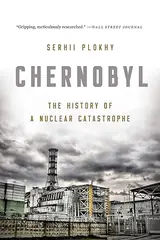 ChernobylSerhii Plokhy75% subject matchShares Technology
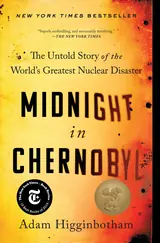 Midnight in ChernobylAdam Higginbotham75% subject matchShares Nuclear Physics
For younger readers: Bomb, Never Silent, What Was the Bombing of Hiroshima?
Start with three books, and this one can be the first.
Members get a new edition every morning: a route out from their books to essays, research and talks, with the reason for each.
Sign upAbout this book
A chilling account of more than half a century of nuclear catastrophes, by the author of the “definitive” (Economist) Cold War history, Nuclear Folly.
Almost 145,000 Americans fled their homes in and around Harrisburg, Pennsylvania, in late March 1979, hoping to save themselves from an invisible enemy: radiation.
Continue reading
The reactor at the nearby Three Mile Island nuclear power plant had gone into partial meltdown, and scientists feared an explosion that could spread radiation throughout the eastern United States. Thankfully, the explosion never took place—but the accident left deep scars in the American psyche, all but ending the nation’s love affair with nuclear power.
In Atoms and Ashes, Serhii Plokhy recounts the dramatic history of Three Mile Island and five more accidents that that have dogged the nuclear industry in its military and civil incarnations: the disastrous fallout caused by the testing of the hydrogen bomb in the Bikini Atoll in 1954; the Kyshtym nuclear disaster in the USSR, which polluted a good part of the Urals; the Windscale fire, the worst nuclear accident in the UK’s history; back to the USSR with Chernobyl, the result of a flawed reactor design leading to the exodus of 350,000 people; and, most recently, Fukushima in Japan, triggered by an earthquake and a tsunami, a disaster on a par with Chernobyl and whose clean-up will not take place in our lifetime.
Through the stories of these six terrifying incidents, Plokhy explores the risks of nuclear power, both for military and peaceful purposes, while offering a vivid account of how individuals and governments make decisions under extraordinary circumstances. Today, there are 440 nuclear reactors operating throughout the world, with nuclear power providing 10 percent of global electricity. Yet as the world seeks to reduce carbon emissions to combat climate change, the question arises: Just how safe is nuclear energy?
Publisher details
Publisher categories
- Nuclear Warfare
- 20th-Century History
- Energy Policy
- Authors
- Serhii Plokhy
- Publisher
- WW Norton
- Published
- May 17, 2022
- Format
- Print & ebook
- Reading lane
- Nuclear Warfare