
Adventures in Paradox
Don Quixote and the Western Tradition
Charles D. Presberg traces how Don Quixote imitates and transforms traditions of paradoxical discourse.
Don Quixote’s Paradoxes
Come here for
- A detailed reading of paradox in portions of Don Quixote
- Its links to classical, medieval, and Renaissance paradoxical discourse
Expect
- Discussion of serious and comic purpose, history, fiction, and poetic truth
- Attention to Fernando de Rojas, Pero Mexía, and Antonio de Guevara
Where it sits
How strongly BookFrontier reads the book as belonging to each subject.
Nearest books
Matched by our semantic model. Ordered by what its readers also loved. Most of these share its genres: Iberian Lit Crit and Renaissance Literary Criticism.
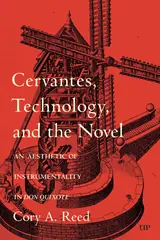 Cervantes, Technology, and the NovelCory A. Reed63% subject matchAlso shares Hispanic American Lit Crit
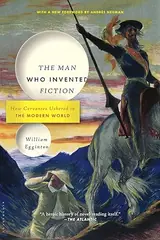 The Man Who Invented FictionWilliam Egginton61% subject match
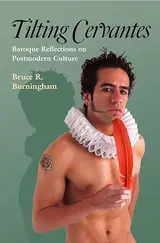 Tilting CervantesBruce R. Burningham61% subject matchAlso shares Hispanic American Lit Crit
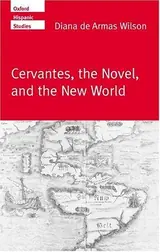 Cervantes, the Novel, and the New WorldDiana de Armas Wilson61% subject matchAlso shares Hispanic American Lit Crit
 Writing in the MarginPaul Julian Smith60% subject match
 Don QuixoteMiguel de Cervantes59% subject match
 Lectures On Don QuixoteVladimir Nabokov58% subject match
 Contradictory SubjectsGeorge Mariscal56% subject match
Start with three books, and this one can be the first.
Members get a new edition every morning: a route out from their books to essays, research and talks, with the reason for each.
Sign upAbout this book
Cervantes’s Don Quixote confronts us with a series of enigmas that, over the centuries, have divided even its most expert readers: Does the text pursue a serious or comic purpose? Does it promote the truth of history and the untruth of fiction, or the truth of poetry and the fictiveness of truth itself?
Continue reading
In a book that will revise the way we read and debate Don Quixote , Charles D. Presberg discusses the trope of paradox as a governing rhetorical strategy in this most canonical of Spanish literary texts. To situate Cervantes’s masterpiece within the centuries-long praxis of paradoxical discourse in the West, Presberg surveys its tradition in Classical Antiquity, the Middle Ages, and the European Renaissance. He outlines the development of paradoxy in the Spanish Renaissance, centering on works by Fernando de Rojas, Pero Mexía, and Antonio de Guevara. In his detailed reading of portions of Don Quixote , Presberg shows how Cervantes’s work enlarges the tradition of paradoxical discourse by imitating as well as transforming fictional and nonfictional models. He concludes that Cervantes’s seriocomic "system" of paradoxy jointly parodies, celebrates, and urges us to ponder the agency of discourse in the continued refashioning of knowledge, history, culture, and personal identity. This engaging book will be welcomed by literary scholars, Hispanisists, historians, and students of the history of rhetoric and poetics. Read more
Publisher details
Publisher categories
- European Lit Crit
- Gothic & Romance Lit Crit
- Iberian Lit Crit
- Authors
- Charles D. Presberg
- Publisher
- Penn State University Press
- Published
- October 15, 2003
- Format
- Print & ebook
- Reading lane
- European Lit Crit