
Book
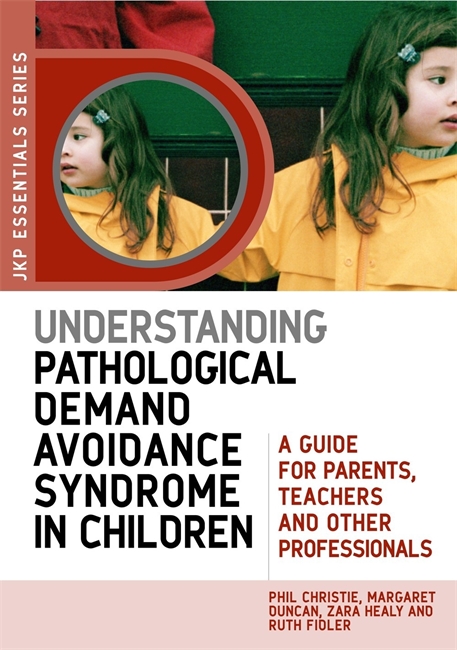
Understanding Pathological Demand Avoidance Syndrome in Children
A Guide for Parents, Teachers and Other Professionals
Margaret Duncan, Zara Healy, Ruth Fidler
Jessica Kingsley Publishers · Print & ebook · September 15, 2011
Reading lane: Special Education
Pathological Demand Avoidance Syndrome (PDA) is a developmental disorder that is being increasingly recognised as part of the autism spectrum.
At a Glance
Who It's For
Book Details
- Authors
- Margaret Duncan, Zara Healy, Ruth Fidler
- Publisher
- Jessica Kingsley Publishers
- Published
- September 15, 2011
- Format
- Print & ebook
- Theme
- Special Education
- Reading lane
- Special Education
Affinity
Publisher Categories
Special Education
About This Book
Pathological Demand Avoidance Syndrome (PDA) is a developmental disorder that is being increasingly recognised as part of the autism spectrum. The main characteristic is a continued resistance to the ordinary demands of life through strategies of social manipulation, which originates from an anxiety-driven need to be in control. This straightforward guide is written collaboratively by professionals and parents to give a complete overview of PDA. Starting with an exploration...
Read full description
Similar Books
Adolescents on the Autism Spectrum
Chantal Sicile-Kira, Temple Grandin · Penguin Publishing Group
Affinity signal
Autism Spectrum
Family & Relationships
Autism and Asperger Syndrome in Adults
Luke Beardon · John Murray Press
Affinity signal
Autism Spectrum

Raising a Sensory Smart Child
Lindsey Biel, Nancy Peske · Penguin Books USA
Affinity signal
Family & Relationships
Parenting Special Needs
Disconnected Kids, Third Edition
Dr. Robert Melillo · Penguin Publishing Group
Affinity signal
ADHD
Children's Health

Looking After Your Autistic Self
Niamh Garvey · Jessica Kingsley Publishers
Affinity signal
Autism Spectrum
Managing Emotions

Autism and Girls
Tony Attwood, Temple Grandin · Future Horizons
Affinity signal
Parenting Special Needs