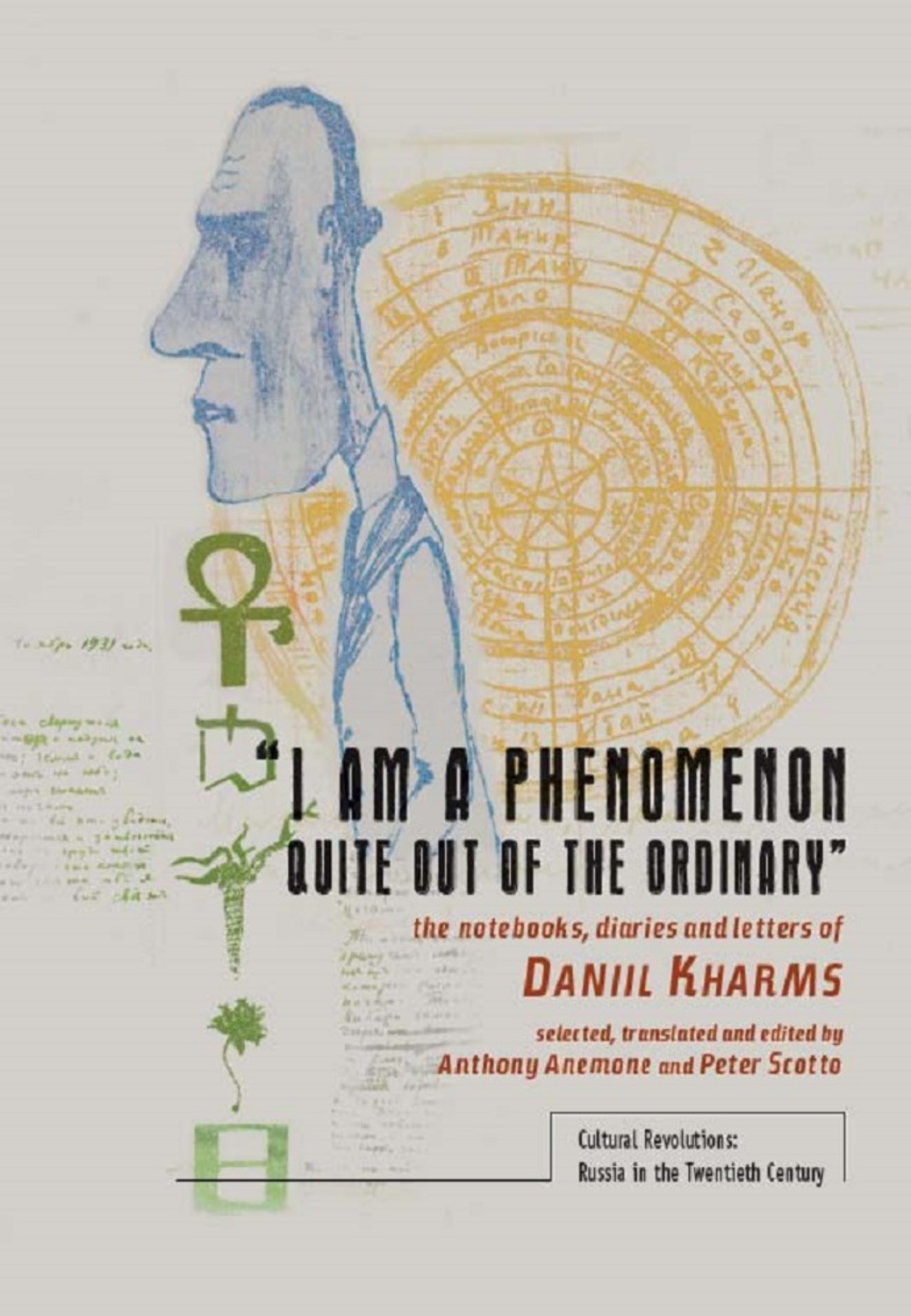
“i Am a Phenomenon Quite Out of the Ordinary”
The Notebooks, Diaries and Letters of Daniil Kharms
Academic Studies Press · Print & ebook · September 15, 2013
In addition to his numerous works in prose and poetry for both children and adults, Daniil Kharms (1905-42), one of the founders of Russia’s “lost literature of the absurd,” wrote notebooks and a diary for most of his adult life.
We earn from qualifying purchases.
- Who it’s for
- Kharms’s notebooks and diary trace the daily life and struggles of an avant-garde writer.
- Genres
- Diaries & Journals Collection, Russian & Former Soviet Collections, Writers' Lives
- Published
- Academic Studies Press, September 15, 2013
Nearest books
Matched by what the books are about, then ordered by what their readers also loved.
 Fifty-two StoriesAnton Chekhov, Richard Pevear50% matchShares Russian & Former Soviet Collections
 RetrogradeOsamu Dazai50% match
 Voices of Jewish-russian LiteratureMaxim D. Shrayer50% matchShares Russian & Former Soviet Collections
 Letters to MilenaFranz Kafka50% matchShares Writers' Lives
For younger readers: Classic Tales and Fables for Children, I Wish I Didn't Have to Tell You This: a Graphic Memoir, Emil and Karl
Start with three books, and this one can be the first.
Members get a new edition every morning: a route out from their books to essays, research and talks, with the reason for each.
Join the waitlistAbout this book
In addition to his numerous works in prose and poetry for both children and adults, Daniil Kharms (1905-42), one of the founders of Russia’s “lost literature of the absurd,” wrote notebooks and a diary for most of his adult life. Published for the first time in recent years in Russian, these notebooks provide an intimate look at the daily life and struggles of one of the central figures of the literary avant-garde in Post-Revolutionary Leningrad.
Continue reading
While Kharms’s stories have been translated and published in English, these diaries represents an invaluable source for English-language readers who, having already discovered Kharms in translation, desire to learn about the life and times of an avant-garde writer in the first decades of Soviet power.
Leningrad Notebooks
Kharms’s notebooks and diary trace the daily life and struggles of an avant-garde writer.
Come here for
- Notebooks and a diary
- A writer’s daily life and struggles
Expect
- An intimate look at literary life in Post-Revolutionary Leningrad
- A view of an avant-garde writer in the first decades of Soviet power
Where it sits
| Writers' Lives | 83% |
|---|---|
| Russian & Former Soviet Collections | 60% |
| Diaries & Journals Collection | 56% |
Percentages are BookFrontier’s reading of the book.
Publisher categories
- Writers' Lives
- Diaries & Journals Collection
- East European Literary Criticism
- Russian & Soviet Poetry
- Authors
- Daniil Kharms, Antony Anemone, Peter Scotto
- Publisher
- Academic Studies Press
- Published
- September 15, 2013
- Format
- Print & ebook
- Reading lane
- Writers' Lives