BookFrontier
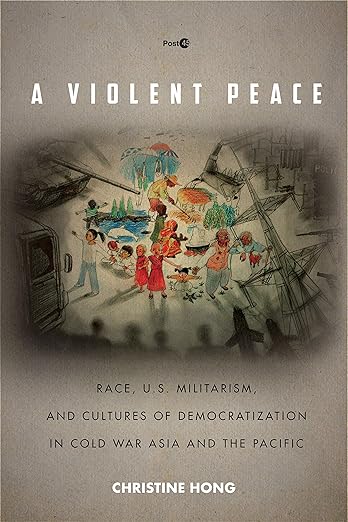
A Violent Peace by Christine Hong
Book

A Violent Peace

Race, U.s. Militarism, and Cultures of Democratization in Cold War Asia and the Pacific

Stanford University Press · 2020-08-11

A Violent Peace: Race, U.s.

Buy on Amazon

Browse Curated Lists

Disclosure: Some outbound links are affiliate links. If you buy through them, we may earn a commission. It doesn't affect which books we include. Learn more in our disclosure policy.

Who It's For

  • Good for readers who enjoy History / Military / Vietnam War
  • Good for readers interested in military
  • Good for fans of History

What You Get

  • Themes: Military.
  • Reading lane: Military and International Relations.
  • Publisher: Stanford University Press.

Categories

What we read

  • History / Military / Vietnam War

    78%
  • Political Science / International Relations / Diplomacy

    76%
  • History / Modern / 20th Century

    75%

About This Book

A Violent Peace offers a radical account of the United States' transformation into a total-war state. As the Cold War turned hot in the Pacific, antifascist critique disclosed a continuity between U.S. police actions in Asia and a rising police state at home. Writers including James Baldwin, Ralph Ellison, and W.E.B. Du Bois discerned in domestic strategies to quell racial protests the same counterintelligence logic structuring America's devastating wars in Asia. Examining U...

Read full description

A Violent Peace offers a radical account of the United States' transformation into a total-war state. As the Cold War turned hot in the Pacific, antifascist critique disclosed a continuity between U.S. police actions in Asia and a rising police state at home. Writers including James Baldwin, Ralph Ellison, and W.E.B. Du Bois discerned in domestic strategies to quell racial protests the same counterintelligence logic structuring America's devastating wars in Asia. Examining U.S. militarism's centrality to the Cold War cultural imagination, Christine Hong assembles a transpacific archive—placing war writings, visual renderings of the American concentration camp, Japanese accounts of the atomic bombing of Hiroshima, black radical human rights petitions, Korean War–era G.I. photographs, Filipino novels on guerrilla resistance, and Marshallese critiques of U.S. human radiation experiments alongside government documents. By making visible the way the U.S. war machine waged informal wars abroad and at home, this archive reveals how the so-called Pax Americana laid the grounds for solidarity—imagining collective futures beyond the stranglehold of U.S. militarism.

Similar Books