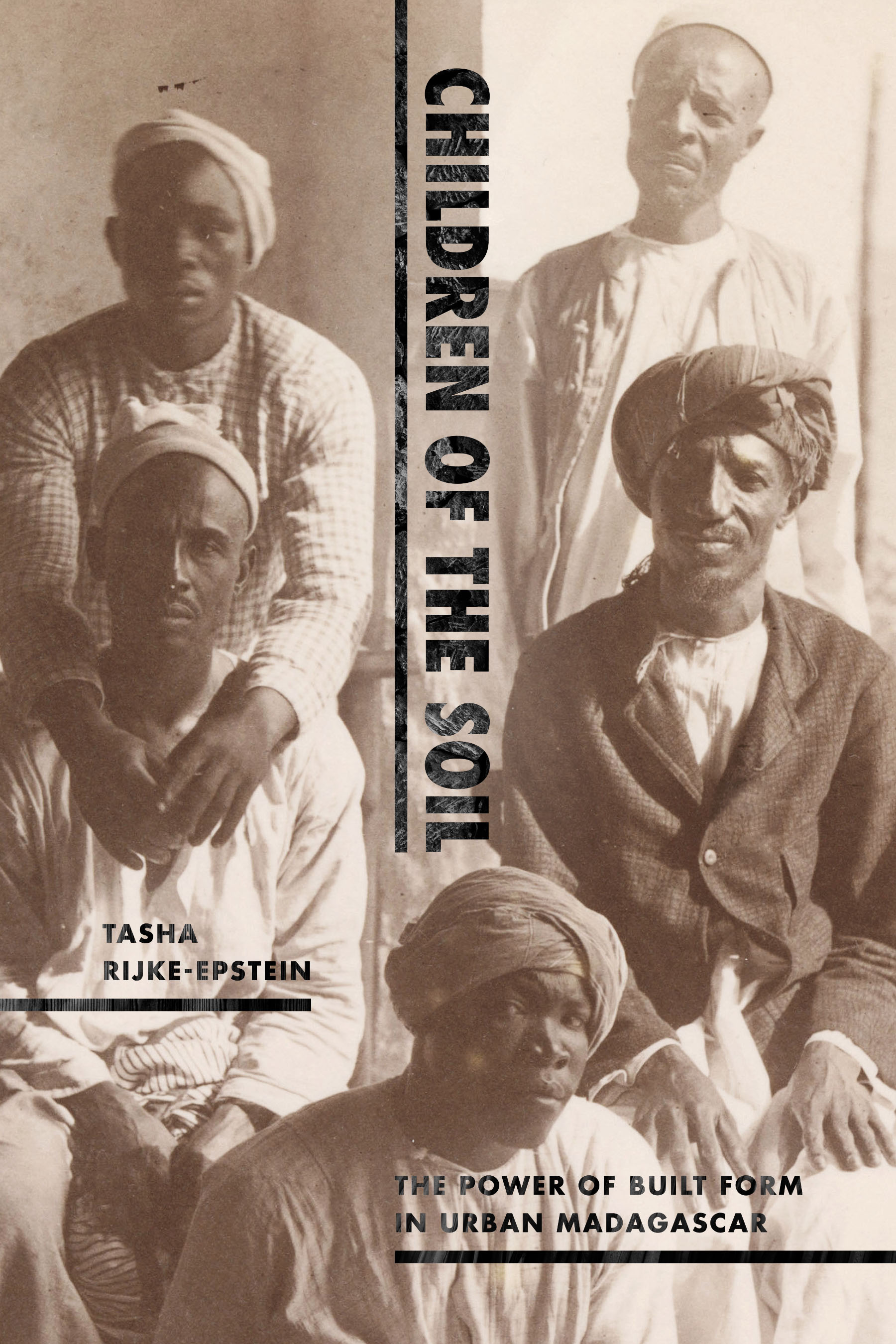
Children of the Soil
The Power of Built Form in Urban Madagascar
Duke University Press · Print & ebook · October 31, 2023
In Children of the Soil, Tasha Rijke-Epstein offers an urban history of the port city of Mahajanga, Madagascar, before, during, and after colonization.
We earn from qualifying purchases.
- Who it’s for
- Mahajanga’s architecture reveals how residents contested power and claimed urban belonging across two centuries.
- Genres
- African History, Urban & Land Use Planning, Colonialism & Its Aftermath
- Published
- Duke University Press, October 31, 2023
Nearest books
Matched by what the books are about, then ordered by what their readers also loved.
 Tragedy of MadagascarNathaniel Adams55% matchShares African History and Colonialism & Its Aftermath
 Empire UnseenMélanie Lamotte53% matchShares Colonialism & Its Aftermath
 The Gardens of MarsJohn Gimlette51% matchShares African History
 The City ElectricMichael Degani48% match
 Monrovia ModernDanny Hoffman48% match
 Decolonizing Maasai HistoryMeitamei Olol Olol Dapash, Mary Poole47% matchShares Colonialism & Its Aftermath
 Seattle From the MarginsMegan Asaka47% match
For younger readers: Taste of Salt, Manhattan, Harlem Grown
Start with three books, and this one can be the first.
Members get a new edition every morning: a route out from their books to essays, research and talks, with the reason for each.
Join the waitlistAbout this book
In Children of the Soil, Tasha Rijke-Epstein offers an urban history of the port city of Mahajanga, Madagascar, before, during, and after colonization. Drawing on archival and ethnographic evidence, she weaves together the lives and afterlives of built spaces to show how city residents negotiated imperial encroachment, colonial rule, and global racial capitalism over two centuries.
Continue reading
From Mahajanga’s hilltop palace to the alluvial depths of its cesspools, the city’s spaces were domains for ideological debates between rulers and subjects, French colonizers and indigenous Malagasy peoples, and Comorian migrants and Indian traders. In these spaces, Mahajanga’s residents expressed competing moral theories about power over people and the land. The built world was also where varying populations reckoned with human, ancestral, and ecological pasts and laid present and future claims to urban belonging. Migrants from nearby Comoros harnessed built forms as anticipatory devices through which they sought to build their presence into the landscape and transform themselves from outsiders into "children of the soil" (zanatany). In tracing the centrality of Mahajanga’s architecture to everyday life, Rijke-Epstein offers new ways to understand the relationships between the material world, the more-than-human realm, and the making of urban life.
Mahajanga’s Built World
Mahajanga’s architecture reveals how residents contested power and claimed urban belonging across two centuries.
Come here for
- A port city’s hilltop palace and cesspools
- Competing claims over people, land, and urban belonging
Expect
- An urban history before, during, and after colonization
- Attention to architecture, ancestry, and ecological pasts
Where it sits
| Colonialism & Its Aftermath | 49% |
|---|---|
| African History | 45% |
| Urban & Land Use Planning | 28% |
Percentages are BookFrontier’s reading of the book.
Publisher categories
- Architecture
- East African History
- African Studies
- Authors
- Tasha Rijke-Epstein
- Publisher
- Duke University Press
- Published
- October 31, 2023
- Format
- Print & ebook
- Reading lane
- Architecture