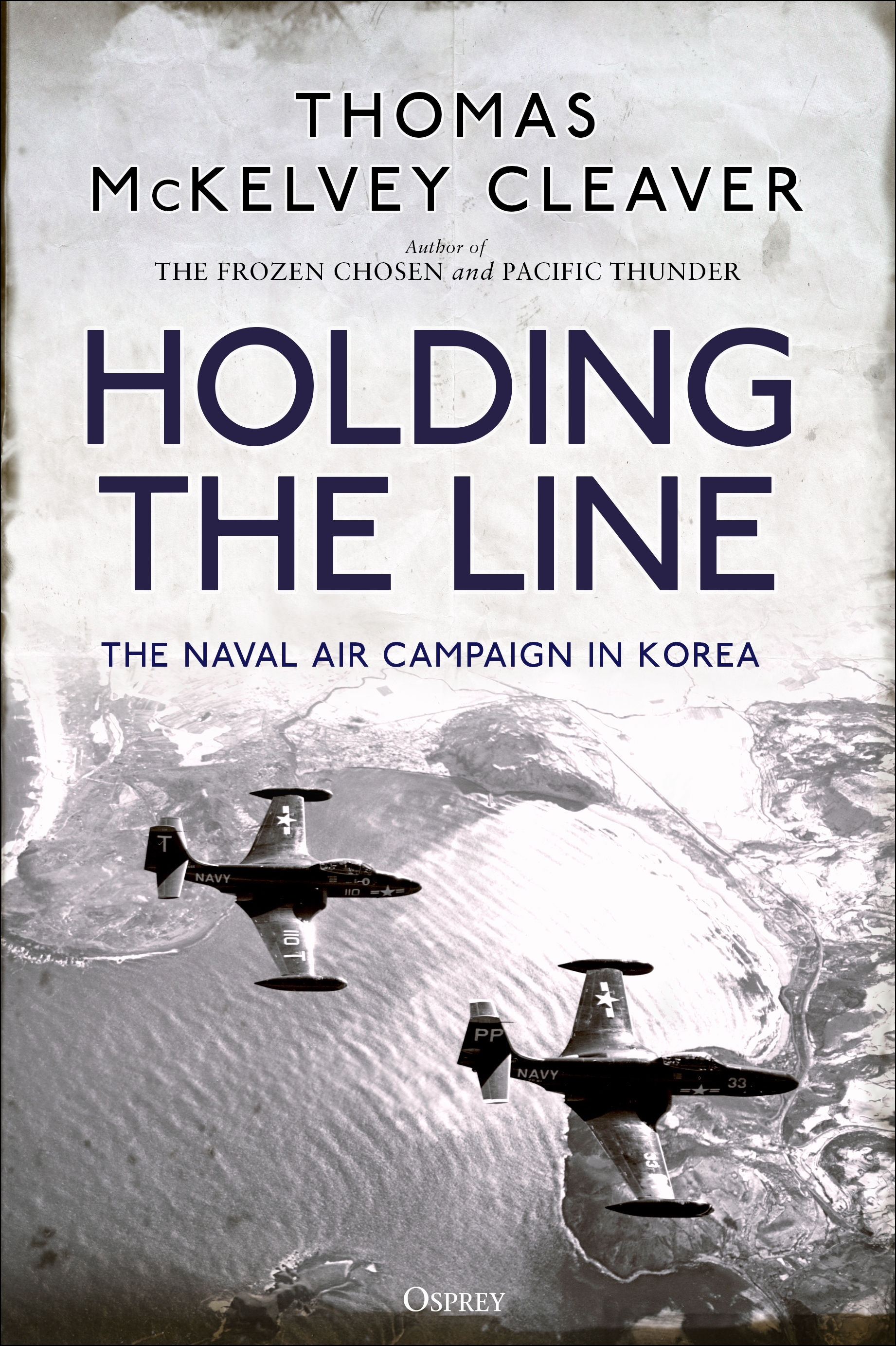
Holding the Line
The Naval Air Campaign in Korea
Osprey · Print & ebook · March 5, 2019
Naval and air power was crucial to the United Nations' success in the Korean War, as it sought to negate the overwhelming Chinese advantage in manpower.
We earn from qualifying purchases.
- Genres
- Korean War History, Naval History, Military Aviation
- Published
- Osprey, March 5, 2019
Nearest books
Matched by what the books are about, then ordered by what their readers also loved.
 U.s. Navy Attack Aircraft, 1920-2020Norman Friedman PhD., Norman Friedman53% matchShares Naval History and Military Aviation
 TorchVincent O'Hara, Vincent P. O'Hara42% matchShares Naval History
 MidwayMark Stille, Mark E. Stille48% matchShares Naval History
 81 Days Below ZeroBrian Murphy42% matchShares Military Aviation
 The LineWilliam T. Bowers65% matchShares Korean War History
 American Airpower Strategy in Korea, 1950-1953Conrad C. Crane63% matchShares Korean War History and Military Aviation
 Passing the TestWilliam T. Bowers, John T. Greenwood62% matchShares Korean War History
 F4u Corsair Units of the Korean WarWarren Thompson62% matchShares Korean War History, Naval History and Military Aviation
For younger readers: I Remember Korea, So Far From the Bamboo Grove, Men of the 65th
Start with three books, and this one can be the first.
Members get a new edition every morning: a route out from their books to essays, research and talks, with the reason for each.
Join the waitlistAbout this book
Naval and air power was crucial to the United Nations' success in the Korean War, as it sought to negate the overwhelming Chinese advantage in manpower. In what became known as the 'long hard slog', naval aviators sought to slow and cut off communist forces and support troops on the ground.
Continue reading
USS Leyte (CV-32) operated off Korea in the Sea of Japan for a record 93 continuous days to support the Marines in their epic retreat out of North Korea, and was crucial in the battles of the spring and summer of 1951 in which the UN forces again battled to the 38th Parallel. All of this was accomplished with a force that was in the midst of change, as jet aircraft altered the entire nature of naval aviation. Holding the Line chronicles the carrier war in Korea from the first day of the war to the last, focusing on front-line combat, while also describing the technical development of aircraft and shipboard operations, and how these all affected the broader strategic situation on the Korean Peninsula.
Where it sits
| Korean War History | 93% |
|---|---|
| Military Aviation | 68% |
| Naval History | 52% |
Percentages are BookFrontier’s reading of the book.
Publisher categories
- Korean War History
- Authors
- Thomas McKelvey Cleaver
- Publisher
- Osprey
- Published
- March 5, 2019
- Format
- Print & ebook
- Reading lane
- Korean War History