With an Introduction by George Woodcock. With the international celebrations of the French Revolution as background, the publication of Peter Kropotkin's classic with an introduction by George Woodcock represents the fulfilment of an important documentary need. The turbulent upheaval that swept in the first mighty revolution in the West, and which had such far ranging consequences, has subsequently been described by a thousand differing pens. From the King's summoning of the...
Read full description
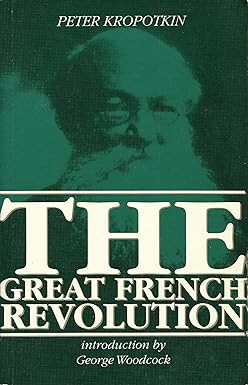
With an Introduction by George Woodcock.
With the international celebrations of the French Revolution as background, the publication of Peter Kropotkin's classic with an introduction by George Woodcock represents the fulfilment of an important documentary need.
The turbulent upheaval that swept in the first mighty revolution in the West, and which had such far ranging consequences, has subsequently been described by a thousand differing pens. From the King's summoning of the Estates General in 1789 to the establishment of the Directory in 1793, the revolution has had many interpretations. But Kropotkin is among the very few who analyses this drama not only as a complex interplay of its leading personalities or a chain of political decisions made from above; rather, he penetrates this surface confusion to describe a great reordering of the economic bases of the ancien régime by the mass of urban workers and the peasantry. He saw the redistribution of land impeded at every step by an aggrandising middle class and by the forces of the counter-revolution inside and outside France.
Kropotkin, as a true historian, was not concerned with merely the period he discussed. He saw it as a climax in a long past and future development. The result is a very skillful and absorbing book, with great momentum, an active and readable style, and a capable use of a mass of details regarding the most obscure but no less important aspects of the French Revolution.
First published in 1909 and long out of print, The Great French Revolution is the finest historical writing from the fluent pen of Peter Kropotkin (1842-1921). The introduction by George Woodcock, the celebrated Canadian author, throws a modern light on the significance and scope of Kropotkin's contribution.
Table of Contents
An Introduction By George Woodcock
Preface
Chapter 1: The Two Great Currents of the Revolution
Chapter 2: The Idea
Chapter 3: Action
Chapter 4: The People before the Revolution
Chapter 5: The Spirit of Revolt: the Riots
Chapter 6: The Convocation of the States-General becomes Necessary
Chapter 7: The Rising of the Country Districts during the Opening Months of 1789
Chapter 8: Riots in Paris and its Environs
Chapter 9: The States-General
Chapter 10: Preparations for the Coup d'Etat
Chapter 11: Paris on the Eve of the Fourteenth
Chapter 12: The Taking of the Bastille
Chapter 13: The Consequences of July 14 at Versailles
Chapter 14: The Popular Uprisings
Chapter 15: The Towns
Chapter 16: The Peasant Uprising
Chapter 17: August 4 and its Consequences
Chapter 18: The Feudal Rights remain
Chapter 19: Deceleration of the Rights of Men
Chapter 20: The Fifth and Sixth of October 1789
Chapter 21: Fears of the Middle Classes – the New Municipal Organization
Chapter 22: Financial Difficulties – Sale of Church Property
Chapter 23: The Fete of the Federation
Chapter 24: The “Districts” and the “Sections” of Paris
Chapter 25: The Sections of Paris Under the New Municipal Law
Chapter 26: Delays in the Abolition of the Feudal Rights
Chapter 27: Feudal Legislation in 1790
Chapter 28: Arrest over the Revolution in 1790
Chapter 29: The Flight of the King – Reaction