
Book
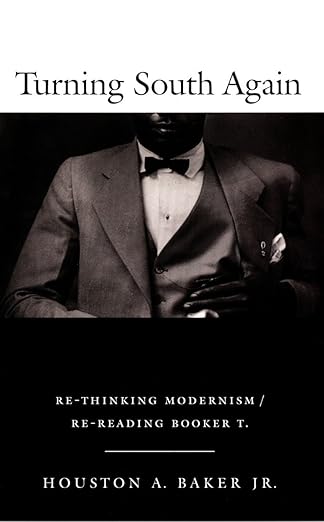
Turning South Again
Re-thinking Modernism/re-reading Booker T.
Houston A. Baker
Duke University Press · Print & ebook · June 6, 2001
Reading lane: Black Lit Crit
In Turning South Again the distinguished and award-winning essayist, poet, and scholar of African American literature Houston A. Baker, Jr. offers a revisionist account of the struggle for black modernism in the United States.
At a Glance
Who It's For
Book Details
- Authors
- Houston A. Baker
- Publisher
- Duke University Press
- Published
- June 6, 2001
- Format
- Print & ebook
- Theme
- Black Lit Crit · African American Literary Collections
- Reading lane
- Black Lit Crit
Affinity
Publisher Categories
Cultural Heritage Lives
U.S. State & Local History
African American Studies
About This Book
In Turning South Again the distinguished and award-winning essayist, poet, and scholar of African American literature Houston A. Baker, Jr. offers a revisionist account of the struggle for black modernism in the United States. With a take on the work of Booker T. Washington and the Tuskegee Institute surprisingly different from that in his earlier book Modernism and the Harlem Renaissance, Baker combines historical considerations with psychoanalysis, personal memoir, and whi...
Read full description
Similar Books

The Black Box
Henry Louis Gates Jr. · Penguin Publishing Group
Affinity signal
Black Lit Crit
Black & African American Lives

The Black Book
Middleton A. Harris, Ernest Smith · Random House Publishing Group
Affinity signal
African American Literary Collections
Black & African American Lives

Stony the Road
Henry Louis Gates Jr. · Penguin Publishing Group
Affinity signal
Black & African American Lives
19th-Century America

South to America
Imani Perry, Ecco · HarperCollins
Affinity signal
Southern U.S. History
Black & African American Lives

Against Normalization
Anthony O'Brien · Duke University Press
Affinity signal
African Lit Crit
Southern African History