
Book
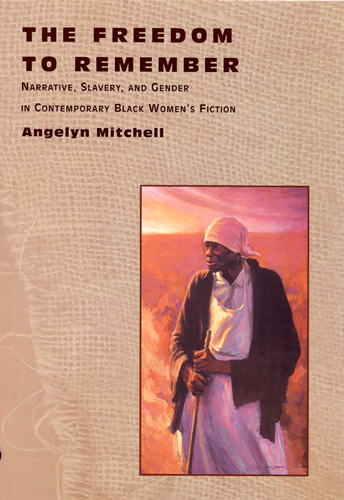
The Freedom to Remember
Narrative, Slavery, and Gender in Contemporary Black Women's Fiction
Angelyn Mitchell
Rutgers University Press · Print & ebook · March 1, 2002
Reading lane: African American Literary Criticism
Disclosure: Some outbound links are affiliate links. If you buy through them, we may earn a commission. It doesn't affect which books we include. Learn more in our disclosure policy.
At a Glance
Who It's For
Book Details
- Authors
- Angelyn Mitchell
- Publisher
- Rutgers University Press
- Published
- March 1, 2002
- Format
- Print & ebook
- Theme
- African American Literary Criticism · Women Authors Criticism
- Reading lane
- African American Literary Criticism
Affinity
Publisher Categories
African American Literary Criticism
African American Studies
About This Book
The Freedom to Remember examines contemporary literary revisions of slavery in the United States by black women writers. The narratives at the center of this book include: Octavia E. Butler’s Kindred , Sherley Anne Williams’s Dessa Rose , Toni Morrison’s Beloved , J. California Cooper’s Family , and Lorene Cary’s The Price of a Child . Recent studies have investigated these works only from the standpoint of victimization. Angelyn Mitchell changes the conceptualization of the...
Read full description
Similar Books
The Book of Old Ladies
Ruth O. Saxton · She Writes Press
Shared affinity
African American Literary Criticism
The Black Woman
Toni Cade Bambara, Eleanor W Traylor · Washington Square Press
Shared affinity
Affinity match is still building for this title.
African Novels and the Question of Orality
Eileen M. Julien, Eileen Julien · Indiana University Press
Shared affinity
Affinity match is still building for this title.