

Book
American Africans in Ghana
Black Expatriates and the Civil Rights Era
Kevin K. Gaines
The University of North Carolina Press · Print & ebook · February 25, 2008
Reading lane: West African History
In 1957 Ghana became one of the first sub-Saharan African nations to gain independence from colonial rule.
At a Glance
Who It's For
Book Details
- Authors
- Kevin K. Gaines
- Publisher
- The University of North Carolina Press
- Published
- February 25, 2008
- Format
- Print & ebook
- Theme
- West African History · African Studies
- Reading lane
- West African History
Affinity
Publisher Categories
West African History
African American Studies
Immigration & Emigration
About This Book
In 1957 Ghana became one of the first sub-Saharan African nations to gain independence from colonial rule. Over the next decade, hundreds of African Americans — including Martin Luther King Jr., George Padmore, Malcolm X, Maya Angelou, Richard Wright, Pauli Murray, and Muhammad Ali — visited or settled in Ghana. Kevin K. Gaines explains what attracted these Americans to Ghana and how their new community was shaped by the convergence of the Cold War, the rise of the U.S. civi...
Read full description
Similar Books

The Ghana Reader
Kwasi Konadu, Clifford C. Campbell · Duke University Press
Affinity signal
West African History
West Africa Travel
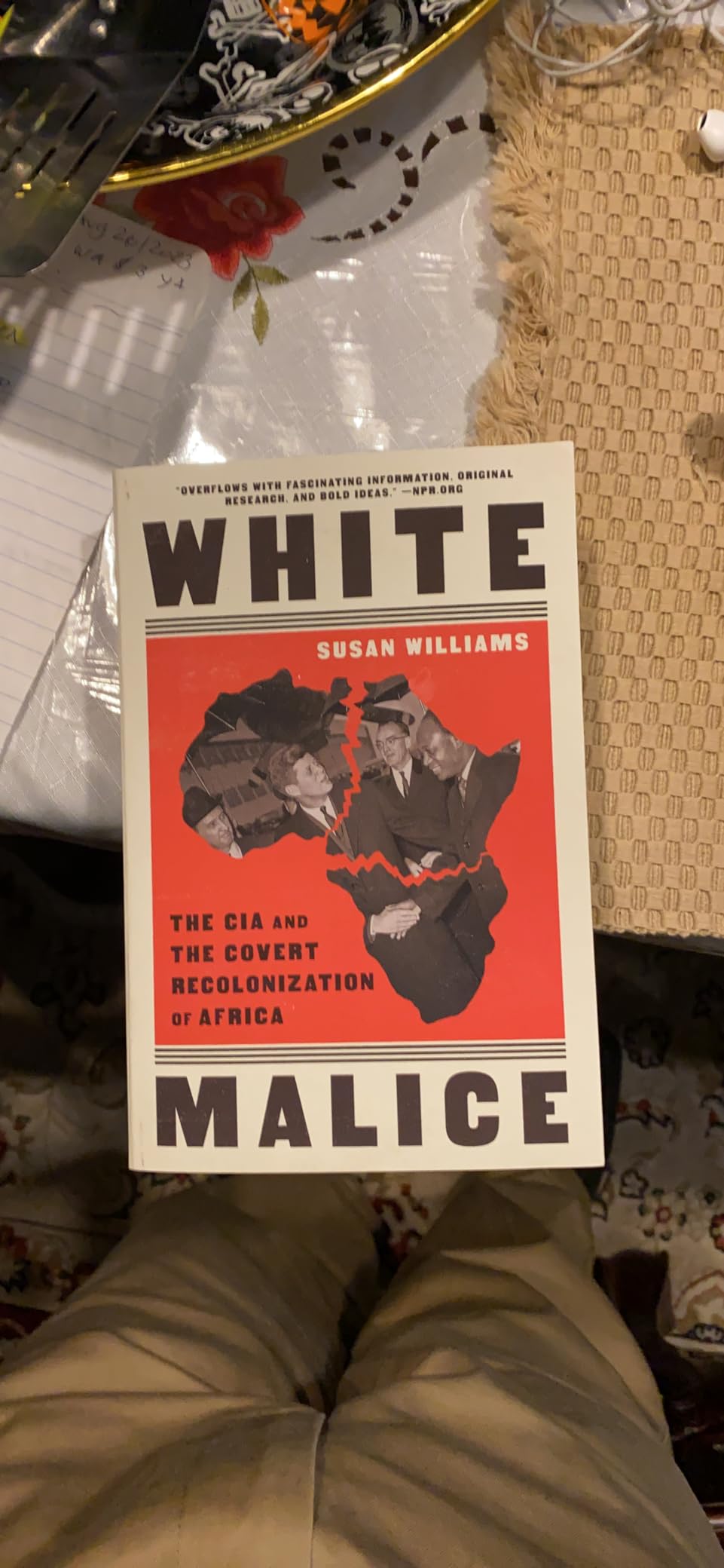
White Malice
Chanté McCormick, Susan Williams · PublicAffairs
Affinity signal
Central African History
West African History

Independent Africa
Emmanuel Kwaku Akyeampong · Indiana University Press
Affinity signal
West African History
Southern African History

An Economic History of Ghana
Ivor Agyeman-Duah · Ayebia Clark Books
Affinity signal
Business & Economics
History

African Founders
David Hackett Fischer · Simon & Schuster
Affinity signal
West African History
Colonial America (to 1775)

Another America: the Story of Liberia and the Former Slaves Who Ruled It
James Ciment, James D. Ciment · Farrar Straus & Giroux
Affinity signal
West African History
African Studies

Mississippi in Africa
Alan Huffman · University Press of Mississippi
Affinity signal
West African History
African Studies

An Amerikan Family
Santi Elijah Holley · HarperCollins
Affinity signal
Black & African American Lives
African Studies