
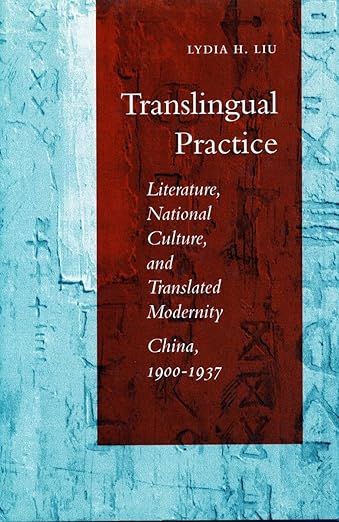
Book
Translingual Practice
Literature, National Culture, and Translated Modernity—china, 1900-1937
Lydia Liu, Lydia H. Liu
Stanford University Press · Print & ebook · January 1, 1995
Reading lane: Chinese Literary Criticism
Are languages incommensurate?
At a Glance
Who It's For
Book Details
- Authors
- Lydia Liu, Lydia H. Liu
- Publisher
- Stanford University Press
- Published
- January 1, 1995
- Format
- Print & ebook
- Theme
- Chinese Literary Criticism · Chinese Literary Collections
- Reading lane
- Chinese Literary Criticism
Affinity
Publisher Categories
Chinese Literary Criticism
About This Book
Are languages incommensurate? If so, how do people establish and maintain hypothetical equivalences between words and their meanings? What does it mean to translate one culture into the language of another on the basis of commonly conceived equivalences? This study—bridging contemporary theory, Chinese history, comparative literature, and culture studies—analyzes the historical interactions among China, Japan, and the West in terms of "translingual practice." By this term, t...
Read full description
Similar Books
The Literature of China in the Twentieth Century
Bonnie S. McDougall, Kam Louie · Columbia University Press
Affinity signal
Chinese Literary Criticism
Chinese Literary Collections
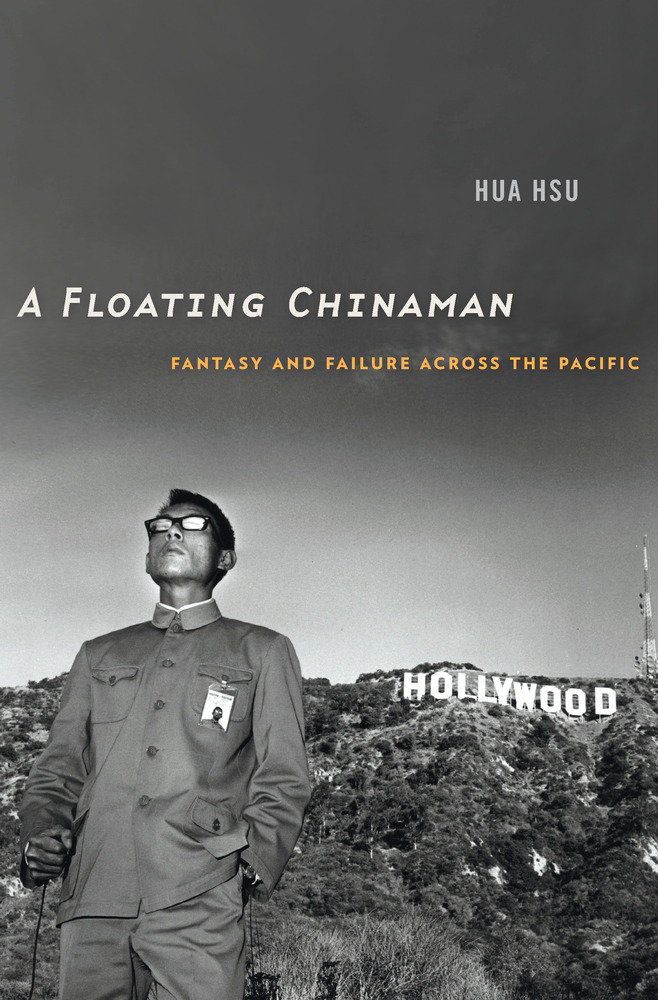
Floating Chinaman
Hua Hsu · WW Norton
Affinity signal
Chinese Literary Collections
Asian American Lit Crit

The Stranger and the Chinese Moral Imagination
Haiyan Lee · Stanford University Press
Affinity signal
Chinese Literary Criticism
Chinese Literary Collections

Maxine Hong Kingston's the Woman Warrior
Say-ling Cynthia Wong · Oxford University Press
Affinity signal
Asian American Lit Crit
Chinese Literary Criticism
The Big Red Book of Modern Chinese Literature
Yunte Huang · WW Norton
Affinity signal
Chinese Literary Collections
Chinese Literary Criticism

Great Books of China
Frances Wood · BlueBridge
Affinity signal
Chinese Literary Criticism
Chinese Literary Collections

Questioning Borders
Robin Visser · Columbia University Press
Affinity signal
Chinese Literary Criticism
Chinese Literary Collections