
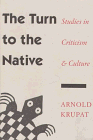
Book
The Turn to the Native
Studies in Criticism and Culture
Arnold Krupat
UNP - Nebraska · Print & ebook · October 28, 1996
Reading lane: Native American Literary Criticism
Disclosure: Some outbound links are affiliate links. If you buy through them, we may earn a commission. It doesn't affect which books we include. Learn more in our disclosure policy.
At a Glance
Who It's For
Book Details
- Authors
- Arnold Krupat
- Publisher
- UNP - Nebraska
- Published
- October 28, 1996
- Format
- Print & ebook
- Theme
- Native American Literary Criticism · American Literary Criticism
- Reading lane
- Native American Literary Criticism
Affinity
Publisher Categories
Native American Literary Criticism
About This Book
The Turn to the Native is a timely account of Native American literature and the critical writings that have grown up around it. Arnold Krupat considers racial and cultural "essentialism," the ambiguous position of non-Native critics in the field, cultural "sovereignty" and "property," and the place of Native American culture in a so-called multicultural era. Chapters follow on the relationship of Native American culture to postcolonial writing and postmodernism. Krupat comm...
Read full description
Similar Books

The Routledge Companion to Native American Literature
Deborah L. Madsen · Taylor and Francis
Shared affinity
Native American Literary Criticism
American Literary Criticism
African Literary Criticism

Faulkner and the Native South
Jay Watson, Annette Trefzer · University Press of Mississippi
Shared affinity
Native American Literary Criticism
American Literary Criticism
African Literary Criticism

A New Continent of Liberty
Geoff Hamilton · University of Virginia Press
Shared affinity
Native American Literary Criticism
American Literary Criticism
African Literary Criticism
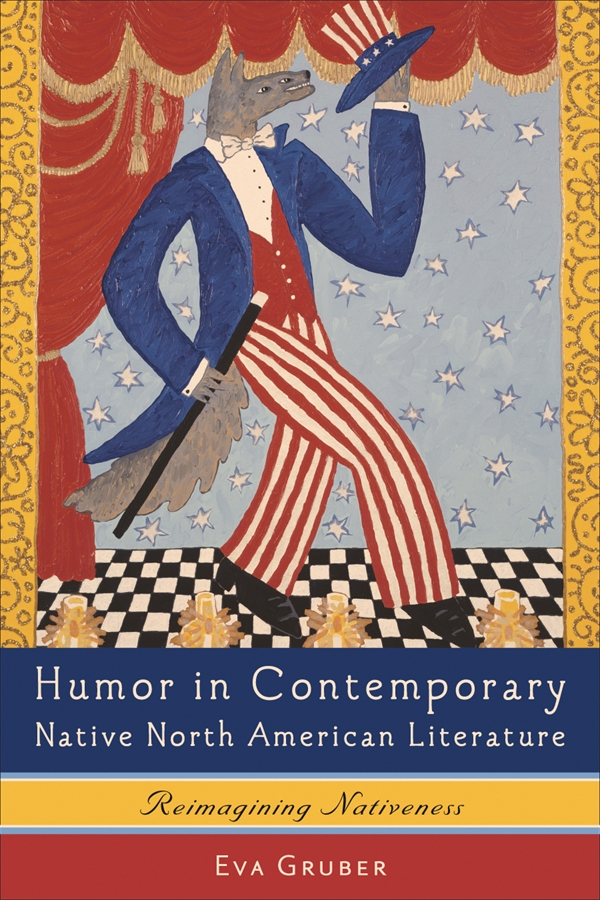
Humor in Contemporary Native North American Literature
Eva Gruber · Boydell & Brewer Inc.
Shared affinity
Native American Literary Criticism
American Literary Criticism
African Literary Criticism
The Native American Renaissance
Alan R. Velie, A. Robert Lee · University of Oklahoma Press
Shared affinity
Affinity match is still building for this title.

Politics and Aesthetics in Contemporary Native American Literature
Matthew Herman, Matthew D. Herman · Taylor and Francis
Shared affinity
Affinity match is still building for this title.
The Invention of Native American Literature
Robert Dale Parker · Cornell University Press
Shared affinity
Affinity match is still building for this title.
Tribal Theory in Native American Literature
Penelope Myrtle Kelsey · Nebraska Paperback
Shared affinity
Affinity match is still building for this title.