BookFrontier
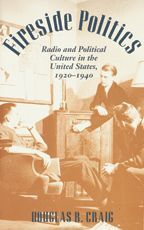
Fireside Politics by Douglas B. Craig
Book

Fireside Politics

Radio and Political Culture in the United States, 1920-1940

Johns Hopkins University Press · 2005-08-11

Fireside Politics: Radio and Political Culture in the United States, 1920-1940

Buy on Amazon

See Lists Featuring This Book

Disclosure: Some outbound links are affiliate links. If you buy through them, we may earn a commission. It doesn't affect which books we include. Learn more in our disclosure policy.

Who It's For

  • Good for readers who enjoy History / United States / 20th Century
  • Good for readers interested in politics
  • Strong fit for readers who prefer grounded, real-world context.

What You Get

  • Themes: History, Political, Culture.
  • Reading lane: United States and Industries.
  • Publisher: Johns Hopkins University Press.

Categories

What we read

  • History / United States / 20th Century

    72%
  • Business & Economics / Industries / Media & Communications

    71%
  • Performing Arts / Television / History & Criticism

    71%

About This Book

In Fireside Politics , Douglas B. Craig provides the first detailed and complete examination of radio's changing role in American political culture between 1920 and 1940—the medium's golden age, when it commanded huge national audiences without competition from television. Craig follows the evolution of radio into a commercialized, networked, and regulated industry, and ultimately into an essential tool for winning political campaigns and shaping American identity in the int...

Read full description

In Fireside Politics , Douglas B. Craig provides the first detailed and complete examination of radio's changing role in American political culture between 1920 and 1940—the medium's golden age, when it commanded huge national audiences without competition from television. Craig follows the evolution of radio into a commercialized, networked, and regulated industry, and ultimately into an essential tool for winning political campaigns and shaping American identity in the interwar period. Finally, he draws thoughtful comparisons of the American experience of radio broadcasting and political culture with those of Australia, Britain, and Canada.

Similar Books