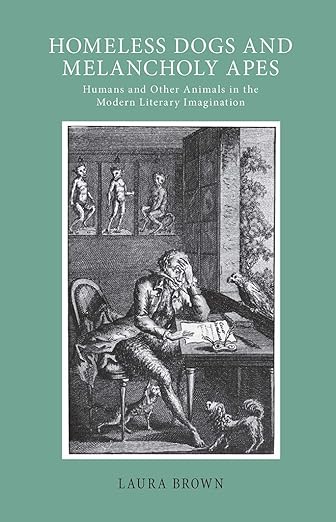
Homeless Dogs and Melancholy Apes
Humans and Other Animals in the Modern Literary Imagination
Cornell University Press · Print & ebook · August 5, 2010
In eighteenth-century England, the encounter between humans and other animals took a singular turn with the discovery of the great apes and the rise of bourgeois pet keeping.
We earn from qualifying purchases.
- Who it’s for
- Brown traces animals in literature bringing questions of identity, intimacy, and convention into view.
- Genres
- 18th Century Literature, British & Irish Literary Criticism, Nature in Literature
- Published
- Cornell University Press, August 5, 2010
Nearest books
Matched by what the books are about, then ordered by what their readers also loved.
 The New SentienceAshley Capps, Allison Titus63% match
 Tamed and UntamedSy Montgomery, Elizabeth Marshall Thomas58% match
 Modernism's Inhuman WorldsRasheed Tazudeen57% matchShares Nature in Literature
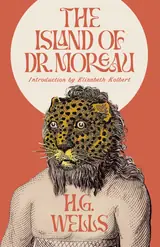 The Island of Dr. MoreauH.G. Wells, Elizabeth Kolbert56% match
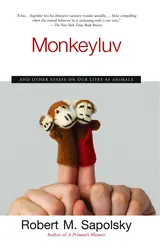 MonkeyluvRobert M. Sapolsky56% match
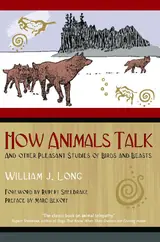 How Animals TalkWilliam J. Long55% match
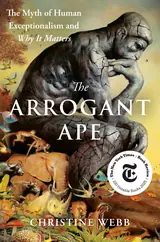 The Arrogant ApeChristine Webb, Christine E. Webb55% match
 Beyond WordsCarl Safina53% match
For younger readers: Queer Ducks (and Other Animals), My Life With the Chimpanzees, Solitary Animals
Start with three books, and this one can be the first.
Members get a new edition every morning: a route out from their books to essays, research and talks, with the reason for each.
Join the waitlistAbout this book
In eighteenth-century England, the encounter between humans and other animals took a singular turn with the discovery of the great apes and the rise of bourgeois pet keeping. These historical changes created a new cultural and intellectual context for the understanding and representation of animal-kind, and the nonhuman animal has thus played a significant role in imaginative literature from that period to the present day.
Continue reading
In Homeless Dogs and Melancholy Apes, Laura Brown shows how the literary works of the eighteenth century use animal-kind to bring abstract philosophical, ontological, and metaphysical questions into the realm of everyday experience, affording a uniquely flexible perspective on difference, hierarchy, intimacy, diversity, and transcendence. Writers of this first age of the rise of the animal in the modern literary imagination used their nonhuman characters?from the lapdogs of Alexander Pope and his contemporaries to the ill-mannered monkey of Frances Burney's Evelina or the ape-like Yahoos of Jonathan Swift?to explore questions of human identity and self-definition, human love and the experience of intimacy, and human diversity and the boundaries of convention. Later literary works continued to use imaginary animals to question human conventions of form and thought. Brown pursues this engagement with animal-kind into the nineteenth century?through works by Mary Shelley, Charles Dickens, and Elizabeth Barrett Browning?and into the twentieth, with a concluding account of Paul Auster's dog-novel, Timbuktu. Auster's work suggests that?today as in the eighteenth century?imagining other animals opens up a potential for dissonance that creates distinctive opportunities for human creativity.
Literary Animal Figures
Brown traces animals in literature bringing questions of identity, intimacy, and convention into view.
Come here for
- Eighteenth-century lapdogs in works by Pope and his contemporaries
- Animal figures in works by Shelley, Dickens, and Barrett Browning
Expect
- Animal figures used to explore human identity and self-definition
- A concluding account of Paul Auster’s dog-novel, Timbuktu
Where it sits
| 18th Century Literature | 84% |
|---|---|
| Nature in Literature | 47% |
| British & Irish Literary Criticism | 27% |
Percentages are BookFrontier’s reading of the book.
Publisher categories
- British & Irish Literary Criticism
- Animals
- Authors
- Laura S. Brown, Laura Brown
- Publisher
- Cornell University Press
- Published
- August 5, 2010
- Format
- Print & ebook
- Reading lane
- British & Irish Literary Criticism