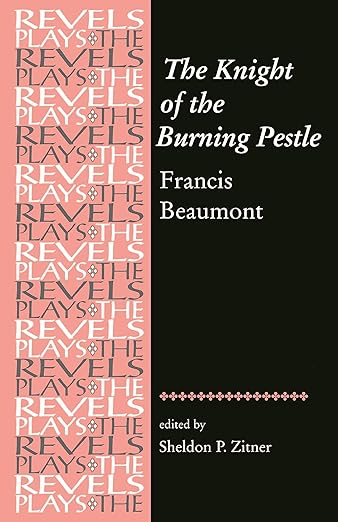
The Knight of the Burning Pestle
Francis Beaumont
Manchester University Press · Print & ebook · October 28, 2004
This play is a celebration of London life and theatre in which Francis Beaumont's comic genius is given free rein.
We earn from qualifying purchases.
- Genres
- British & Irish Plays
- Published
- Manchester University Press, October 28, 2004
Nearest books
Matched by what the books are about, then ordered by what their readers also loved. Most of these share its genre: British & Irish Plays.
 Philaster: or Love Lies A-bleedingAndrew Gurr, Francis Beaumont70% match
 The MalcontentGeorge Hunter, George K. Hunter66% match
 Bartholomew FairSuzanne Gossett70% match
 The Roaring GirlPaul Mulholland66% match
 GalateaJohn Lyly, Leah Scragg59% match
 Edward II RevisedChristopher Marlowe, Martin Wiggins61% match
 Epicene, or the Silent WomanRichard Dutton67% match
 A Short History of English Renaissance DramaHelen Hackett60% match
For younger readers: By Any Other Name, Shakespeare's First Folio: All the Plays: a Children's Edition, An Assassin's Guide to Love and Treason
Start with three books, and this one can be the first.
Members get a new edition every morning: a route out from their books to essays, research and talks, with the reason for each.
Join the waitlistAbout this book
This play is a celebration of London life and theatre in which Francis Beaumont's comic genius is given free rein. A grocer, his wife and their two apprentices attending the theatre in holiday mood interrupt and finally replace a fatuous love comedy with their own heart's desire: exotic spectacle and sound English sentiment. This edition presents an accurate modern-spelling text, with full historical and critical introduction and a detailed commentary.
Continue reading
The introduction analyses the character of Beaumont's wit and his unsentimental critique of society and of society's stage image. It also places 'The Knight' in the contexts of Jacobean comedy and the work of the children's theatrical troupes. An appendix on the songs and a concern for details of production make this edition especially useful to actors and directors, as well as students of Renaissance drama.
Stage and Page
Come here for
- performance-minded reading
- literary criticism with a stage-aware angle
Expect
- 16th-century criticism
- theater-history framing
Where it sits
| British & Irish Plays | 91% |
|---|
Percentages are BookFrontier’s reading of the book.
Publisher categories
- 16th-Century Literary Criticism
- Theater History & Criticism
- Authors
- Sheldon Zitner, Francis Beaumont, Sheldon P. Zitner
- Publisher
- Manchester University Press
- Published
- October 28, 2004
- Format
- Print & ebook
- Reading lane
- 16th-Century Literary Criticism