
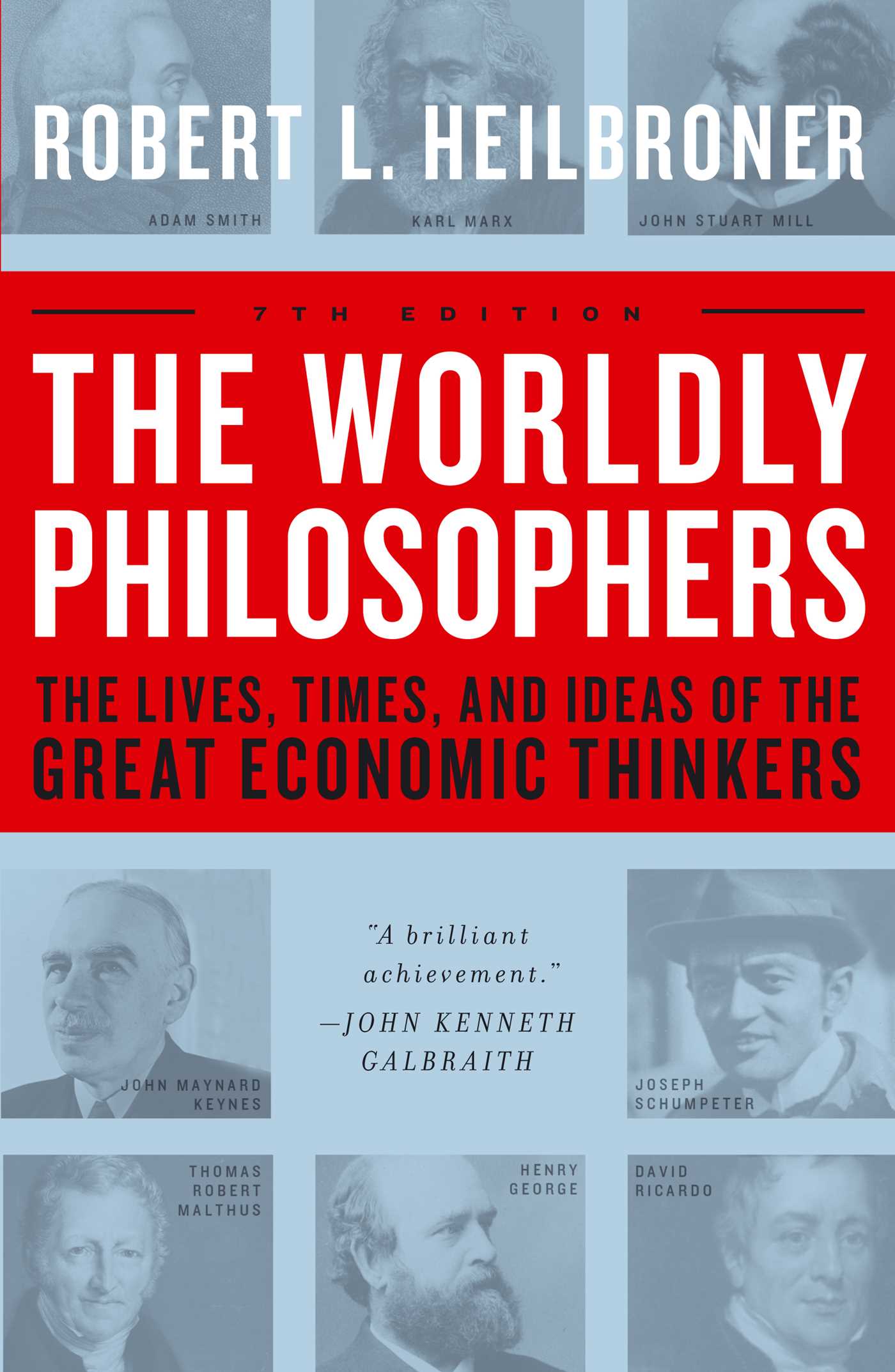
Book
The Worldly Philosophers
The Lives, Times and Ideas of the Great Economic Thinkers
Robert L. Heilbroner
Touchstone · Print & ebook · August 10, 1999
Reading lane: Economic Theory
The bestselling classic that examines the history of economic thought from Adam Smith to Karl Marx—“all the economic lore most general readers conceivably could want to know, served up with a flourish” ( The New York Times ).
At a Glance
Why This Clicks
Ideas Behind Markets
Economic thought meets the question of how capitalism works—and what economics can miss.
Come here for
- A connected history of ideas from Adam Smith to Karl Marx
- A wider lens on today’s confusing economic headlines
Expect
- Reflections on economics’ social and political limits
- Past debates opening onto questions about our future
Book Details
- Authors
- Robert L. Heilbroner
- Publisher
- Touchstone
- Published
- August 10, 1999
- Format
- Print & ebook
- Theme
- Economic Theory · Comparative Economics
- Reading lane
- Economic Theory
Affinity
Publisher Categories
Economic History
Comparative Economics
Modern Philosophy
About This Book
The bestselling classic that examines the history of economic thought from Adam Smith to Karl Marx—“all the economic lore most general readers conceivably could want to know, served up with a flourish” ( The New York Times ). The Worldly Philosophers not only enables us to see more deeply into our history but helps us better understand our own times. In this seventh edition, Robert L. Heilbroner provides a new theme that connects thinkers as diverse as Adam Smith and Karl Ma...
Read full description
Similar Books

How Economics Explains the World
Andrew Leigh · HarperCollins
Affinity signal
Economic Theory
Comparative Economics

The Armchair Economist
Steven E. Landsburg · Free Press
Affinity signal
Economic Theory
Comparative Economics

The Economics Book
DK, Niall Kishtainy · DK
Affinity signal
Economic Theory
Comparative Economics

Basic Economics
Thomas Sowell · Basic Books
Affinity signal
Economic Theory
Comparative Economics

A People's Guide to Capitalism
Hadas Thier · Haymarket Books
Affinity signal
Capitalism & Markets
Economic Theory

Capitalism and Its Critics
John Cassidy · Farrar Straus & Giroux
Affinity signal
Capitalism & Markets
Economic Theory

Life After Capitalism
George Gilder · Skyhorse Publishing
Affinity signal
Capitalism & Markets
Economic Theory

Modern Times Revised Edition
Paul Johnson · HarperCollins
Affinity signal
Modern History
20th-Century History