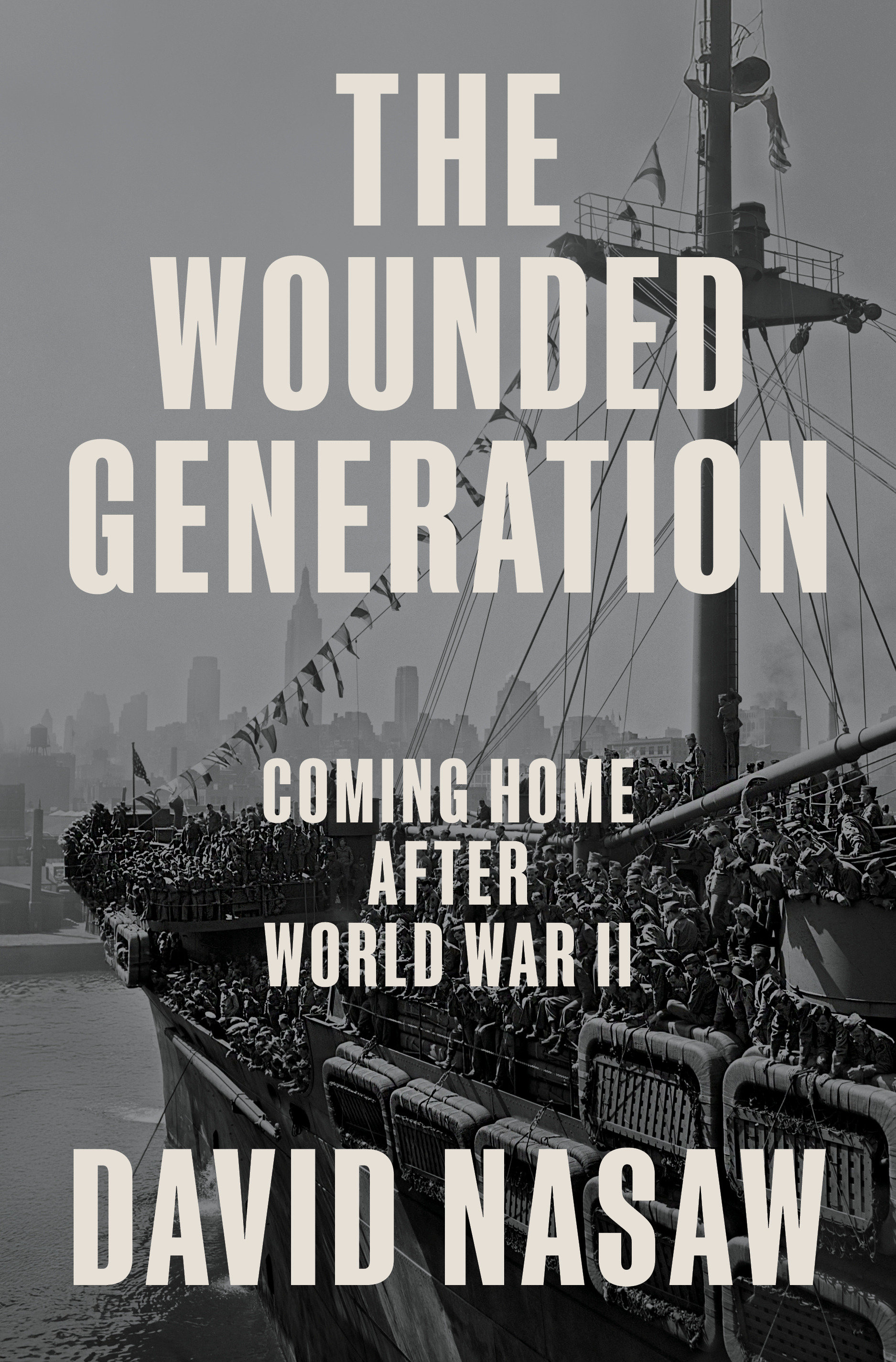
The Wounded Generation
Coming Home After World War II
Penguin Publishing Group · Print & ebook · October 14, 2025
From award-winning and bestselling author David Nasaw, a brilliant re-examination of post-World War II America that looks beyond the victory parades and into the veterans’—and nation’s—unhealed traumas In its duration, geographical reach, and ferocity, World War II was unprecedented, and the effects on those who fought it and their loved ones at home, immeasurable.
We earn from qualifying purchases.
- Who it’s for
- A sober, readable look at what coming home after World War II meant.
- Genres
- Veterans' Stories, World War II History, PTSD & Trauma
- Published
- Penguin Publishing Group, October 14, 2025
Nearest books
Matched by what the books are about, then ordered by what their readers also loved.
 Victory '45James Holland, Al Murray55% matchShares World War II History
 Bravo CompanyBen Kesling53% matchShares Veterans' Stories
 The Devil Reached Toward the SkyGarrett M. Graff52% match
 The Darkest YearWilliam K. Klingaman60% matchShares World War II History
 Looking for the Good WarElizabeth D Samet71% matchShares Veterans' Stories and World War II History
 Remember USRobert M. Edsel, Bret Witter61% match
 America's War for the Greater Middle EastAndrew J. Bacevich55% match
 Gangsters of CapitalismJonathan M Katz54% match
For younger readers: When Can We Go Back to America?, Flags of Our Fathers, I Remember Korea
Start with three books, and this one can be the first.
Members get a new edition every morning: a route out from their books to essays, research and talks, with the reason for each.
Join the waitlistAbout this book
From award-winning and bestselling author David Nasaw, a brilliant re-examination of post-World War II America that looks beyond the victory parades and into the veterans’—and nation’s—unhealed traumas In its duration, geographical reach, and ferocity, World War II was unprecedented, and the effects on those who fought it and their loved ones at home, immeasurable.
Continue reading
The heroism of the men and women who won the war may be well documented, but we know too little about the pain and hardships the veterans endured upon their return home. As historian David Nasaw makes evident in his masterful recontextualization of these years, the veterans who came home to America were not the same people as those who had left for war, and the nation to which they returned was not the one they had left behind. Contrary to the prevailing narratives of triumph, here are the largely unacknowledged realities the veterans—and the nation—faced that radically reshaped our understanding of this era as a bridge to today. The Wounded Generation tells the indelible stories of the veterans and their loved ones as they confronted the aftershocks of World War II. Veterans suffering from recurring nightmares, uncontrollable rages, and social isolation were treated by doctors who had little understanding of PTSD. They were told that they were suffering from nothing more than battle fatigue and that time would cure it. When their symptoms persisted, they were given electro-shock treatments and lobotomies, while the true cause of their distress would remain undiagnosed for decades to come. Women who had begun working outside the home were pressured to revert to their prewar status as housewives dependent on their husbands. Returning veterans and their families were forced to double up with their parents or squeeze into overcrowded, substandard shelters as the country wrestled with a housing crisis. Divorce rates doubled. Alcoholism was rampant. Racial tensions heightened as White southerners resorted to violence to sustain the racial status quo. To ease the veterans’ readjustment to civilian life, Congress passed the GI Bill, but Black veterans were disproportionately denied their benefits, and the consequences of this discrimination would endure long after the war was won. In this richly textured examination, Nasaw presents a complicated portrait of those who brought the war home with them, among whom were the period’s most influential political and cultural leaders, including John F. Kennedy, Robert Dole, and Henry Kissinger; J. D. Salinger and Kurt Vonnegut; Harry Belafonte and Jimmy Stewart. Drawing from veterans’ memoirs, oral histories, and government documents, Nasaw illuminates a hidden chapter of American history—one of trauma, resilience, and a country in transition.
After the War
A sober, readable look at what coming home after World War II meant.
Come here for
- postwar return, not battlefield pages
- serious historical context, cleanly framed
Expect
- cultural literacy with a historian’s restraint
- long-view narrative, not a quick skim
Where it sits
| PTSD & Trauma | 72% |
|---|---|
| World War II History | 54% |
| Veterans' Stories | 52% |
Percentages are BookFrontier’s reading of the book.
Publisher categories
- World War II History
- Veterans' Stories
- 20th-Century History
- Authors
- David Nasaw
- Publisher
- Penguin Publishing Group
- Published
- October 14, 2025
- Format
- Print & ebook
- Reading lane
- World War II History