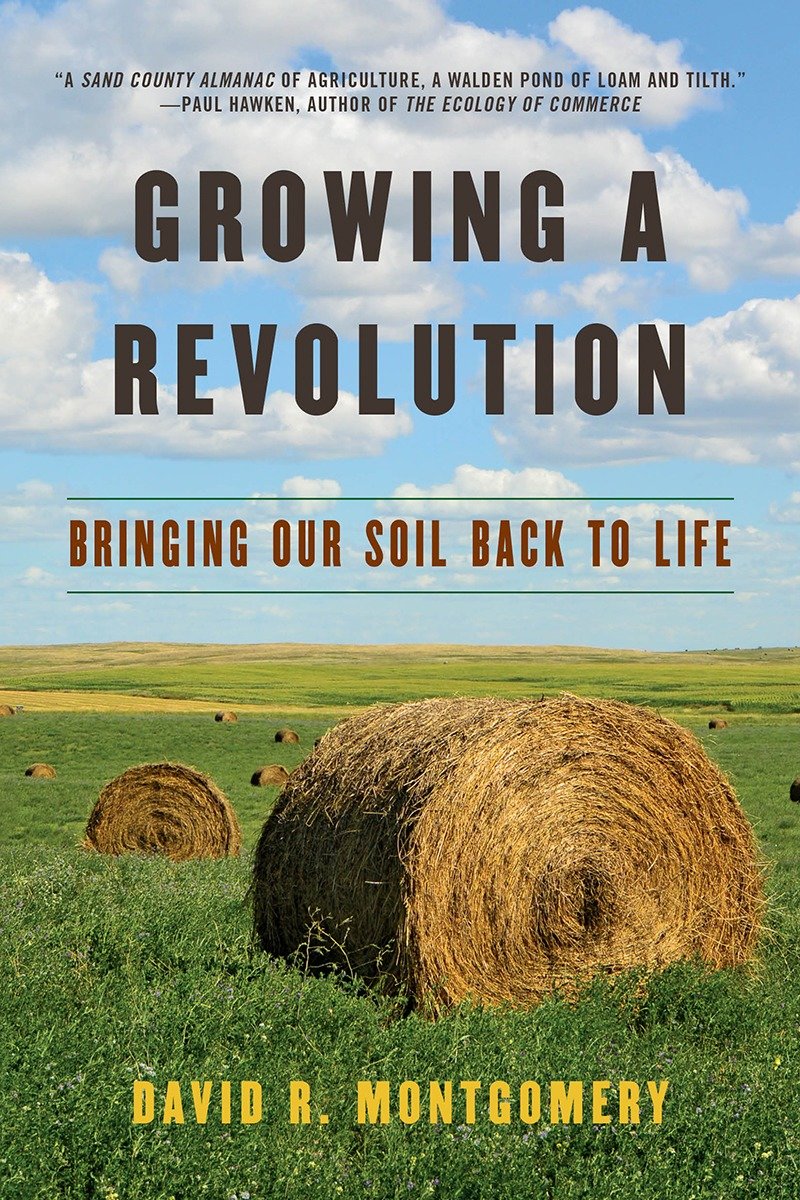
Growing a Revolution
Bringing Our Soil Back to Life
WW Norton · Print & ebook · July 10, 2018
Finalist for the PEN/E.
We earn from qualifying purchases.
- Who it’s for
- A layered look at soil, food, and the ideas behind restoring land.
- Genres
- Sustainable Agriculture, Soil Science, Environmental Science
- Published
- WW Norton, July 10, 2018
Nearest books
Matched by what the books are about, then ordered by what their readers also loved. Most of these share its genre: Sustainable Agriculture.
 A Bold Return to Giving a DamnWill Harris, Penguin Audio68% match
 Lentil UndergroundLiz Carlisle64% match
 What Your Food AteDavid R. Montgomery, Anne Biklé75% matchAlso shares Soil Science
For younger readers: The Story of Seeds, Farming Is Female, Mountains Beyond Mountains (adapted for Young People)
Start with three books, and this one can be the first.
Members get a new edition every morning: a route out from their books to essays, research and talks, with the reason for each.
Join the waitlistAbout this book
Finalist for the PEN/E. O. Wilson Literary Science Writing Award "A call to action that underscores a common goal: to change the world from the ground up." —Dan Barber, author of The Third Plate For centuries, agricultural practices have eroded the soil that farming depends on, stripping it of the organic matter vital to its productivity. Now conventional agriculture is threatening disaster for the world’s growing population.
Continue reading
In Growing a Revolution, geologist David R. Montgomery travels the world, meeting farmers at the forefront of an agricultural movement to restore soil health. From Kansas to Ghana, he sees why adopting the three tenets of conservation agriculture—ditching the plow, planting cover crops, and growing a diversity of crops—is the solution. When farmers restore fertility to the land, this helps feed the world, cool the planet, reduce pollution, and return profitability to family farms.
Soil, Clearly
A layered look at soil, food, and the ideas behind restoring land.
Come here for
- soil, science, and history in one clear frame
- practical insight with a serious tone
Expect
- explanation over spectacle
- steady, instruction-minded reading
Where it sits
| Sustainable Agriculture | 73% |
|---|---|
| Soil Science | 47% |
| Environmental Science | 22% |
Percentages are BookFrontier’s reading of the book.
Publisher categories
- Ecology
- Soil Science
- Authors
- David R. Montgomery
- Publisher
- WW Norton
- Published
- July 10, 2018
- Format
- Print & ebook
- Reading lane
- Ecology