
Rereading the Imperial Romance
British Imperialism and South African Resistance in Haggard, Schreiner, and Plaatje
Oxford University Press · Print & ebook · August 1, 2000
This book examines literary romance as a vehicle for the ideological contradictions of British imperialism in South Africa.
We earn from qualifying purchases.
- Who it’s for
- Laura Chrisman examines South African resistance and the ideological contradictions of British imperial romance.
- Genres
- African Lit Crit, Colonialism & Its Aftermath, 19th-Century Literary Criticism
- Published
- Oxford University Press, August 1, 2000
Nearest books
Matched by what the books are about, then ordered by what their readers also loved.
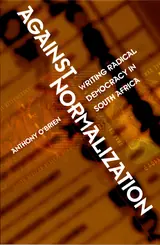 Against NormalizationAnthony O'Brien61% matchShares African Lit Crit and Colonialism & Its Aftermath
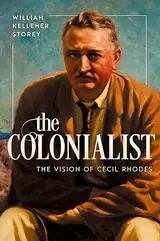 The ColonialistWilliam Kelleher Storey58% matchShares Colonialism & Its Aftermath
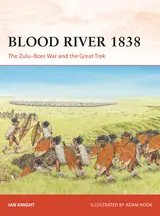 Blood River 1838Ian Knight58% match
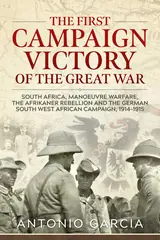 The First Campaign Victory of the Great WarAntonio Garcia, Antonio García58% match
 Diamonds, Gold, and WarMartin Meredith57% match
For younger readers: Journey to Jo'burg, I Am the Mau and Other Stories, Part of a Story That Started Before Me
Start with three books, and this one can be the first.
Members get a new edition every morning: a route out from their books to essays, research and talks, with the reason for each.
Join the waitlistAbout this book
This book examines literary romance as a vehicle for the ideological contradictions of British imperialism in South Africa. Chrisman draws upon postcolonial theory and cultural materialism to discuss the imperialist Rider Haggard's fictional accounts of mining in King Solomon's Mines, and Zulu history in Nada the Lily, examining these novels as fraught responses to the introduction of capitalist modernity.
Continue reading
She goes on to analyse the counter-narratives of metropolitan and African resistance of feminist Olive Schreiner and black nationalist Sol Plaatje. Exploring Schreiner's much-neglected Trooper Peter Halket of Mashonaland, Chrisman situates this book in relation to the violent creation of 'Rhodesia', the 1896-7 Shona uprisings, and contemporary criticism of Cecil Rhodes. In doing so, she shows how Schreiner's is a much more challenging example of anti-imperialist fiction than Conrad's Heart of Darkness, published two years later. Chrisman's discussion of Plaatje's Mhudi–the first black African novel in English–considers the book as a direct response to Haggard's imperialism and Schreiner's feminist theory. Locating the book through the politics and epistemology of the early ANC, she reveals how Plaatje challenges Haggard's misogyny and fatalistic historiography. Mhudi, she argues, is a novel whose nationalist and sexual politics are considerably more complex than has been recognized. Plaatje uses his narrative form to articulate both radical and liberal alternatives to white South African rule. Chrisman's book demonstrates how South Africa played an important if now overlooked role in British imperial culture, and shows the impact of capitalism itself in the making of racial, gender and national identities. This book makes an original contribution to studies of Victorian literature of empire; South African literary history; African studies; black nationalism; and the literature of resistance.
South African Resistance
Laura Chrisman examines South African resistance and the ideological contradictions of British imperial romance.
Come here for
- Read Haggard’s imperial romances alongside Schreiner’s and Plaatje’s counter-narratives.
- Trace how capitalism shapes racial, gender, and national identities.
Expect
- Analysis of King Solomon’s Mines and Nada the Lily.
- Discussion of Trooper Peter Halket of Mashonaland and Mhudi.
Where it sits
| African Lit Crit | 65% |
|---|---|
| Colonialism & Its Aftermath | 35% |
| 19th-Century Literary Criticism | 31% |
Percentages are BookFrontier’s reading of the book.
Publisher categories
- British & Irish Literary Criticism
- Authors
- Laura Chrisman
- Publisher
- Oxford University Press
- Published
- August 1, 2000
- Format
- Print & ebook
- Reading lane
- British & Irish Literary Criticism