
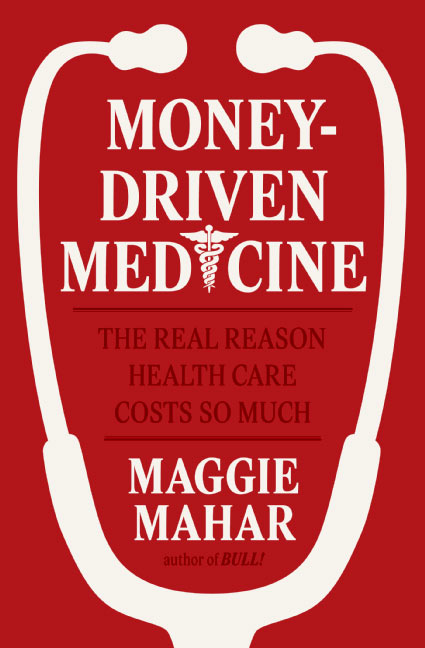
Book
Money-driven Medicine
The Real Reason Health Care Costs So Much
Maggie Mahar
HarperCollins · Print & ebook · May 9, 2006
Reading lane: Healthcare Industry
Why is medical care in the United States so expensive?
Disclosure: Some outbound links are affiliate links. If you buy through them, we may earn a commission. It doesn't affect which books we include. Learn more in our disclosure policy.
At a Glance
Who It's For
Book Details
- Authors
- Maggie Mahar
- Publisher
- HarperCollins
- Published
- May 9, 2006
- Format
- Print & ebook
- Theme
- Healthcare Industry · Health Insurance
- Reading lane
- Healthcare Industry
Affinity
Publisher Categories
World Politics Overview
About This Book
Why is medical care in the United States so expensive? For decades, Americans have taken it as a matter of faith that we spend more because we have the best health care system in the world. But as costs levitate, that argument becomes more difficult to make. Today, we spend twice as much as Japan on health care—yet few would argue that our health care system is twice as good. Instead, startling new evidence suggests that one out of every three of our health care dollars is s...
Read full description
Similar Books

Remaking the American Patient
Nancy Tomes · The University of North Carolina Press
Shared affinity
Healthcare Industry
Health Insurance
Pharma & Biotech Industry

America's Bitter Pill
Steven Brill · Random House Publishing Group
Shared affinity
Healthcare Industry
Health Insurance
Pharma & Biotech Industry
An American Sickness
Elisabeth Rosenthal · Penguin Publishing Group
Shared affinity
Healthcare Industry
Health Insurance
Pharma & Biotech Industry
Never Pay the First Bill
Marshall Allen · Penguin Publishing Group
Shared affinity
Affinity match is still building for this title.

We've Got You Covered
Liran Einav, Amy Finkelstein · Penguin Publishing Group
Shared affinity
Affinity match is still building for this title.

The Truth About the Drug Companies
Marcia Angell · Random House Publishing Group
Shared affinity
Healthcare Industry

Redefining Health Care
Michael E. Porter, Elizabeth Olmsted Teisberg · Harvard Business Review Press
Shared affinity
Healthcare Industry
Health Insurance
Pharma & Biotech Industry

Zero Harm: How to Achieve Patient and Workforce Safety in Healthcare
Craig Clapper, James Merlino · McGraw Hill LLC
Shared affinity
Healthcare Industry
Health Insurance
Pharma & Biotech Industry