
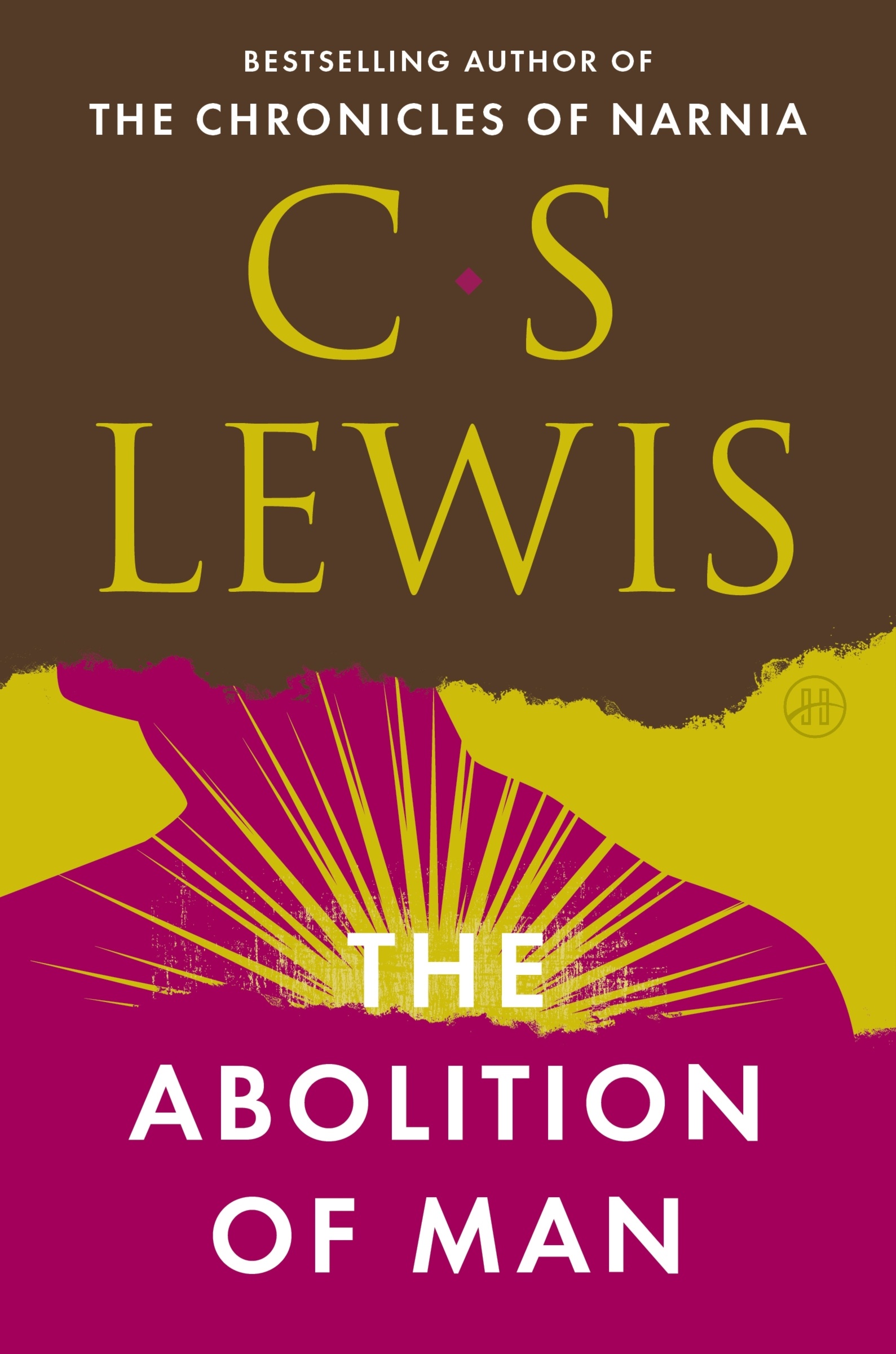
Book
The Abolition of Man
C. S. Lewis
HarperCollins · Print & ebook · April 7, 2015
Reading lane: Faith & Inspiration
A Philosophy pick for readers exploring The Abolition of Man.
At a Glance
Why This Clicks
Reason and Feeling
Lewis makes a bracing case for why reason needs emotion—and why moral truths matter.
Come here for
- A thoughtful challenge to reason as the sole guide
- Questions about science, virtue, and moral absolutes
Expect
- A compact philosophical argument rooted in lectures on education
- A case for truths that reach beyond personal preference
Book Details
- Authors
- C. S. Lewis
- Publisher
- HarperCollins
- Published
- April 7, 2015
- Format
- Print & ebook
- Theme
- Faith & Inspiration · Christian Apologetics
- Reading lane
- Faith & Inspiration
Affinity
Publisher Categories
Civilizations
Essay Collections
Faith & Inspiration
Catholicism
Show all 8 publisher categories
Devotional Readings
Inspirational Christian Books
Spiritual Growth
Religion in the Arts
About This Book
In many ways C. S. Lewis predicted the future. “He foresaw the rise of trends we’re currently experiencing: ethical emotivism, the sometimes unquestioned authority of science, and the increasing use of technology by states to control their populations.” –The Gospel Coalition, Joseph A. Kohm Jr. The Abolition of Man discusses why we shouldn’t always listen to only reason and cut out our emotions. Lewis argues that reason without emotion there is not a reality. He debunks argu...
Read full description
Similar Books

Mere Christianity
C. S. Lewis, Kathleen Norris · HarperCollins
Affinity signal
Christian Apologetics
Faith & Inspiration
The Weight of Glory
C. S. Lewis · HarperCollins
Affinity signal
Faith & Inspiration
Religion in Literature

The C. S. Lewis Signature Classics
C. S. Lewis · HarperCollins
Affinity signal
Faith & Inspiration
Religion in Literature
Miracles
C. S. Lewis · HarperCollins
Affinity signal
Faith & Inspiration
Christian Apologetics

The Medieval Mind of C. S. Lewis
Jason M. Baxter · InterVarsity Press
Affinity signal
Religion in Literature
Faith & Inspiration

C. S. Lewis in America
Mark A. Noll, Kirk D Farney · InterVarsity Press
Affinity signal
Religion in Literature
Faith & Inspiration

The Great Divorce
C. S. Lewis · HarperCollins
Affinity signal
Faith & Inspiration
Christian Afterlife

The Last Romantic
Jeffrey W. Barbeau, Sarah Borden · InterVarsity Press
Affinity signal
Religion in Literature
Faith & Inspiration