
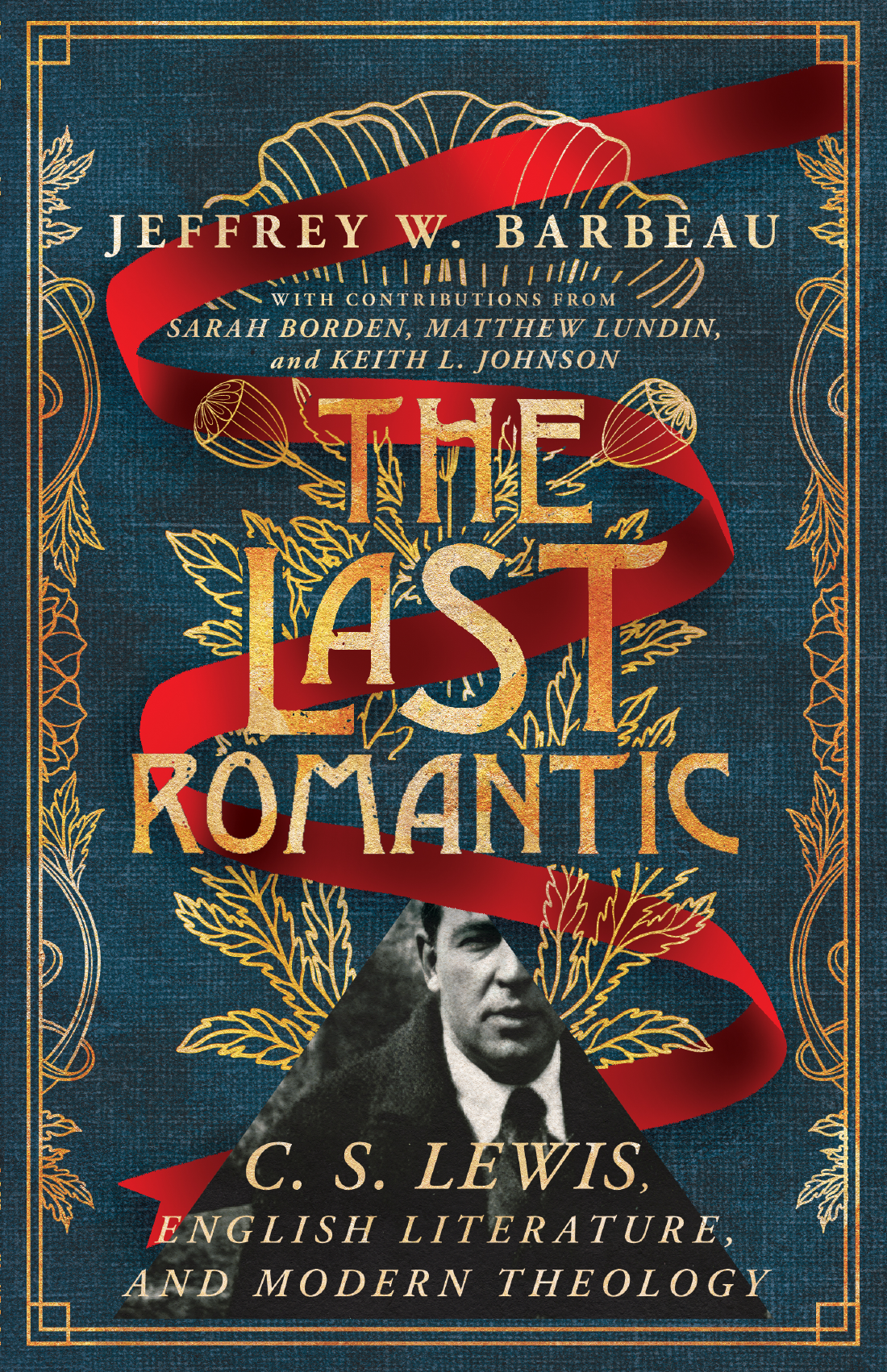
Book
The Last Romantic
C. S. Lewis, English Literature, and Modern Theology
Jeffrey W. Barbeau, Sarah Borden, Matthew Lundin
InterVarsity Press · Print & ebook · January 28, 2025
Reading lane: Religion in Literature
Credo Book Award Winner – Natural Theology "There are so many books on Lewis that are simply a rehash of existing knowledge; by contrast, this is a work of fresh, detailed, illuminating scholarship. ...
At a Glance
Who It's For
Book Details
- Authors
- Jeffrey W. Barbeau, Sarah Borden, Matthew Lundin
- Publisher
- InterVarsity Press
- Published
- January 28, 2025
- Format
- Print & ebook
- Theme
- Religion in Literature · Faith & Inspiration
- Reading lane
- Religion in Literature
Affinity
Publisher Categories
British & Irish Literary Criticism
Religion in Literature
Religion in the Arts
About This Book
Credo Book Award Winner – Natural Theology "There are so many books on Lewis that are simply a rehash of existing knowledge; by contrast, this is a work of fresh, detailed, illuminating scholarship. ... Barbeau's use of Lewis's personal annotations in the books in the Marion E. Wade Collection is a revelation and makes this book a permanent and important contribution to the study of Lewis's thought." – Malcolm Guite, Girton College, Cambridge Three Essays on C. S. Lewis and...
Read full description
Similar Books

C. S. Lewis in America
Mark A. Noll, Kirk D Farney · InterVarsity Press
Affinity signal
Religion in Literature
Faith & Inspiration

The Medieval Mind of C. S. Lewis
Jason M. Baxter · InterVarsity Press
Affinity signal
Religion in Literature
Faith & Inspiration

The C. S. Lewis Bible
C. S. Lewis, Anonymous · HarperCollins
Affinity signal
CSB Reference Bibles
CSB Study Bibles

Mere Christianity
C. S. Lewis, Kathleen Norris · HarperCollins
Affinity signal
Christian Apologetics
Faith & Inspiration
Reflections on the Psalms
C. S. Lewis · HarperCollins
Affinity signal
CSB Study Bibles
CSB Reference Bibles

English Literature in the Sixteenth Century (excluding Drama)
C. S. Lewis · HarperCollins
Affinity signal
British & Irish Literary Criticism
Religion in Literature

Surprised by Joy
C. S. Lewis · HarperCollins
Affinity signal
Faith & Inspiration
Religion in Literature
The Fellowship
Philip Zaleski, Carol Zaleski · Farrar Straus & Giroux
Affinity signal
Religion in Literature
SF & Fantasy Criticism