

Book
His Brother's Keeper
A Story From the Edge of Medicine
Jonathan Weiner
HarperCollins · Print & ebook · March 16, 2004
Reading lane: Leukemia & Lymphoma
From Jonathan Weiner, Pulitzer Prize-winning author of The Beak of the Finch , comes His Brother's Keeper -- the story of a young entrepreneur who gambles on the risky science of gene therapy to try to save his brother's life.
At a Glance
Why This Clicks
Medicine’s Edge
Family devotion and experimental science meet in a suspenseful account of medicine’s reach.
Come here for
- The human stakes behind gene therapy
- Hard questions about how far medicine can reach
Expect
- A personal, dramatic look at ALS and emerging treatments
- Hope and uncertainty alongside the science
Book Details
- Authors
- Jonathan Weiner
- Publisher
- HarperCollins
- Published
- March 16, 2004
- Format
- Print & ebook
- Theme
- Leukemia & Lymphoma · Genetic Disorders
- Reading lane
- Leukemia & Lymphoma
Affinity
Publisher Categories
Science & Tech Pioneers
Lives in Medicine
Women's Lives
Personal Memoirs
Show all 8 publisher categories
AI & Machine Learning
Computer Science
Women's History
Biotech
About This Book
From Jonathan Weiner, Pulitzer Prize-winning author of The Beak of the Finch , comes His Brother's Keeper -- the story of a young entrepreneur who gambles on the risky science of gene therapy to try to save his brother's life. Stephen Heywood was twenty-nine years old when he learned that he was dying of ALS -- Lou Gehrig's disease. Almost overnight his older brother, Jamie, turned himself into a genetic engineer in a quixotic race to cure the incurable. His Brother's Keeper...
Read full description
Similar Books

When Death Becomes Life
Joshua D. Mezrich · HarperCollins
Affinity signal
Transplant Surgery
Infectious Diseases

Schizophrenia
Ronald Chase · The Johns Hopkins University Press
Affinity signal
Schizophrenia
Bipolar Disorder
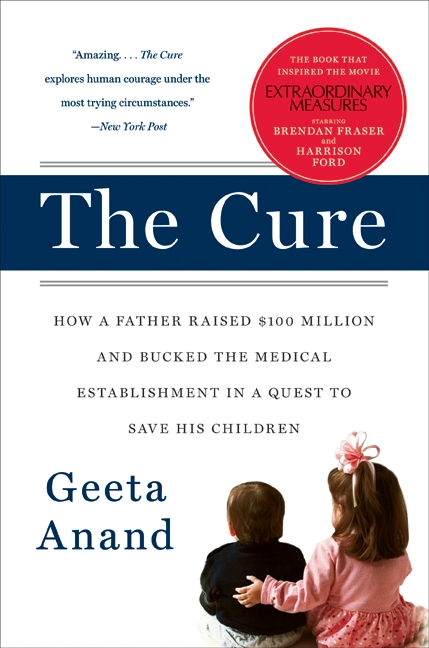
The Cure
Geeta Anand · HarperCollins
Affinity signal
Pharma & Biotech Industry
Genetic Disorders

All That Moves US
Jay Wellons · Random House Publishing Group
Affinity signal
Neurosurgery
Physical Disabilities

Death Benefit
George Guidall, Robin Cook · Penguin Publishing Group
Affinity signal
Medical Thrillers
Crime Fiction

The Philadelphia Chromosome
Jessica Wapner, Robert A. Weinberg · The Experiment
Affinity signal
Leukemia & Lymphoma
Cancer