
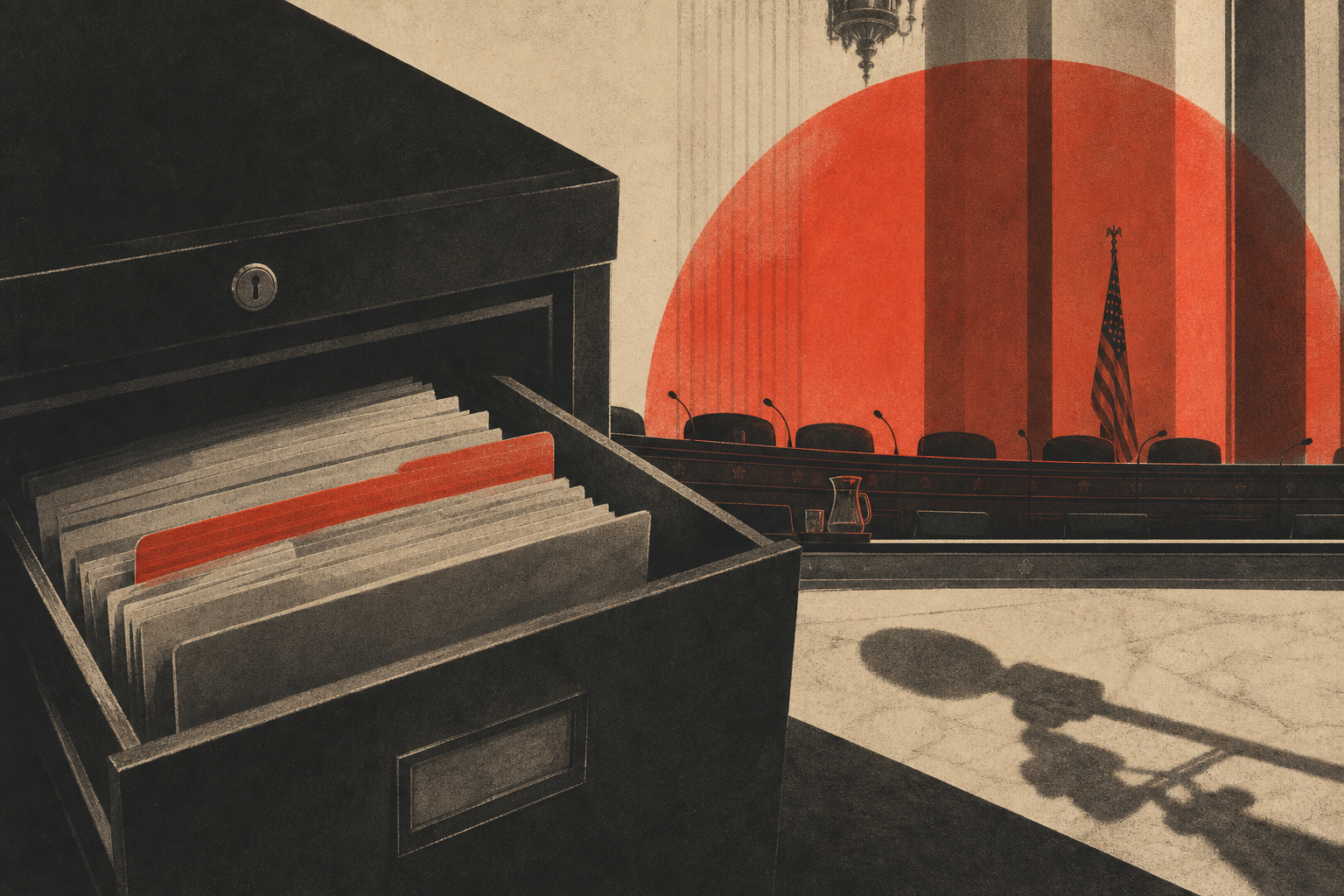
Picture a hearing room in March 2026. A Director of National Intelligence sits at the witness table, cameras rolling, while a Florida lawmaker insists somewhere offstage that her agency just raided a vault for JFK and MKUltra files. Her office denies it, and the denial becomes the story. Intelligence denials always do this work, sitting somewhere between technically true and operationally useless. Tulsi Gabbard's testimony at the 2026 Worldwide Threats Assessment was supposed to be about future risks. Instead it pulled the past into the room, which is what happens whenever the words CIA and documents land in the same sentence. The question worth asking is who currently controls the paperwork on six decades of covert action, and what that control is worth to the people holding it.
Cable coverage will give you the choreography: lawmaker claims, spokesperson denies, hearing proceeds, clip goes viral. None of that tells you what a CIA paramilitary archive actually contains, why every president from Truman onward kept feeding it, or how a sitting DNI inherits authority over files that outlast administrations. The accusation is the noise. The institutional fact is that the Special Activities Division has been running quiet operations since 1947, and that every president since has had to decide what to authorize and what to leave on the page. To evaluate any claim about CIA documents, raids, or sudden disclosures, you need a working sense of what the underlying machinery does and has done. A sourced account of the operational history will give you that.
Annie Jacobsen's Surprise, Kill, Vanish is built on interviews with forty-two people who served inside CIA covert operations, from the early Cold War through the post-9/11 years: Senior Intelligence Service officers, targeting officers, counterterrorism chiefs, Ground Branch operators. She gets them on the record, which is rarer than the genre usually admits, and she pairs their accounts with declassified documents instead of treating either source as self-sufficient. The book traces the Special Activities Division from its founding role as the president's guerrilla warfare corps through decades of sabotage, subversion, and targeted killing. Jacobsen is interested in a specific chain of custody: how an order leaves the Oval Office, who translates it into an operational plan, who carries it out, and what legal opinion is written to make the whole sequence survivable if it ever surfaces.
The bureaucratic texture is where she does her best work. The legal memos, the finding documents a president signs, the compartmentalization that keeps one team ignorant of another's existence. One passage on the mechanics of a targeting decision reads less like a thriller and more like a procurement process with lethal output, and that is the point. Covert action is paperwork plus consequence. The sourcing posture is more contestable. Forty-two officers willing to talk is a real achievement, but they are self-selected, and several have memoirs or consulting work of their own. Jacobsen cross-checks against documents, generally with care, yet the cumulative effect tilts sympathetic toward the operators.
You hear far less from the people on the receiving end of these operations in Iran, Guatemala, Vietnam, and Yemen than from the ones who planned them. That gap is real, and worth holding while you read. The operational detail is still where the book earns its keep. You learn what a Group is, what a Ground Branch deployment looks like, how a paramilitary officer differs from a case officer, and why the line between Title 10 and Title 50 authorities determines whether something registers as a military strike or a covert action. These are the categories any current oversight fight will be conducted inside, and most coverage of intelligence controversy skips them because explaining them is slower than running the clip.
The through line is leverage. Presidents gain optionality from a paramilitary capability that does not require a declaration of war. Congress absorbs the cost of oversight without the cost of authorship. The officers themselves carry the operational risk and, when things surface decades later, often the reputational one. Jacobsen does not editorialize this arrangement, but the arrangement is visible on every page.
If the Gabbard exchange comes up over dinner, you do not need to litigate whether a raid happened. The dispute is about custody and timing of files the public has been promised and re-promised for decades, and Surprise, Kill, Vanish gives you the specifics to say so. Read it for the operational detail, read it skeptically about whose voices fill its pages, and the next round of this story will look less like breaking news and more like another move in a long argument over who controls the record.