160,000 Pounds of Frozen Snacks and One Question About Judgment
What does a frozen pizza snack have to do with how you think? More than you'd guess.
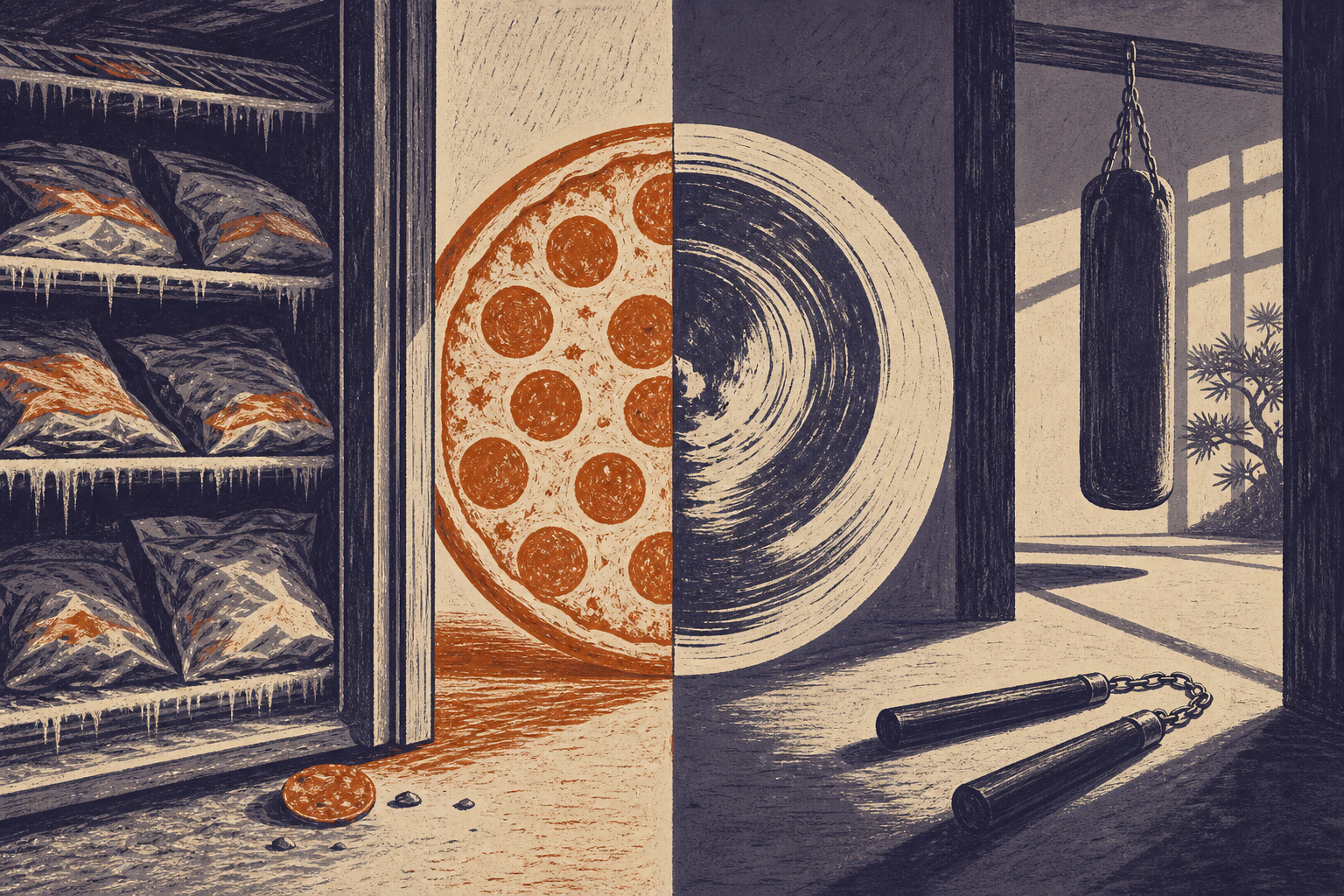
What does a frozen pizza snack have to do with how you think? More than you'd guess. The FDA just pulled roughly 160,000 pounds of frozen pizza snacks from shelves across 21 states over possible metal contamination, and the coverage runs on a familiar loop: the brand, the lot numbers, the photo of a representative product nobody actually ate. You scan it, you check your freezer, you get on with your afternoon. Underneath that procedural shrug sits a small test of judgment. A recall interrupts you. It asks you to react under mild pressure with incomplete information, which is the same situation, scaled down, that you face in almost every decision that matters. The interesting question isn't whether the snacks are safe. It's how you decide what to do when someone hands you alarming news and a half-empty box.
Most of the coverage stops at the freezer door. You get the recall class, the affected states, the contact line for refunds, maybe a sentence on how metal fragments end up in food during processing. Useful, and forgotten by lunch. None of it touches the part that involves you: the few seconds between reading the alert and deciding what it means. That gap is where panic and complacency both set up shop. Do you toss everything, call the manufacturer, or shrug because you bought a different brand? The reporting treats your response as automatic, a box to tick. It isn't. Reacting well to bad news is a skill, and it goes underexamined precisely because it feels like it shouldn't take any skill at all. The recall story has a missing chapter, and that chapter is set inside your own head.
Bruce Lee spent his short life obsessed with that missing chapter. Striking Thoughts, assembled by John Little from Lee's personal writings, collects 825 of his aphorisms across 72 topics, sorted into headings like On Being Human and On Matters of Existence. The organizing idea sits in the opening line Lee chose for himself: a teacher points, he does not hand you the truth. You are meant to find your own footing. The book is built for interruption. Each entry is short enough to read in the time it takes to decide whether to be alarmed, and that format is the argument.
Lee believed clarity under pressure came from rehearsed perspective, not from improvised calm, and a recall alert is exactly the kind of small, sudden demand he had in mind. You read a steadying line, absorb it, and return to the choice with a cooler head. His recurring targets are fear and reactivity, the mind that grabs at the first available response and mistakes speed for competence. He cares about the pause that precedes a good decision, the deliberate beat where you ask what is actually happening instead of what you are afraid is happening. Applied to a freezer full of questionable snacks, this turns almost comically practical: check the lot number, then act.
I'll register one real hesitation. The aphorism form flatters itself. A line like "be like water" feels profound in the moment and dissolves the instant you ask it to do real work, and Striking Thoughts has its share of entries that gesture at depth without paying the bill. Compression can sharpen a thought or hollow it out, and Lee does both, sometimes on the same page. If you want a worked-out philosophy of action, this isn't it. It's raw material, and some of that material is just motivational poster. The better entries earn their brevity.
When Lee writes about self-mastery and personal responsibility, he draws on something concrete: a fighter's understanding that hesitation and overreaction are two ways of losing the same exchange. The years building jeet kune do, the borrowed grammar of Taoism and Zen, all of it feeds a single preoccupation with staying composed while the situation moves. That single concern is why a book of fragments holds together better than it should. What you get is uneven by design. You skip, reread, argue with the weak lines, and pocket the strong ones. The metal fragment in the pizza snack is trivial. The reflex it triggers is not, and Lee makes unusually good company for examining that reflex.
So, back to the question. What does a frozen pizza snack have to do with how you think? It hands you a small interruption that asks you to decide well and fast, which is most of life in miniature. Striking Thoughts won't tell you whether to toss the box. It's more interested in the person doing the deciding, and whether that person reacts or chooses. Read it the way it was built to be read: a few lines when you need them, the rest left for later. The recall will pass. The reflex it tested is yours to keep working on.
Why this book
Set the two side by side and the recall stops looking like a food story. Strip away the brand and the state map and you're left with a structure that repeats everywhere: incomplete information, a clock, a decision that feels bigger in the moment than it usually turns out to be. The frozen pizza snack is just this week's version. Next week it's a market dip, a worrying text, a headline about something closer to home. The contents change while the mechanics hold steady. Lee's whole project was learning to meet that structure the same way each time, with a pause instead of a flinch. The recall coverage measures the event in pounds and states. Striking Thoughts measures it in the quality of the half-second after you read the alert. One of those numbers you can look up. The other you have to build, and 825 short prompts make a reasonable place to start practicing.
Bridges by email
A news story and the book that goes with it, whenever we publish one.