Before You Replay Joshua Henry's Ragtime Ovation, Read August Wilson's The Piano Lesson
Joshua Henry just won the 2026 Tony for Best Actor in a Musical, and the clips making the rounds explain why: as Coalhouse Walker Jr. in Ragtime, he holds a note long enough that audiences keep rising mid-scene, before the song has even finished.
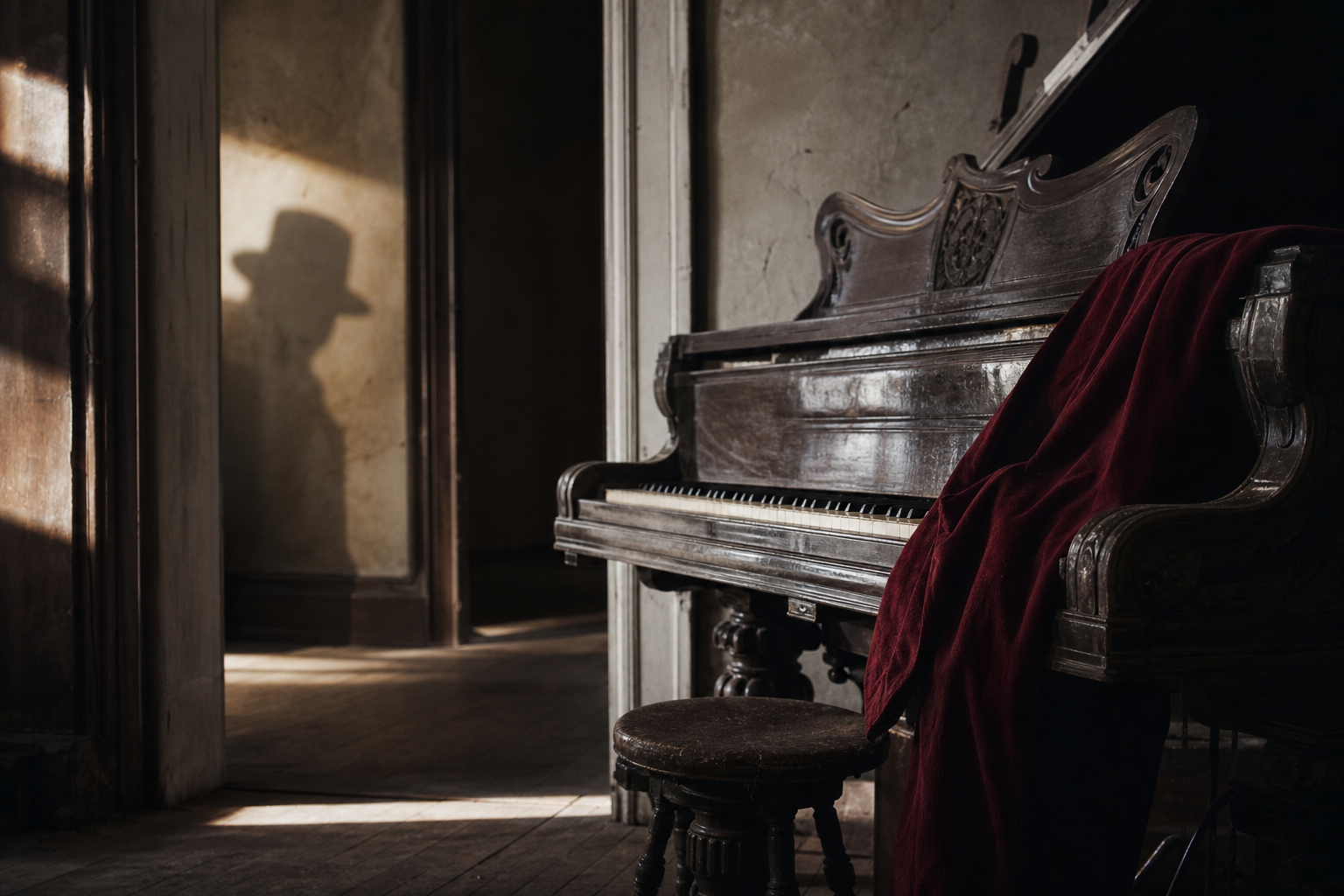
Joshua Henry just won the 2026 Tony for Best Actor in a Musical, and the clips making the rounds explain why: as Coalhouse Walker Jr. in Ragtime, he holds a note long enough that audiences keep rising mid-scene, before the song has even finished. That kind of ovation is its own small rebellion against theater etiquette. The performance lands because of what Coalhouse carries, a Black man in early-twentieth-century America whose dignity becomes a thing other people feel entitled to take. Henry sings the cost of that. If you want to sit with the same question without the orchestra swell, August Wilson wrote a quieter, fiercer version of it. The Piano Lesson asks who owns the proof that a family survived, and whether survival should ever be sold for a shot at something better.
Most coverage of the win stops at the standing ovations and the vocal range, which is fair, since both are real and on tape. What gets skipped is the mechanism underneath. Coalhouse does not move people because he sings well. He moves people because the play sets up an inheritance, a humiliation, and an impossible choice, then makes you watch a person decide what his pride is worth. Strip the music away and you still have that engine. The question is how a story builds an emotional standing ovation out of plain argument, with no belted high note doing the lifting. Wilson is the place to study that. He wrote a play where the loudest instrument sits silent in the corner for most of the night, and everyone in the room keeps circling it anyway.
The setup is almost stubbornly small. It is 1936, the Charles family home in Pittsburgh, and Boy Willie shows up from Mississippi with a truck full of watermelons and a plan. He wants to buy the land his ancestors worked as slaves, and to do it he will sell the family piano. His sister Berniece keeps the piano. She will not sell. That is the whole standoff, and Wilson refuses to make it easy by handing either side the wrong argument. Boy Willie is right that a piano gathering dust does nothing for a man who wants land of his own and a future he can stand on.
Berniece is right that the piano is the only physical record of what the family came through, its legs carved with the faces of relatives once traded as property. Both of them want to honor the dead. They disagree, completely, about what honoring them looks like. The carvings are where the play earns its weight. An enslaved ancestor was forced to carve the family's likenesses into the wood, turning an object of ownership into a record of the owned. So when Boy Willie offers to convert that into cash for land, he is not being callous.
He is making a defensible case that the past is only useful if it buys a present. The friction is that Wilson never lets you fully take his side, because Berniece is sitting right there, refusing to turn her grandmother into a down payment. The title points at something bleaker than the word "lesson" suggests. A family can be stripped of the symbols of its history and, at the same time, find the present still bolted shut against them. The land Boy Willie wants was once worked by people his family could not profit from.
Now he can buy it only by selling the proof of what they endured. Opportunity and memory go on a scale, and Wilson rigs it so neither wins cleanly. Music runs through all of this as the actual subject, not the mood lighting. The piano is an instrument nobody quite plays freely anymore, because playing it means touching everything it represents. When sound finally comes out of it near the end, Wilson stages it as an exorcism, which is a heavy lift for one upright piano. The supernatural turn asks more faith than the realism around it can quite repay, and the seams show.
The play won Wilson his second Pulitzer and the New York Drama Critics Circle Award for Best Play, and a recent Netflix film put Samuel L. Jackson in the cast for a new round of attention. None of that is why it works. It works because two people who love each other argue about a piece of furniture, and somehow that argument holds an entire history of what gets taken and what refuses to be sold.
If the Henry clips pulled you in, read The Piano Lesson before or after you find the full Ragtime cast recording, and notice which one you cannot shake. It is a short play and a fast read, mostly two siblings in a kitchen refusing to back down. Watch how Wilson makes you want both of them to win, then close the book and listen to Coalhouse again. You will hear the argument underneath the aria, the part the standing ovations cannot quite tell you on their own.
Why this book
Set Coalhouse beside the Charles family and the shared circuitry shows. Henry's solos hit because Ragtime spends an act establishing exactly what Coalhouse has earned and how casually it is stripped from him, so the voice arrives already loaded. The note is the payoff, not the source. Wilson does the same thing on a stage with no orchestra, building the charge through argument and refusal until the smallest gesture, a hand on the piano, an unsung promise, lands like a held high C. Once you have watched a play generate that current from dialogue alone, the musical's effect stops feeling like vocal fireworks. You start to notice the setup beneath the swell, the way a performer is handed an emotional debt the audience has been tracking all night. That is a transferable habit of attention, and it works on any stage where someone is asked to pay for dignity that was never theirs to lose.
Bridges by email
A news story and the book that goes with it, whenever we publish one.