Before the Hegseth Vote, Follow the Orders Down: Seymour Hersh's Chain of Command
This week the House is expected to vote on impeaching Pete Hegseth, and party math will likely settle the outcome before the first floor speech begins.
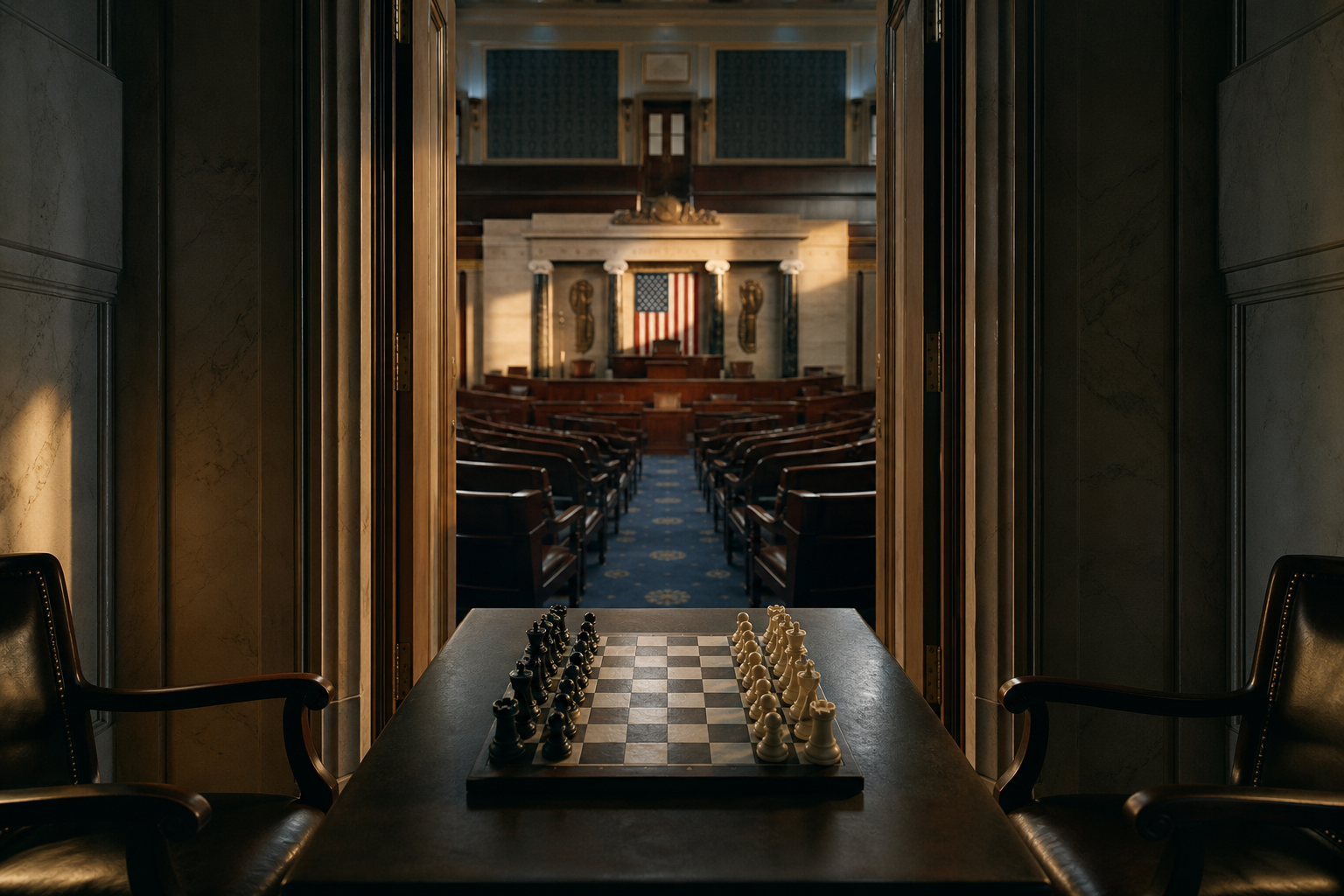
This week the House is expected to vote on impeaching Pete Hegseth, and party math will likely settle the outcome before the first floor speech begins. A cabinet impeachment is an odd instrument. The Senate has never convicted a cabinet officer, and a Pentagon chief serves at the president's pleasure regardless, so the vote rarely removes anyone. Its real product is a roll call. Every member attaches a name to a judgment about how the Defense Department is being run, and that list stays in the record for the historian who pulls it out decades later beside old hearing transcripts. The list stays quiet about how an order travels from a secretary's office to a pilot, a contractor, or a guard working a night shift. The consequential facts usually live along that route, several floors below the room where anyone casts a vote.
The closest echo is the spring of 2004. Photographs from Abu Ghraib reached the public, and that May Donald Rumsfeld went before Congress to take responsibility. He later said he offered President Bush his resignation twice, and Bush declined both times. Rumsfeld stayed until late 2006. The prosecutions that followed landed mostly on low-ranking soldiers, which settled the legal question and left the larger one open: did the abuse start with a handful of guards, or with decisions made far from the cellblock? Washington spent that year arguing over one man's job while the interrogation guidance that reached the prison went largely untraced. Coverage of a vote tends to repeat that habit, keeping the camera on the person at the top and losing sight of the paper trail between his desk and the people who act on what leaves it.
Seymour Hersh's Chain of Command gathers the reporting he published in The New Yorker after September 11, along with material that was new at the time, and points all of it at one question: how did the country get from that clear morning in 2001 to a divisive, dirty war in Iraq? Hersh came to the job with long practice. Some thirty-five years earlier he had broken the story of the My Lai massacre in Vietnam and won a Pulitzer Prize for it, so he already knew what it took to follow an atrocity past the men who committed it.
The title is the thesis. In his Abu Ghraib pieces, Hersh refuses to stop at the guards in the photographs and keeps pulling the thread upward, toward the officers, agencies, and policy choices that shaped what happened inside the prison. You watch an atrocity that looked like a local failure acquire a history, with pressures arriving from people who never set foot in the place. Some of the links he draws rest on thinner evidence than others, and a few read as strong inference more than proof. His method survives those weak spots: assume conduct at the bottom has causes at the top, then go find the paperwork.
His reporting on weapons of mass destruction runs the same circuit in reverse. Here the cargo is intelligence moving up toward the White House, and Hersh shows how it got bent in transit to fit what senior officials hoped to hear. He was writing about the administration's shaky claims months before most of his peers, which gives those chapters an uncomfortable vindication now.
The hunt for Al Qaeda sits behind all of this. Hersh ties early missteps in that pursuit to the disasters that followed on the ground in Iraq, and the connection turns a stack of magazine pieces into one continuous argument about institutions that reward the information they already wanted. Once you see that pattern in the Iraq chapters, it becomes hard to read any Pentagon briefing without wondering what got trimmed on the way to the podium.
The book has serious weaknesses. Hersh leans hard on anonymous sources, and you are often asked to trust a retired officer you will never meet. Sometimes he stacks several unnamed officials on a single conclusion, and none of them can be checked. Because the book is assembled from magazine work, some passages circle back over ground already covered, and the seams show. His later career drew sharper doubts about sourcing, which is a reasonable suspicion to carry into these pages. I still think his account of this period has held up better than the official version it was written against. That is a low bar, and he cleared it by a wide margin.
Chain of Command is a book about one war, and it has aged into a field guide for reading a military bureaucracy under pressure. If the Hegseth vote has you wondering what sits beneath the roll call, Hersh's reporting is a sturdy place to begin, flaws included. Go in skeptical of his sources and patient with the repetition, and you will come out with a sharper sense of how responsibility moves through an institution built on rank. The guards at Abu Ghraib stood at the bottom of a long staircase of decisions, and Hersh spent a book climbing it one step at a time. Whatever the House decides this week, the name at the top of the ledger marks only the highest step.
Why this book
Hersh kept pressing one question that applies to this week as well: where does an inquiry stop? Accountability efforts tend to halt at whichever level is politically convenient, and in 2004 the convenient level was enlisted soldiers. A cabinet impeachment moves the stopping point to the far end of the hierarchy, onto a single name that can absorb blame while the processes beneath it go unexamined. The instrument itself has shifted in the years since. With the Abu Ghraib photographs public and a war going badly, no impeachment of Rumsfeld ever reached the House floor. Hearings and editorials carried the pressure, and his future stayed in the president's hands. This week Thomas Massie, a Republican from Kentucky, has used House rules to force a vote on Hegseth within days, arriving just after an election in which voters rebuked the administration. A mechanism that would once have looked drastic now shows up on a schedule, and familiarity drains some of its force. A floor vote, whatever its result, will not produce the internal emails or the account from the officer who carried an order out and had doubts about it. That testimony comes from subpoenas and document requests. Treat the vote as a marker, then watch who gets called to testify and whether anyone below the top gets asked what they were told to do. Those answers will tell you more about the Pentagon than the tally will.
Bridges by email
A news story and the book that goes with it, whenever we publish one.