
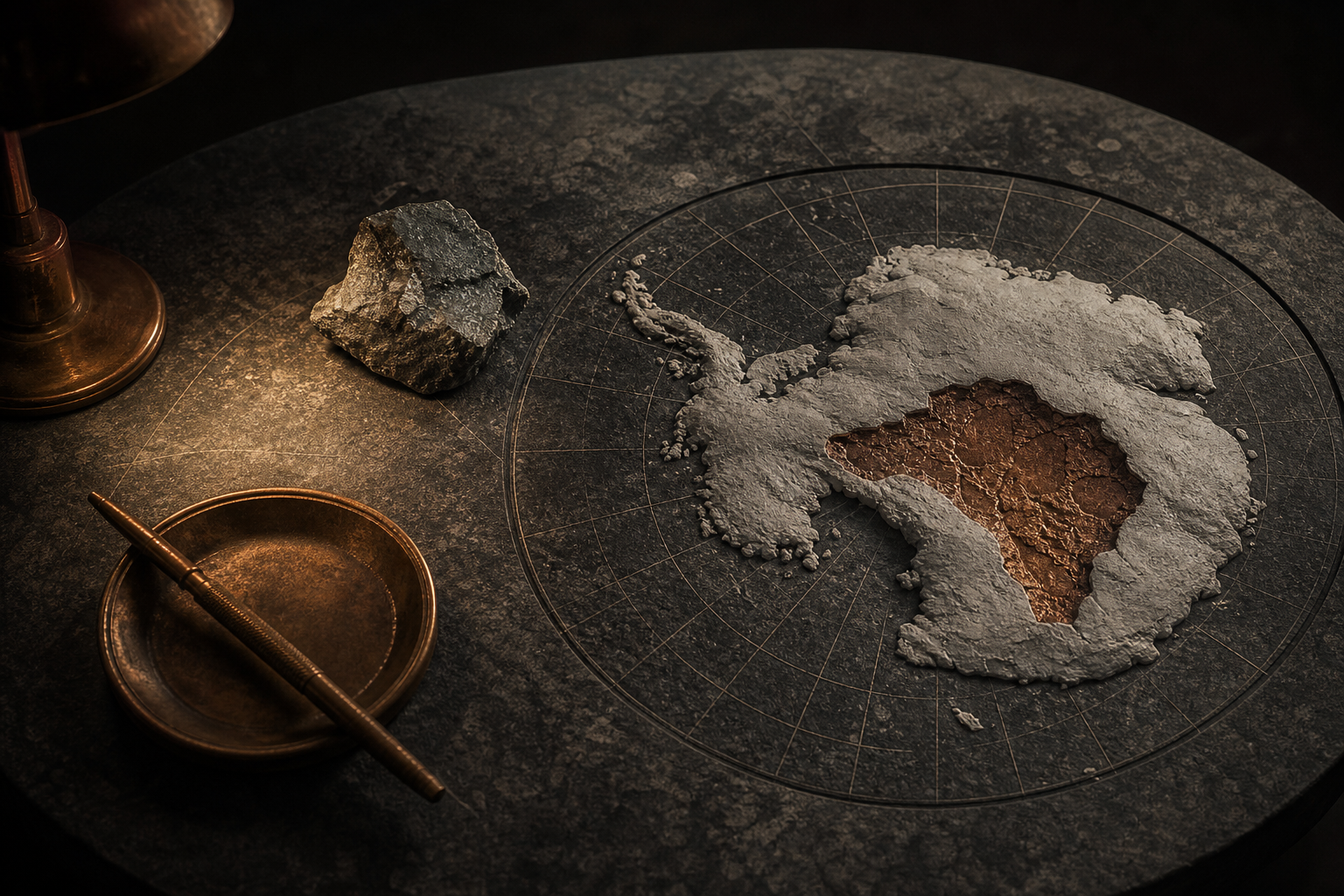
Picture a research team running deep-radar surveys over East Antarctica and catching something steady under all that ice: a block of ancient crust, a craton, wider than India, sitting through the last billion years like furniture nobody remembered buying. The video clip making the rounds calls it a hidden megastructure, a word that does a lot of work for very little money. The geologists found something older and stranger than the marketing: a stable slab of deep rock that helps explain why the continent behaves the way it does. Antarctica has always been good at this trick. It hides its facts under two miles of ice and lets the rest of us fill the silence with whatever we brought along.
The signal worth keeping is the craton, a real piece of geology that shifts how the continent's deep past gets reconstructed. The noise is everything the word megastructure smuggles in: the suggestion of something built, something placed, something meant. One is a finding about rock that has been cooling since before complex life. The other is a feeling about Antarctica that predates the science entirely. Most coverage blurs the two, because the blur clicks better than the craton. To understand why a sober crustal discovery gets dressed up as a buried artifact the moment it surfaces, you need the back catalogue of southern speculation, the centuries of maps and rumors that taught us to expect a secret down there before anyone had stood on the place.
Brad Olsen's Secrets of Antarctica is that back catalogue, assembled with more enthusiasm than caution. The book opens on a real puzzle: Age of Exploration maps, including the Piri Reis chart, that appear to show a southern coastline centuries before the continent's official discovery. From there Olsen pulls the thread through the old dream of a lost southern landmass and the durable legend of giants in Patagonia, treating the historical record and the rumor as neighbors who keep turning up at the same parties. The stronger material is documentary. Nazi Germany's New Swabia expedition of the late 1930s was real, a territorial claim staked by aircraft dropping markers onto the ice.
Admiral Richard Byrd's Operation Highjump was real too, a large U.S. naval push toward the pole in the late 1940s. Olsen lays the claims and the records side by side, and while he sticks to what was charted, flown, and filed, the book keeps a steady documentary pulse. Then it leaves the dock. Byrd's account of objects moving pole to pole at extraordinary speed becomes a hinge, and the second half swings wide into hollow earth, a hole at the south pole, UFO bases, trapped civilizations, and a recurring black goo that ties Antarctica to transhumanist dread.
Olsen's method is accumulation. He stacks claims rather than weighing them, and the side-by-side framing that felt careful around New Swabia flattens everything onto one plane, so a dated naval operation and an inner-earth civilization share the same calm narrative voice. That flatness is the real problem, and I want to be plain about it. Setting a documented 1930s expedition next to a hole at the pole does not make the second claim more believable. It makes the first one feel cheaper by association. The book treats unequal evidence as a panel of equally interesting dinner guests, and that is where it loses me.
What survives the skepticism is the cultural history. Olsen is good on the long human habit of treating Antarctica as a blank made for projection, a place so hard to reach that the mind furnishes it before the body arrives. The Piri Reis argument is wobbly as cartography and charming as folklore, and the same goes for most of the giants and lost continents. As a record of what people have wanted Antarctica to be, the book holds together. As an argument about what actually sits under the ice, it asks you to leave your weighing instruments at the door, and you should decline.
So when the buried-megastructure video circles back, you have somewhere better to stand than the recap. There is a real craton, ancient and stable, and it does adjust the deep-time picture of the continent. There is also a long appetite for Antarctic secrets that turns every survey into a rumor, and Olsen's book charts that appetite even as it keeps feeding it. Take the craton seriously and the costume lightly. The ice keeps its facts; the rest is what we keep bringing.