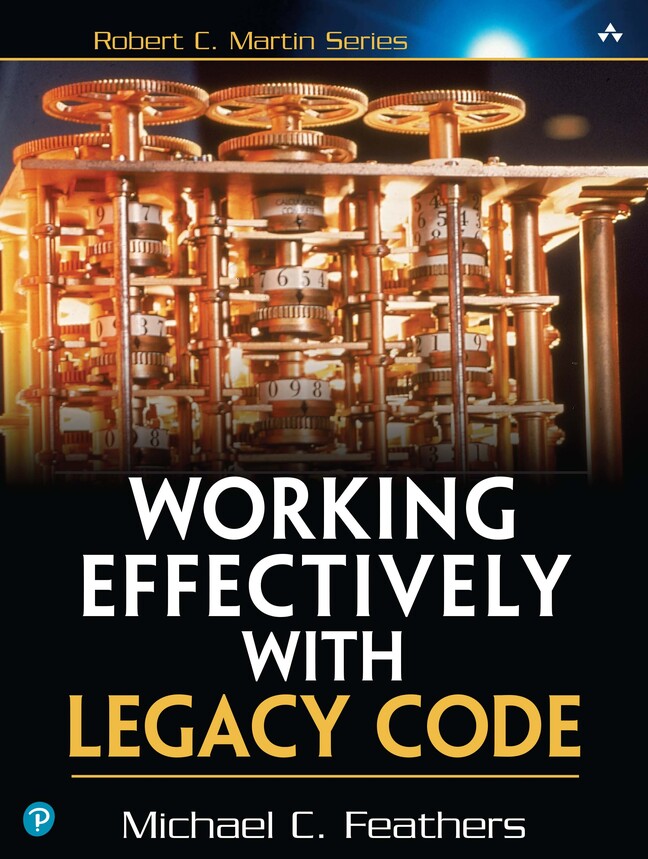
Working Effectively with Legacy Code
Series: Robert C. Martin Series
- Themes
- Legacy software maintenance, Code refactoring, Regression testing
Who it’s for
- Developers maintaining or changing legacy software applications
- Programmers seeking practical refactoring and code-testing strategies
Where it sits
How strongly BookFrontier reads the book as belonging to each subject.
Nearest books
Matched by our semantic model. Ordered by what its readers also loved.
 Test Driven DevelopmentKent Beck52% subject matchShares Testing & QA and Programming Basics
 Agile Software Development, Principles, Patterns, and PracticesRobert C. Martin68% subject match
 Domain-Driven DesignEric Evans56% subject matchShares Software Development
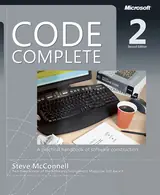 Code CompleteSteve McConnell61% subject matchShares Testing & QA, Software Development and Programming Basics
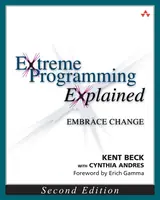 Extreme Programming ExplainedKent Beck, Cynthia Andres54% subject matchShares Software Development and Programming Basics
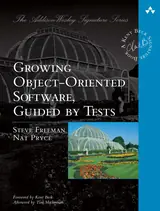 Growing Object-Oriented Software, Guided by TestsSteve Freeman, Nat Pryce57% subject matchShares Testing & QA
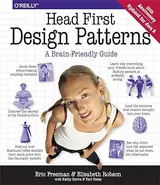 Head First Design PatternsEric Freeman, Elisabeth Robson55% subject match
 PeoplewareTom DeMarco, Tim Lister52% subject match
Start with three books, and this one can be the first.
Members get a new edition every morning: a route out from their books to essays, research and talks, with the reason for each.
Sign upAbout this book
This book provides programmers with the ability to cost-effectively handle common legacy code problems without having to go through the hugely expensive task of rewriting all existing code. It describes a series of practical strategies that developers can employ to bring their existing software applications under control. The author provides useful guidance about how to use these strategies when refactoring or making functional changes to codebases.
Continue reading
One of the book's key points is that it teaches developers to write tests that can be used to ensure they are not unintentionally changing the application as they optimize it. Examples are provided in Java, C++, and C#, and the book assumes that the reader has some knowledge of UML notation. Strategies using UML and code in C++ and Java are emphasized, while language-independent advice is delivered in sidebars and appendices for language-specific users.
Publisher details
Publisher categories
- Software Development
- Testing & QA
- Authors
- Michael Feathers
- Publisher
- Pearson Education
- Published
- September 22, 2004
- Format
- Print & ebook
- Reading lane
- Software Development