
Words, Not Swords
Iranian Women Writers and the Freedom of Movement
Farzaneh Milani examines how movement, sex segregation, and women’s writing intersect in Iranian literature and film.
Freedom of Movement
Come here for
- Iranian women writers and the history of freedom of movement
- Connections between veiling, foot binding, Cinderella, and Barbie
Expect
- Discussion of beauty and the erotics of passivity
- An argument extending freedom of movement across cultures
Where it sits
How strongly BookFrontier reads the book as belonging to each subject.
Nearest books
Matched by our semantic model. Ordered by what its readers also loved.
 Islam in PracticeReinhold Loeffler47% subject match
 City of LiesRamita Navai55% subject match
 Until We Are FreeShirin Ebadi57% subject match
 Revolutionary IranMichael Axworthy48% subject match
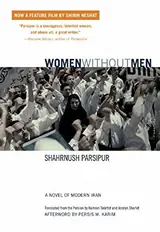 Women Without MenShahrnush Parsipur69% subject match
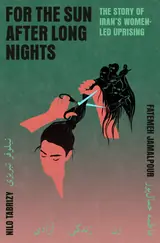 For the Sun After Long NightsFatemeh Jamalpour, Nilo Tabrizy66% subject matchShares Women's Studies
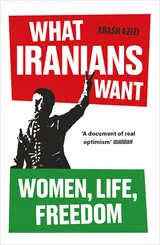 What Iranians WantArash Azizi66% subject match
For younger readers: If You Could Be Mine, Blue Thread, A Thousand Nights
Start with three books, and this one can be the first.
Members get a new edition every morning: a route out from their books to essays, research and talks, with the reason for each.
Sign upAbout this book
A woman not only needs a room of her own, as Virginia Woolf wrote, but also the freedom to leave it and return to it at will; for a room without that right becomes a prison cell. The privilege of self-directed movement, the power to pick up and go as one pleases, has not been a traditional "right" of Iranian women. This prerogative has been denied them in the name of piety, anatomy, chastity, class, safety, and even beauty.
Continue reading
It is only during the last 160 years that the spell has been broken and Iranian women have emerged as a moderating, modernizing force. Women writers have been at the forefront of this desegregating movement and renegotiation of boundaries.
Words, Not Swords explores the legacy of sex segregation and its manifestations in Iranian literature and film and in notions of beauty and the erotics of passivity. Milani expands her argument beyond Iranian culture, arguing that freedom of movement is a theme that crosses frontiers and dissolves conventional distinctions of geography, history, and religion. She makes bold connections between veiling and foot binding, between Cinderella and Barbie, between the figures of the female Gypsy and the witch. In so doing, she challenges cultural hierarchies that divert attention from key issues in the control of women across the globe.
Publisher details
Publisher categories
- Middle Eastern Lit Crit
- Women Authors Criticism
- Authors
- Farzaneh Milani
- Publisher
- Syracuse University Press
- Published
- May 16, 2011
- Format
- Print & ebook
- Reading lane
- Middle Eastern Lit Crit