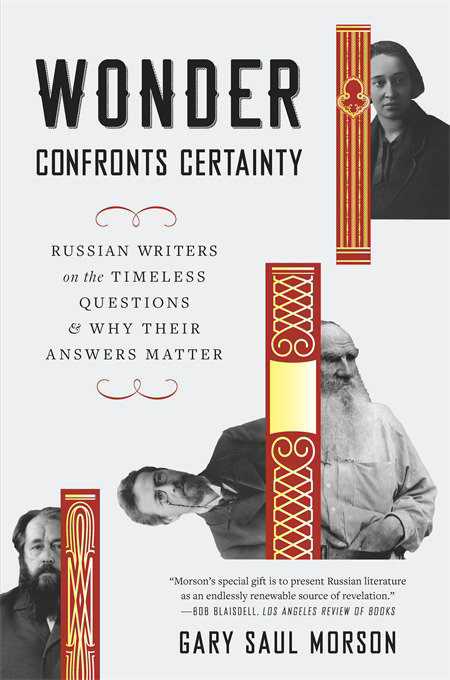
Wonder Confronts Certainty
Russian Writers on the Timeless Questions and Why Their Answers Matter
Where it sits
How strongly BookFrontier reads the book as belonging to each subject.
Nearest books
Matched by our semantic model. Ordered by what its readers also loved.
 Fifty-Two StoriesAnton Chekhov51% subject match
 Cold WarriorsDuncan White58% subject match
 The Last TsarTsuyoshi Hasegawa49% subject match
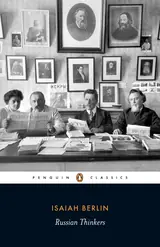 Russian ThinkersIsaiah Berlin, Henry Hardy68% subject matchShares Russian Lit Crit
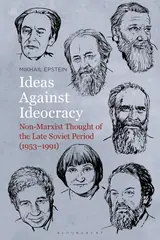 Ideas Against IdeocracyMikhail Epstein65% subject match
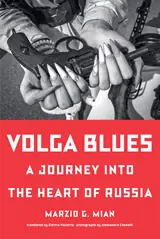 Volga BluesMarzio G. Mian62% subject match
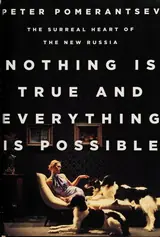 Nothing Is True and Everything Is PossiblePeter Pomerantsev61% subject match
For younger readers: Classic Tales and Fables for Children
Start with three books, and this one can be the first.
Members get a new edition every morning: a route out from their books to essays, research and talks, with the reason for each.
Sign upAbout this book
A noted literary scholar traverses the Russian canon, exploring how realists, idealists, and revolutionaries debated good and evil, moral responsibility, and freedom.
Since the age of Tolstoy, Dostoevsky, and Chekhov, Russian literature has posed questions about good and evil, moral responsibility, and human freedom with a clarity and intensity found nowhere else.
Continue reading
In this wide-ranging meditation, Gary Saul Morson delineates intellectual debates that have coursed through two centuries of Russian writing, as the greatest thinkers of the empire and then the Soviet Union enchanted readers with their idealism, philosophical insight, and revolutionary fervor.
Morson describes the Russian literary tradition as an argument between a radical intelligentsia that uncompromisingly followed ideology down the paths of revolution and violence, and writers who probed ever more deeply into the human condition. The debate concerned what Russians called “the accursed questions”: If there is no God, are good and evil merely human constructs? Should we look for life’s essence in ordinary or extreme conditions? Are individual minds best understood in terms of an overarching theory or, as Tolstoy thought, by tracing the “tiny alternations of consciousness”? Exploring apologia for bloodshed, Morson adapts Mikhail Bakhtin’s concept of the non-alibi—the idea that one cannot escape or displace responsibility for one’s actions. And, throughout, Morson isolates a characteristic theme of Russian culture: how the aspiration to relieve profound suffering can lead to either heartfelt empathy or bloodthirsty tyranny.
What emerges is a contest between unyielding dogmatism and open-minded dialogue, between heady certainty and a humble sense of wonder at the world’s elusive complexity—a thought-provoking journey into inescapable questions.
Publisher details
Publisher categories
- Russian Lit Crit
- 19th-Century Literary Criticism
- 20th-Century Literary Criticism
- Authors
- Gary Saul Morson
- Publisher
- WW Norton
- Published
- August 5, 2025
- Format
- Print & ebook
- Reading lane
- Russian Lit Crit