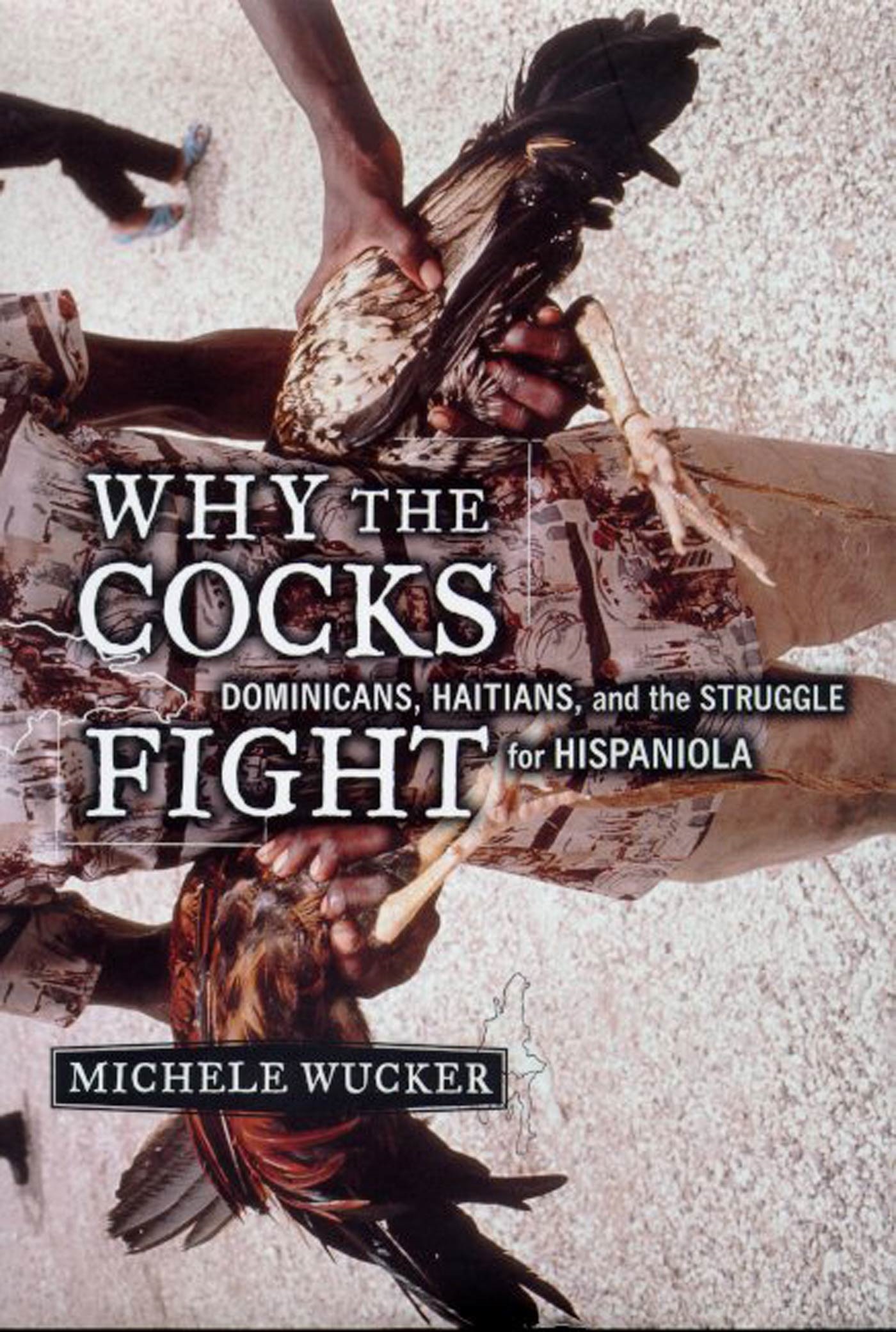
Why the Cocks Fight
Dominicans, Haitians, and the Struggle for Hispaniola
- Themes
- Cockfighting as cultural ritual, Haitian-Dominican divisions, U.S. policy in Hispaniola
Who it’s for
- Readers interested in Caribbean history and politics
- Readers exploring Haitian-Dominican relations and cockfighting
Where it sits
How strongly BookFrontier reads the book as belonging to each subject.
Nearest books
Matched by our semantic model. Ordered by what its readers also loved.
 On Becoming CubanLouis A. Pérez Jr.46% subject matchShares Caribbean & Latin American Studies
 Brazil on the RiseLarry Rohter39% subject match
 Haiti: The Aftershocks of HistoryLaurent Dubois53% subject matchShares History of Haiti
 Revolutionary Masculinity and Racial InequalityBonnie A. Lucero50% subject matchShares Caribbean & Latin American Studies
 Cuba and the U.S. EmpireJane Franklin49% subject match
 Sexual Revolutions in CubaCarrie Hamilton49% subject match
 The Farming of BonesEdwidge Danticat49% subject match
 Cuba in the American ImaginationLouis A. Pérez Jr.48% subject match
For younger readers: If Dominican Were a Color, Taste of Salt, My Latin America and the Caribbean: A Celebration
Start with three books, and this one can be the first.
Members get a new edition every morning: a route out from their books to essays, research and talks, with the reason for each.
Sign upAbout this book
Like two roosters in a fighting arena, Haiti and the Dominican Republic are encircled by barriers of geography and poverty. They co-inhabit the Caribbean island of Hispaniola, but their histories are as deeply divided as their cultures: one French-speaking and black, one Spanish-speaking and mulatto. Yet, despite their antagonism, the two countries share a national symbol in the rooster--and a fundamental activity and favorite sport in the cockfight.
Continue reading
In this book, Michele Wucker asks: "If the symbols that dominate a culture accurately express a nation's character, what kind of a country draws so heavily on images of cockfighting and roosters, birds bred to be aggressive? What does it mean when not one but two countries that are neighbors choose these symbols? Why do the cocks fight, and why do humans watch and glorify them?"
Wucker studies the cockfight ritual in considerable detail, focusing as much on the customs and histories of these two nations as on their contemporary lifestyles and politics. Her well-cited and comprehensive volume also explores the relations of each nation toward the United States, which twice invaded both Haiti (in 1915 and 1994) and the Dominican Republic (in 1916 and 1965) during the twentieth century. Just as the owners of gamecocks contrive battles between their birds as a way of playing out human conflicts, Wucker argues, Haitian and Dominican leaders often stir up nationalist disputes and exaggerate their cultural and racial differences as a way of deflecting other kinds of turmoil. Thus Why the Cocks Fight highlights the factors in Caribbean history that still affect Hispaniola today, including the often contradictory policies of the U.S.
Publisher details
Publisher categories
- Dominican Republic History
- History of Haiti
- Authors
- Michele Wucker
- Publisher
- Farrar Straus & Giroux
- Published
- April 3, 2000
- Format
- Print & ebook
- Reading lane
- Dominican Republic History