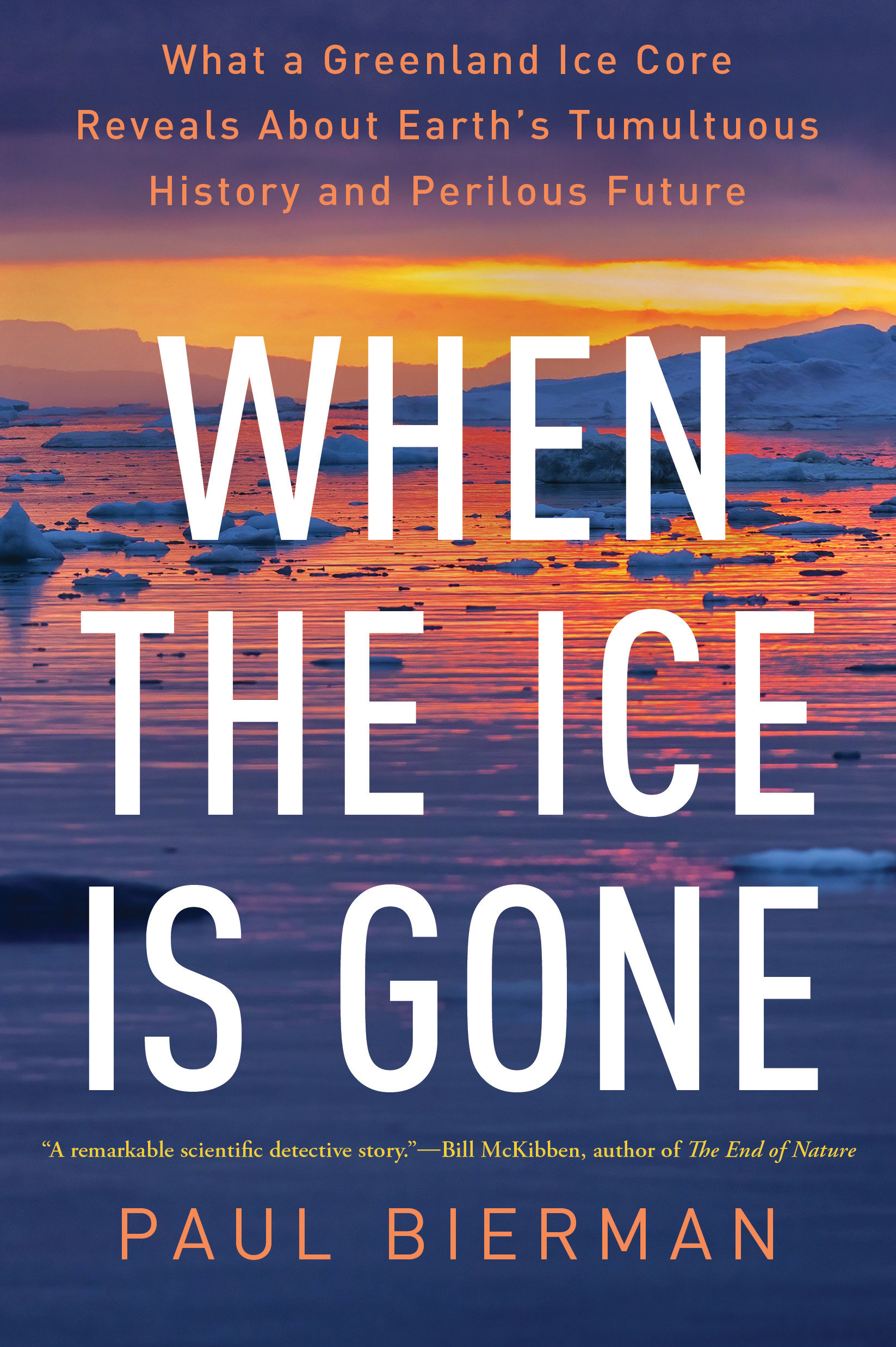
When the Ice Is Gone
What a Greenland Ice Core Reveals About Earth's Tumultuous History and Perilous Future
A recovered core opens a vivid window onto Greenland’s past—and the climate stakes of its future.
- Themes
- Ice-core climate discoveries, Greenland's past and ice loss, Global risks of climate change
Reading the Ice
Come here for
- The detective work behind an unexpected geological discovery
- Greenland’s ice as a record of Earth’s changing climate
Expect
- Science and history braided into a sustained narrative
- A sobering view of how Greenland’s melting reaches far beyond the Arctic
Where it sits
How strongly BookFrontier reads the book as belonging to each subject.
Nearest books
Matched by our semantic model. Ordered by what its readers also loved. Most of these share its genre: Climate Change.
 The Ice at the End of the WorldJon Gertner83% subject match
 We Are Eating the EarthMichael Grunwald51% subject match
 The Burning EarthSunil Amrith52% subject match
 So You Want to Own Greenland?Elizabeth Buchanan70% subject match
 Into the Great EmptinessDavid Roberts68% subject match
For younger readers: Frozen in Time, What Was the Ice Age?, Ice Drift
Start with three books, and this one can be the first.
Members get a new edition every morning: a route out from their books to essays, research and talks, with the reason for each.
Sign upAbout this book
A New Yorker Best Book of 2024
Paul Bierman’s realization that Greenland’s ice sheet melted when Earth was no warmer than today sounds an alarm for our planet.
In 2018, lumps of frozen soil, collected from the bottom of the world’s first deep ice core and lost for decades, reappeared in Denmark. When geologist Paul Bierman and his team first melted a piece of this unique material, they were shocked to find perfectly preserved leaves, twigs, and moss.
Continue reading
That observation led them to a startling discovery: Greenland’s ice sheet had melted naturally before, about 400,000 years ago. The remote island’s ice was far more fragile than scientists had realized—unstable even without human interference.
In When the Ice Is Gone, Bierman traces the story of this extraordinary finding, revealing how it radically changes our understanding of the Earth and its climate. A longtime researcher in Greenland, he begins with a brief history of the island, both human and geological, explaining how over the last century scientists have learned to read the historical record in ice, deciphering when volcanoes exploded and humans started driving cars fueled by leaded gasoline.
For the origins of ice coring, Bierman brings us to Camp Century, a U.S. military base built inside Greenland’s ice sheet, where engineers first drilled through mile-thick ice and into the frozen soil beneath. Decades later, a few feet of that long-frozen earth would reveal its secrets—ancient warmth and melted ice.
Changes in Greenland reverberate around the world, with ice melting high in the arctic affecting people everywhere. Bierman explores how losing Greenland’s ice will catalyze devastating events if we don’t change course and address climate change now.
Publisher details
Publisher categories
- Polar Worlds
- Geology
- Climate Change
- Authors
- Paul Bierman
- Publisher
- WW Norton
- Published
- August 5, 2025
- Format
- Print & ebook
- Reading lane
- Polar Worlds