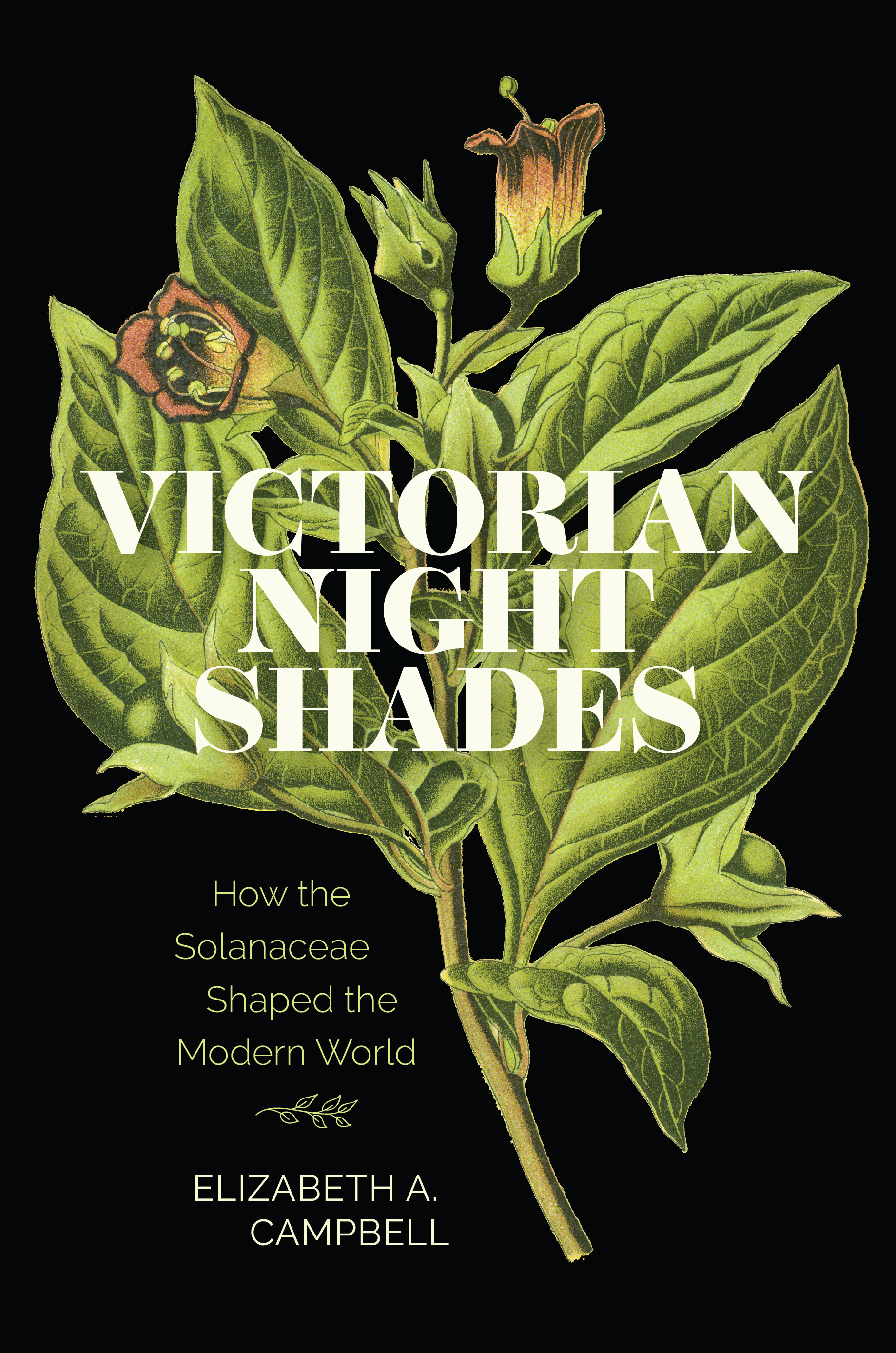
Victorian Nightshades
How the Solanaceae Shaped the Modern World
Trace how changing science, botanical beliefs, and human desire reshaped the Solanaceae's cultural standing.
Nightshades in Victorian Britain
Come here for
- Bittersweet and belladonna’s associations with witchcraft and danger
- The rise of potato, tobacco, petunia, pepper, eggplant, and tomato
Expect
- Conflicts between scientific knowledge and popular sentiment
- A nineteenth-century history moving from suspicion toward cultural favor
Where it sits
How strongly BookFrontier reads the book as belonging to each subject.
Nearest books
Matched by our semantic model. Ordered by what its readers also loved.
 Lost OrchidSarah Bilston49% subject match
 The Regency YearsRobert Morrison47% subject match
 Meet the Georgians: Epic Tales from Britain’s Wildest CenturyRobert Peal47% subject match
 The RoseJennifer Potter45% subject match
For younger readers: The Botany of Desire Young Readers Edition, 10 Plants That Shook The World, Grow
Start with three books, and this one can be the first.
Members get a new edition every morning: a route out from their books to essays, research and talks, with the reason for each.
Sign upAbout this book
A darkly alluring plant family and the arrival of modernity
Victorian Nightshades tells the story of how one plant family—notorious for centuries in England because of its frequently psychoactive and poisonous properties—rose to social and economic prevalence during the nineteenth century.
Continue reading
Beginning with bittersweet and belladonna, the Old World species associated with evil, witchcraft, and dangerous women in an era when traditional botanical beliefs not only assigned morality to plants but also gendered them, Campbell then moves to the ubiquitous potato and tobacco before concluding with four of the Solanaceae that achieved the widest national favor by the end of the century: the ornamental petunia and the edible pepper, eggplant, and tomato.
The story of the nightshades exposes the conflicts between science and popular sentiment and between knowledge and received opinion that defined the nineteenth century. Campbell compellingly details how advances in medical and botanical knowledge, evolutionary theory, and the vagaries of human desire transformed the Solanaceae from a plant family plagued by fear and hostility in the British imagination to one of cultural favor and celebration by the turn of the century—encapsulating the Victorian era’s course to modernity.
Publisher details
Publisher categories
- Victorian Britain (1837-1901)
- 19th-Century Literary Criticism
- Nature in Literature
- Trees & Forests
Show all 5 publisher categories
- Natural History
- Authors
- Elizabeth A. Campbell
- Publisher
- University of Virginia Press
- Published
- March 25, 2025
- Format
- Print & ebook
- Reading lane
- Victorian Britain (1837-1901)