
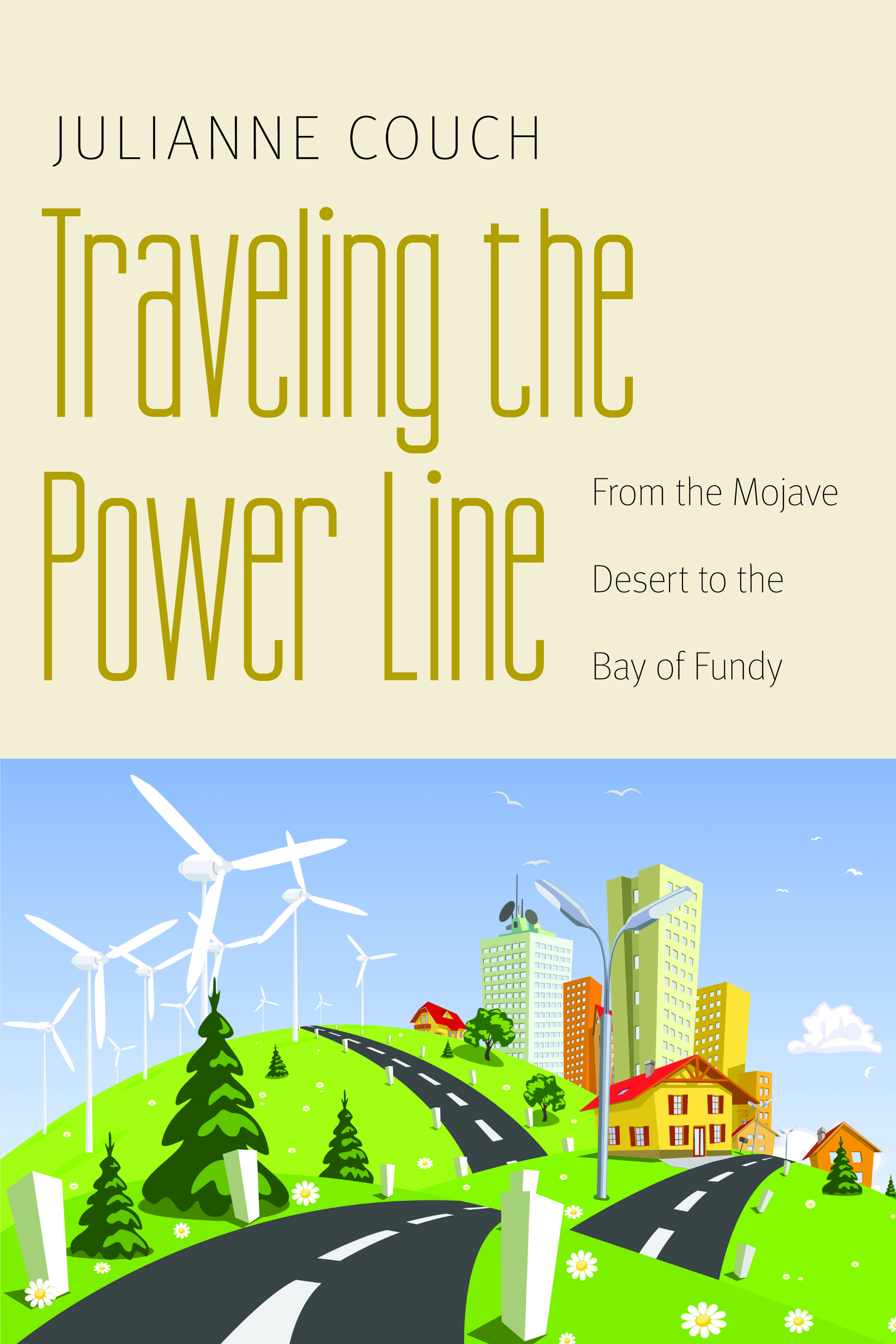
Book
Traveling the Power Line
From the Mojave Desert to the Bay of Fundy
Julianne Couch
Nebraska Paperback · Print & ebook · March 1, 2013
Reading lane: Electrical Power
In our power-hungry world, all the talk about energy—what’s safe and what’s risky, what’s clean and what’s dirty, what’s cheap and what’s easy—tends to generate more heat than light.
At a Glance
Who It's For
Book Details
- Authors
- Julianne Couch
- Publisher
- Nebraska Paperback
- Published
- March 1, 2013
- Format
- Print & ebook
- Theme
- Electrical Power · Energy Industry
- Reading lane
- Electrical Power
Affinity
Publisher Categories
Technology
Renewable Energy
Electrical Power
About This Book
In our power-hungry world, all the talk about energy—what’s safe and what’s risky, what’s clean and what’s dirty, what’s cheap and what’s easy—tends to generate more heat than light. What, Julianne Couch wanted to know, is the real story on power production in this country? Approaching the question as a curious consumer, Couch takes us along as she visits nine sites where electrical power is developed from different fuel sources. From a geothermal plant in the Mojave Desert...
Read full description
Similar Books

Power Trip
Amanda Little · HarperCollins
Affinity signal
Energy Industry
Electrical Power

A Question of Power
Robert Bryce · PublicAffairs
Affinity signal
Energy Industry
Electrical Power

Power Hungry
Robert Bryce, Ax Norman · PublicAffairs
Affinity signal
Energy Industry
Fossil Fuel Energy

Planet Power
Stacy Clark · Barefoot Books
Affinity signal
Electricity & Electronics
Renewable Energy
Routes of Power
Jones · WW Norton
Affinity signal
Fossil Fuel Energy
Energy Industry
The Powerhouse
Steve Levine · Penguin Publishing Group
Affinity signal
Energy Industry
Tech Industry
Volt Rush
Henry Sanderson · Oneworld Publications
Affinity signal
Energy Industry
Mining & Extraction Business

More and More and More
Jean-Baptiste Fressoz · HarperCollins
Affinity signal
Energy Industry
Electrical Power