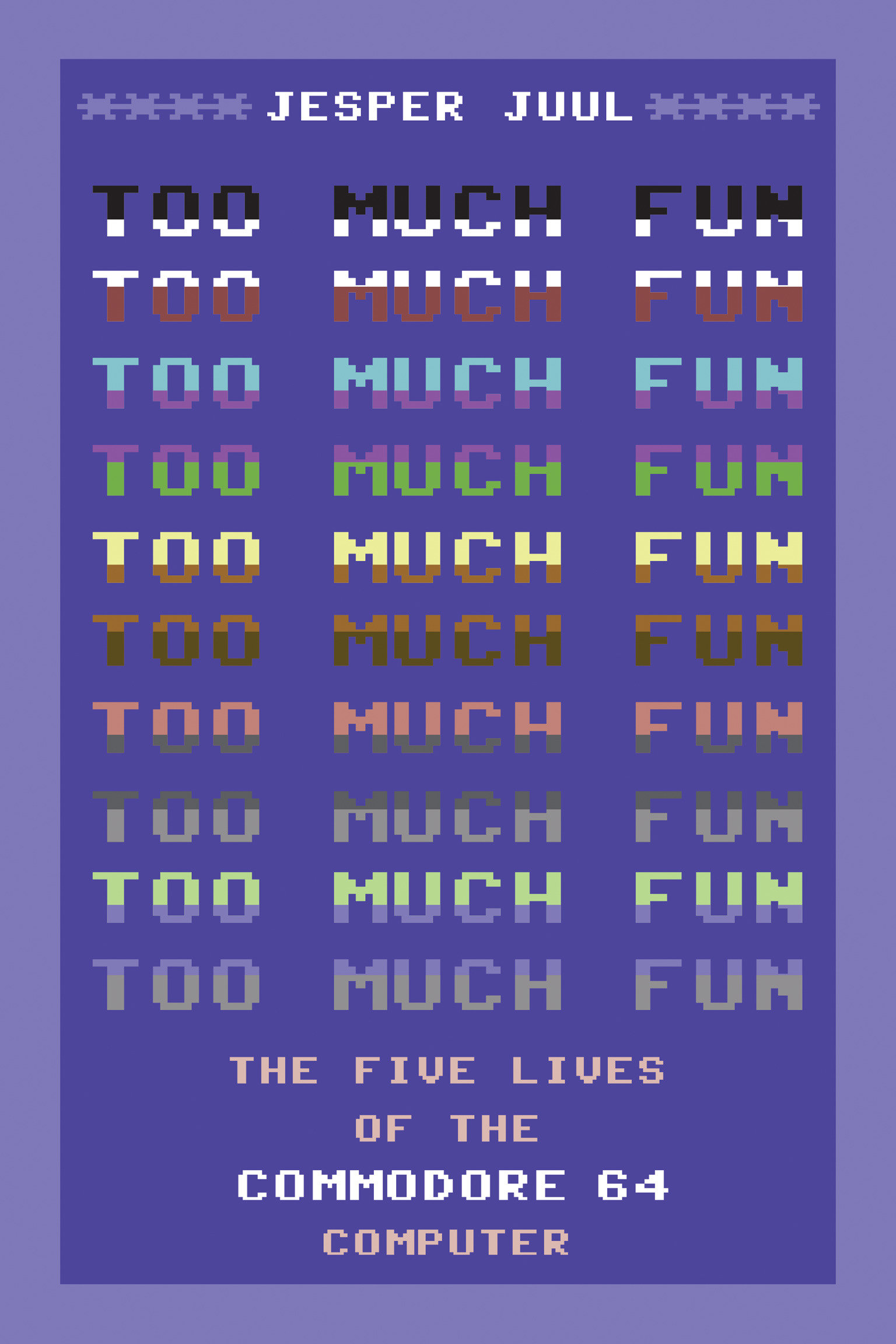
Jesper Juul traces how the Commodore 64 was reinvented across four decades of computing.
- Themes
- Commodore 64 design and history, Computing and video game history, Technology's changing uses
The C64’s Five Lives
Come here for
- The C64’s changing roles, from serious computer to retro device
- Interviews with Commodore engineers, plus games, music, and software
Expect
- Its design and history across US and European contexts
- Discussion of C64 games, music, and software
Where it sits
How strongly BookFrontier reads the book as belonging to each subject.
Nearest books
Matched by our semantic model. Ordered by what its readers also loved.
 JavaScript for KidsNick Morgan41% subject match
 Open CircuitsWindell Oskay, Eric Schlaepfer39% subject match
 How to Invent EverythingRyan North40% subject match
 People's History of Computing in the United StatesJoy Lisi Rankin55% subject matchShares History of Computing
 I Am ErrorNathan Altice54% subject matchShares History of Computing and Games
 ComputingPaul E. Ceruzzi53% subject matchShares History of Computing and History of Technology
 CodeCharles Petzold52% subject match
 Super NintendoKeza MacDonald51% subject matchShares Games
For younger readers: Game On!, Digital Revolutionaries, Science Comics: Computers
Start with three books, and this one can be the first.
Members get a new edition every morning: a route out from their books to essays, research and talks, with the reason for each.
Sign upAbout this book
The surprising history of the Commodore 64, the best-selling home computer of the 1980s—the machine that taught the world that computing should be fun.
The Commodore 64 (C64) is officially the best-selling desktop computer model of all time, according to The Guinness Book of World Records. It was also, from 1985 to 1993, the platform for which most video games were made.
Continue reading
But while it sold at least twice as many units as other home computers of its time, like the Apple II, ZX Spectrum, or Commodore Amiga, it is strangely forgotten in many computer histories. In Too Much Fun, Jesper Juul argues that the C64 was so popular because it was so versatile, a machine developers and users would reinvent again and again over the course of 40 years.
First it was a serious computer, next a game computer, then a computer for technical brilliance (graphical demos using the machine in seemingly impossible ways), then a struggling competitor, and finally a retro device whose limitations are now charming. The C64, Juul shows, has been ignored by history because it was too much fun. Richly illustrated in full color, this book is the first in-depth examination of the C64’s design and history, and the first to integrate US and European histories. With interviews of Commodore engineers and with its insightful look at C64 games, music, and software, from Summer Games to International Karate to Simons’ BASIC, Too Much Fun will appeal to those who used a Commodore 64, those interested in the history of computing and video games and computational literacy, or just those who wish their technological devices would last longer.
Publisher details
Publisher categories
- Tech Industry
- History of Computing
- Games
- Authors
- Jesper Juul
- Publisher
- MIT Press
- Published
- December 10, 2024
- Format
- Print & ebook
- Reading lane
- Tech Industry