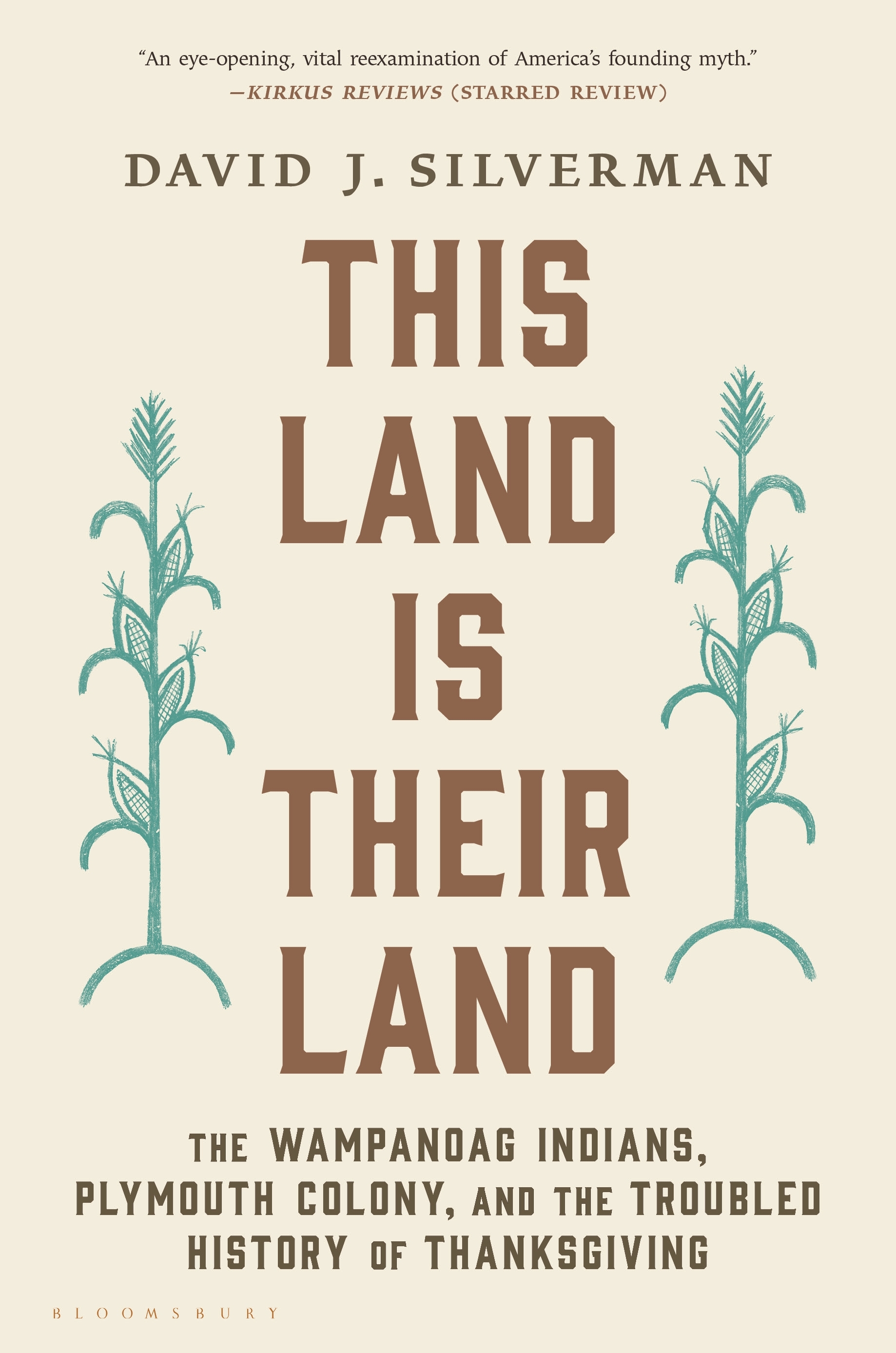
This Land Is Their Land
The Wampanoag Indians, Plymouth Colony, and the Troubled History of Thanksgiving
A Wampanoag-centered history invites a closer, more unsettled look at Thanksgiving’s familiar story.
Rethinking Thanksgiving
Come here for
- A Thanksgiving history centered on Wampanoag people
- The changing alliance between Plymouth and the Wampanoag
Expect
- A long view, from tensions before 1620 to the struggle for self-determination today
- A frank account of alliance, conflict, and the stories a holiday tells
Where it sits
How strongly BookFrontier reads the book as belonging to each subject.
Nearest books
Matched by our semantic model. Ordered by what its readers also loved.
 Whiskey TenderDeborah Taffa48% subject match
 The MayflowerRebecca Fraser63% subject matchShares Colonial America (to 1775)
 The RushNathaniel Philbrick48% subject match
 The Truth about Baked BeansMeg Muckenhoupt50% subject match
 The First ThanksgivingRobert Tracy McKenzie67% subject matchShares Colonial America (to 1775)
 The Hidden Roots of White SupremacyRobert P. Jones54% subject match
 American MidnightAdam Hochschild49% subject match
 Thunder in the MountainsDaniel J. Sharfstein49% subject match
For younger readers: Squanto's Journey, Keepunumuk, 1621: A New Look at Thanksgiving
Start with three books, and this one can be the first.
Members get a new edition every morning: a route out from their books to essays, research and talks, with the reason for each.
Sign upAbout this book
* Pre-order David J. Silverman's next book, The Chosen and The Damned: Native Americans and the Making of Race in the United States. Coming February 2026. *
Ahead of the 400th anniversary of the first Thanksgiving, a new look at the Plymouth colony's founding events, told for the first time with Wampanoag people at the heart of the story.
Continue reading
In March 1621, when Plymouth's survival was hanging in the balance, the Wampanoag sachem (or chief), Ousamequin (Massasoit), and Plymouth's governor, John Carver, declared their people's friendship for each other and a commitment to mutual defense. Later that autumn, the English gathered their first successful harvest and lifted the specter of starvation. Ousamequin and 90 of his men then visited Plymouth for the “First Thanksgiving.” The treaty remained operative until King Philip's War in 1675, when 50 years of uneasy peace between the two parties would come to an end.
400 years after that famous meal, historian David J. Silverman sheds profound new light on the events that led to the creation, and bloody dissolution, of this alliance. Focusing on the Wampanoag Indians, Silverman deepens the narrative to consider tensions that developed well before 1620 and lasted long after the devastating war-tracing the Wampanoags' ongoing struggle for self-determination up to this very day.
This unsettling history reveals why some modern Native people hold a Day of Mourning on Thanksgiving, a holiday which celebrates a myth of colonialism and white proprietorship of the United States. This Land is Their Land shows that it is time to rethink how we, as a pluralistic nation, tell the history of Thanksgiving.
Publisher details
Publisher categories
- Indigenous & Colonial History
- Colonial America (to 1775)
- Native American History
- Authors
- David J. Silverman
- Publisher
- Bloomsbury
- Published
- October 13, 2020
- Format
- Print & ebook
- Reading lane
- Indigenous & Colonial History