
Book
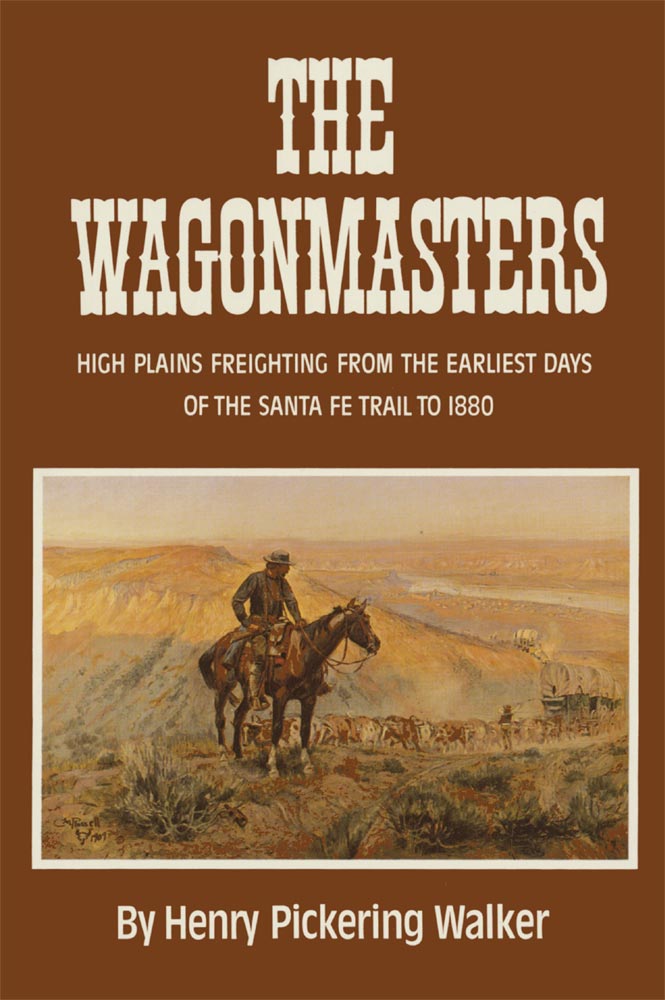
The Wagonmasters
High Plains Freighting From the Earliest Days of the Santa Fe Trail to 1880
Henry Pickering Walker
University of Oklahoma Press · Print & ebook · April 15, 1986
Reading lane: Railroad History
From 1822, when the first wagons were used in the Santa Fe trade, until 1880, when the completion of major railroad lines made the wagon train all but obsolete, wagon freighting was essential to the trade, settlement, and growth of the American West, from the Missouri Valley to the Great Basin.
At a Glance
Who It's For
Book Details
- Authors
- Henry Pickering Walker
- Publisher
- University of Oklahoma Press
- Published
- April 15, 1986
- Format
- Print & ebook
- Theme
- Railroad History · Southwest U.S. History
- Reading lane
- Railroad History
Affinity
Publisher Categories
How Transportation Works
19th-Century America
Transportation
About This Book
From 1822, when the first wagons were used in the Santa Fe trade, until 1880, when the completion of major railroad lines made the wagon train all but obsolete, wagon freighting was essential to the trade, settlement, and growth of the American West, from the Missouri Valley to the Great Basin. Freighters carried goods to and from Santa Fe, bringing in much of the trade goods for the settlements of the Mountain West. Under contract to the government, they supplied the army s...
Read full description
Similar Books

Nothing Like It in the World
Stephen E. Ambrose · Simon & Schuster
Affinity signal
Railroad History
19th-Century America

The Road That Made America
James Dodson · Avid Reader Press / Simon & Schuster
Affinity signal
Colonial America (to 1775)
19th-Century America

Wagon Wheels
Barbara Brenner · HarperCollins
Affinity signal
19th-Century U.S.
Civil War Era

The Log of a Cowboy
Andy Adams · HarperCollins
Affinity signal
19th-Century American Fiction
Western Romance
The Adventures of the Mountain Men
Stephen Brennan · Skyhorse
Affinity signal
Western U.S. History
Mountain West Travel (AZ, CO, ID, MT, NM, NV, UT, WY)

The Undiscovered Country
Paul Andrew Hutton · Penguin Publishing Group
Affinity signal
Southwest U.S. History
Western U.S. History