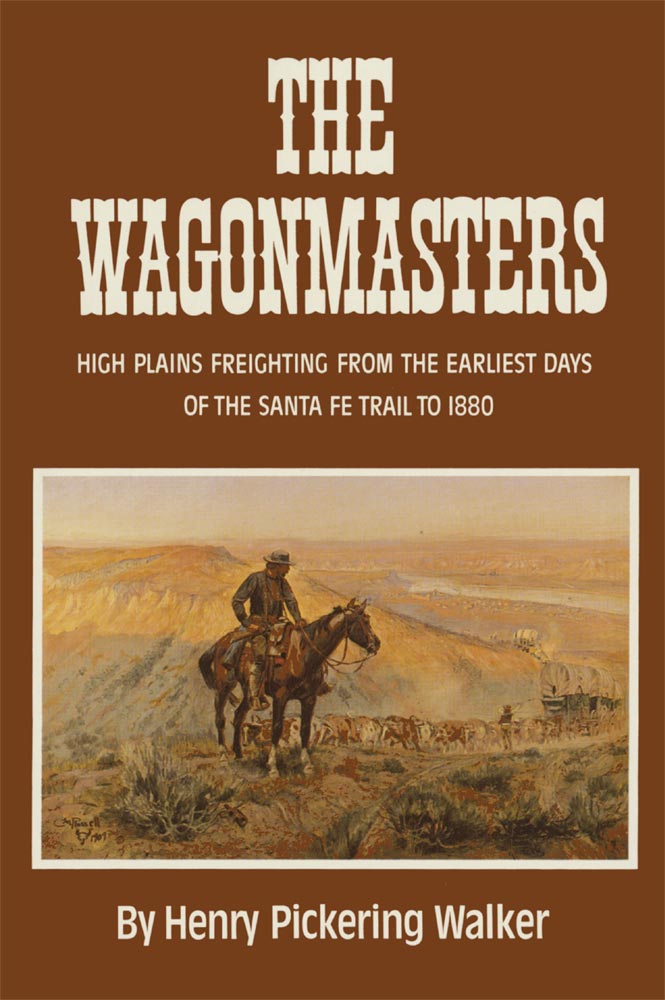
The Wagonmasters
High Plains Freighting From the Earliest Days of the Santa Fe Trail to 1880
Trace wagon freighting from the Santa Fe trade’s first wagons in 1822 to 1880.
- Themes
- Wagon freighting and western growth, Santa Fe trade, Wagon-train workers' customs
Wagon Freighting
Come here for
- Wagon freighting’s role in trade, settlement, and western growth
- The customs and language of bullwhackers and mule skinners
Expect
- Freighters supplying Santa Fe and Mountain West settlements
- Wagon trains carrying goods for the army and mining regions
Where it sits
How strongly BookFrontier reads the book as belonging to each subject.
Nearest books
Matched by our semantic model. Ordered by what its readers also loved.
 The War of Jenkins' EarRobert Gaudi37% subject match
 Nothing Like It In the WorldStephen E. Ambrose51% subject matchShares 19th-Century America and Civil War Era
 The Log Of A CowboyAndy Adams49% subject match
 The Story of American RailroadsStewart H. Holbrook48% subject matchShares 19th-Century America
 The Road That Made AmericaJames Dodson47% subject match
 The Civil War in the Western TerritoriesRay C. Colton46% subject matchShares Western U.S. History and Civil War Era
 The Adventures of the Mountain MenStephen Brennan46% subject matchShares Western U.S. History and 19th-Century America
For younger readers: Wagon Wheels, Trains, History Comics: The Wild Mustang
Start with three books, and this one can be the first.
Members get a new edition every morning: a route out from their books to essays, research and talks, with the reason for each.
Sign upAbout this book
From 1822, when the first wagons were used in the Santa Fe trade, until 1880, when the completion of major railroad lines made the wagon train all but obsolete, wagon freighting was essential to the trade, settlement, and growth of the American West, from the Missouri Valley to the Great Basin.
Freighters carried goods to and from Santa Fe, bringing in much of the trade goods for the settlements of the Mountain West.
Continue reading
Under contract to the government, they supplied the army sent to fight Mexicans and American Indians. Without the wagonmasters, the flow of gold from the mines of Colorado and Montana, which proved essential during the Civil War, would have been delayed at least a decade.
The Wagonmasters is the first comprehensive account of this colorful bygone industry and the men who worked the wagon trains—bullwhackers and mule skinners. A breed apart, they developed their own customs and language, greatly enriching American speech. The business was hard, dirty, and dangerous, but the wagon freighters, like the U.S. mail, almost always came through.
Publisher details
Publisher categories
- How Transportation Works
- 19th-Century America
- Transportation
- Authors
- Henry Pickering Walker
- Publisher
- University of Oklahoma Press
- Published
- April 15, 1986
- Format
- Print & ebook
- Reading lane
- How Transportation Works